
Introduction to Tudor Households
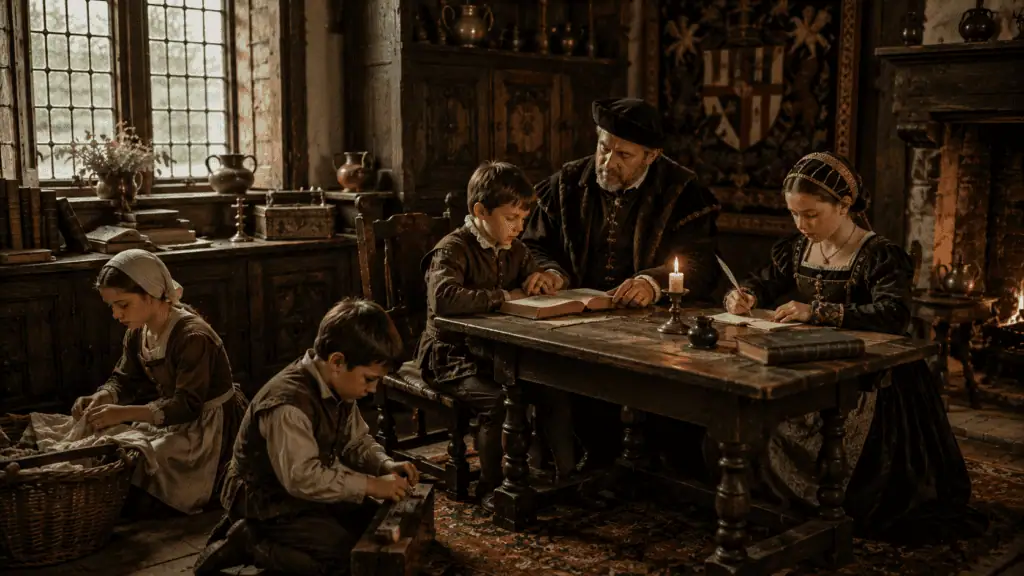
In the realm of history, the Tudor era often conjures images of grandeur and magnificence, dominated by royal courts and lavish banquets. Yet, to truly grasp the heartbeat of early modern society, one must delve into the household—both its structure and daily life. The Tudor household was not merely a physical space; it was a microcosm that reflected the values, relationships, and economies of its time.
Studying Tudor households unravels the intricate tapestry of social hierarchy and cultural norms. These households were operating units where power dynamics, gender roles, and responsibilities played out. By examining their daily routines and interactions, we can gain insight into the larger societal norms that shaped England during the Tudor period.
Nearly 400 years after the Tudor reign, it is easy to overlook the subtle impacts of household dynamics. Yet these homes were foundational to the functioning of society. Understanding how families negotiated and maintained their roles provides a richer perspective on events, economic conditions, and influential figures of the time.
This exploration will reveal how Tudor households were more than just living spaces. They were spaces of power, economy, and social change, reflecting both the ordinary and the extraordinary aspects of early modern life.
Professor Amelia Harcourt tells the story of how social hierarchies, daily life, and gender roles shaped Early Modern England.
The Structure of Tudor Households
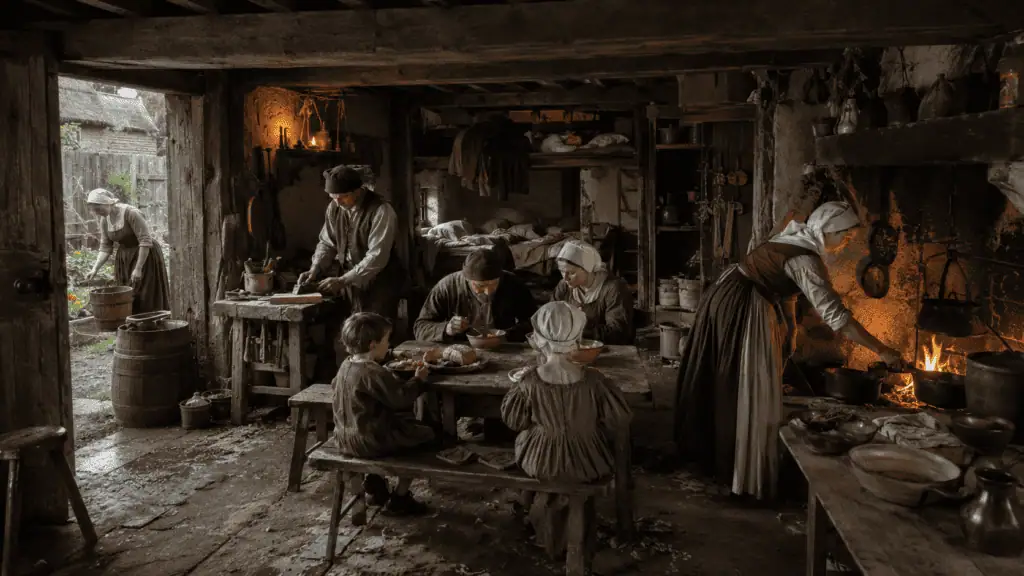
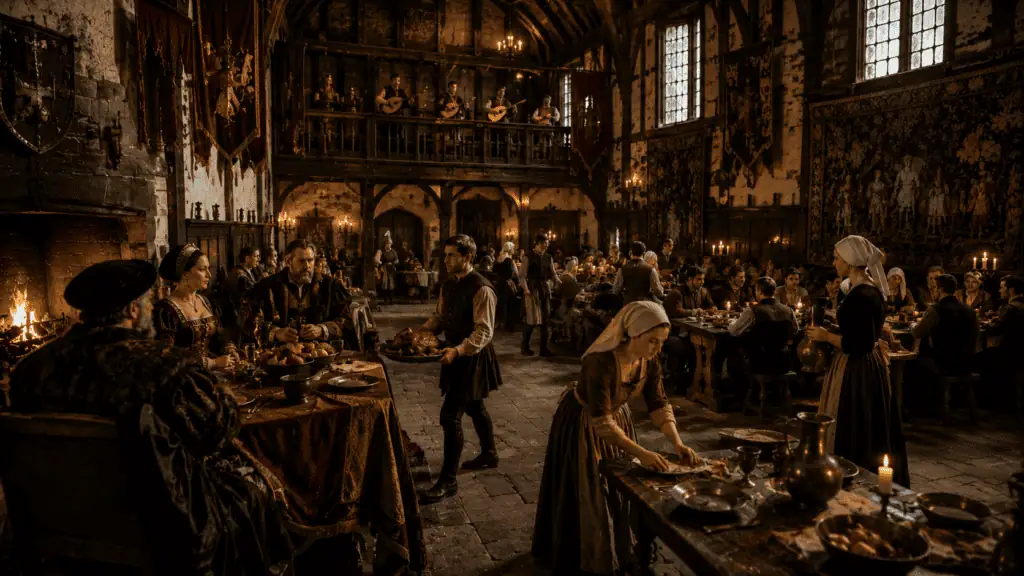
The Tudor household was characterised by a distinct hierarchical structure. At the top sat the master or mistress, whose authority was usually derived from land ownership, noble lineage, or both. In noble households, this hierarchy was particularly pronounced, encompassing multiple layers of social status that dictated daily life interactions. The master controlled resources, managed estates, and was expected to maintain relationships with other local powers.
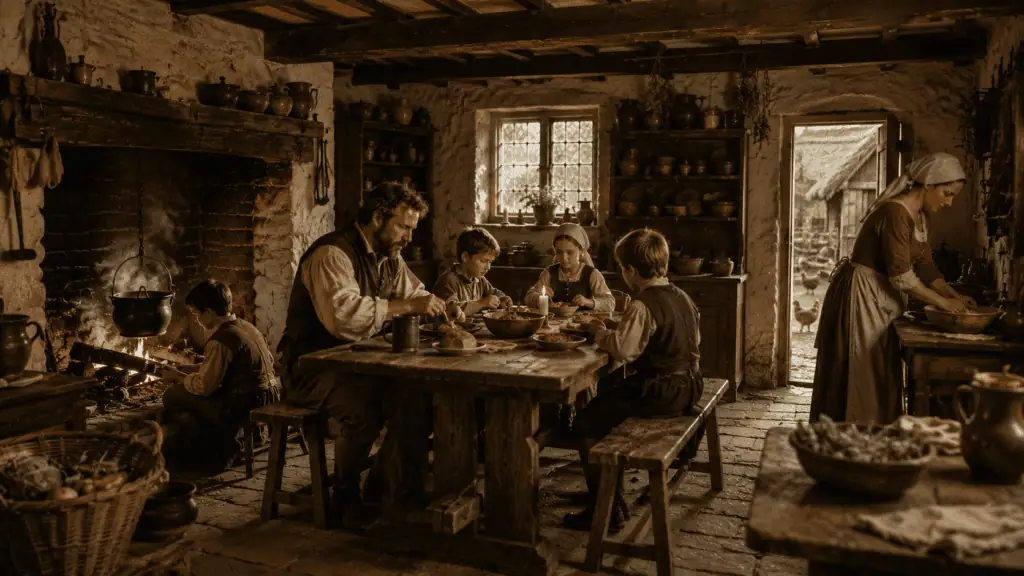
In lower-class households, the structure appeared simpler but was just as vital for organisation. Here, family members often shared responsibilities, working collectively to make ends meet. However, authority was still based on age and gender, challenging contemporary ideas about equality and fairness. The father typically held the principal authority, while women focused on domestic duties.
The dynamics of households often mirrored the complexities of Tudor political life. Marriages were strategic, designed to consolidate power and wealth. Noble women, particularly, played crucial roles in these alliances, navigating their households as conduits of power and influence, whether directly through their husbands or indirectly as mothers of heirs.
This intricate web of relationships and duties shaped not just the household itself, but the very fabric of Tudor society, where class distinctions mattered profoundly and governance began at home.
Daily Life in a Tudor Household
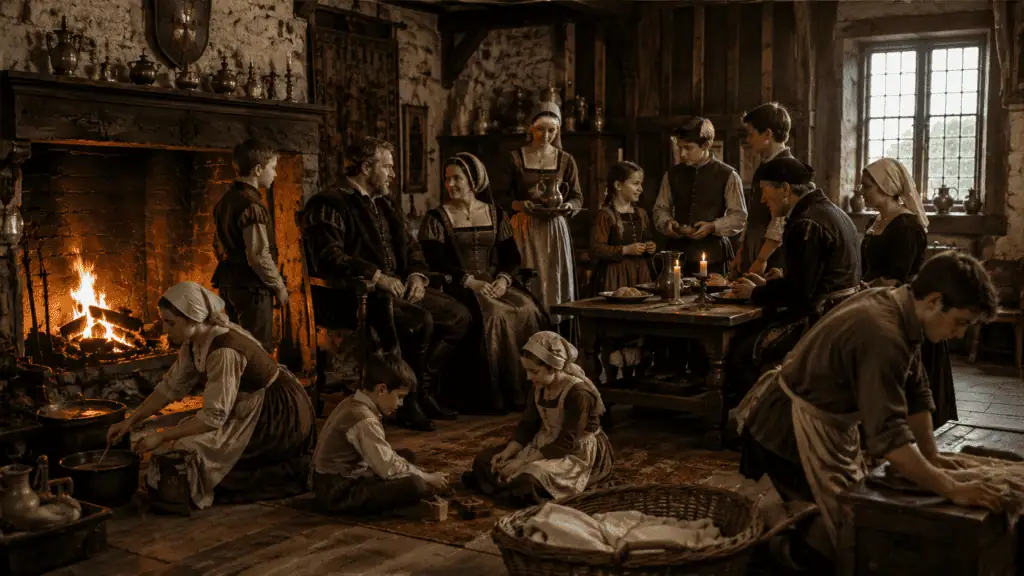
Life in a Tudor household was built around a pattern of routines shaped by social status. Upper-class families enjoyed the luxury of complex schedules, where meals and leisure were carefully orchestrated events. Breakfast could be a modest affair but dinner was an elaborate gathering, sometimes lasting for hours, with varied dishes, entertainment, and lively conversation.
In contrast, lower-class households operated with greater pragmatism. Meals often consisted of simple fare, such as pottage or bread, and were based on what could be grown or purchased. Mealtimes were not mere moments for nourishment; they served as vital social interactions, with families discussing their day and reinforcing family bonds.
Too often overlooked is the role of children in these daily routines. From a young age, they were actively involved in household tasks. Boys learned trade skills while girls assisted their mothers in domestic chores, preparing them for adult responsibilities. Thus, childhood was a period of preparation for future roles within their social class.
These daily rhythms shaped not only the family but the community’s fabric as well. The interconnectedness of households created a network of support and dependence. Understanding these routines provides insights into how Tudor society functioned beyond the realm of politics and grand events.
The Role of Women in Tudor Households
Women played multiple and often complex roles within Tudor households. Their functions extended beyond mere domestic duties; they exercised significant authority and were integral to the economic survival of their families. In noble households, women often managed the household economy and were pivotal in arranging marriages and alliances, thus maintaining family status.
In peasant homes, women’s contributions were equally vital. They engaged in agricultural work, produced home-made goods, and managed gardens. These efforts were essential to ensure the household’s stability. As partners in farming and trade, women became indispensable contributors, often blurring the lines between domesticity and public life.
Despite the prevalent patriarchal culture, women also wielded informal power. The organisation of household affairs often fell to them, allowing a form of authority that was significant, albeit unofficial. Their ability to handle disputes and mediate within family matters underscored an unrecognised sphere of influence.
Understanding women’s roles reveals the intricacies of Tudor society. It is a testament to their resilience that, even in a time defined by gender inequality, women found ways to assert their agency and shape the future of their families.
The Household Economy
At the heart of Tudor households was the household economy, a complex system influenced by land ownership, trade, and the agricultural calendar. Wealthy households often owned extensive lands cultivated for profit and subsistence. This ownership provided not just economic security, but also social and political status.
Trade played a significant role for those households that resided in urban areas. Market days were bustling occasions, with families buying and selling goods, and townspeople relying on these exchanges for their livelihoods. Knowledge of trade, therefore, was essential, and households that thrived adapted to changing markets and consumer tastes.
Additionally, the practice of sharing and barter was commonplace, especially among lower classes. Neighbourhoods often doubled as communities of support, where goods were exchanged within an informal economy, fostering bonds and mutual aid that reinforced social ties.
The household’s economic practices illustrate the interconnectedness of Tudor society, reflecting an intricate relationship between personal lives and broader economic systems. An understanding of this economy is crucial in grasping how Tudor households sustained themselves and influenced the world around them.
Household Staff and Their Roles
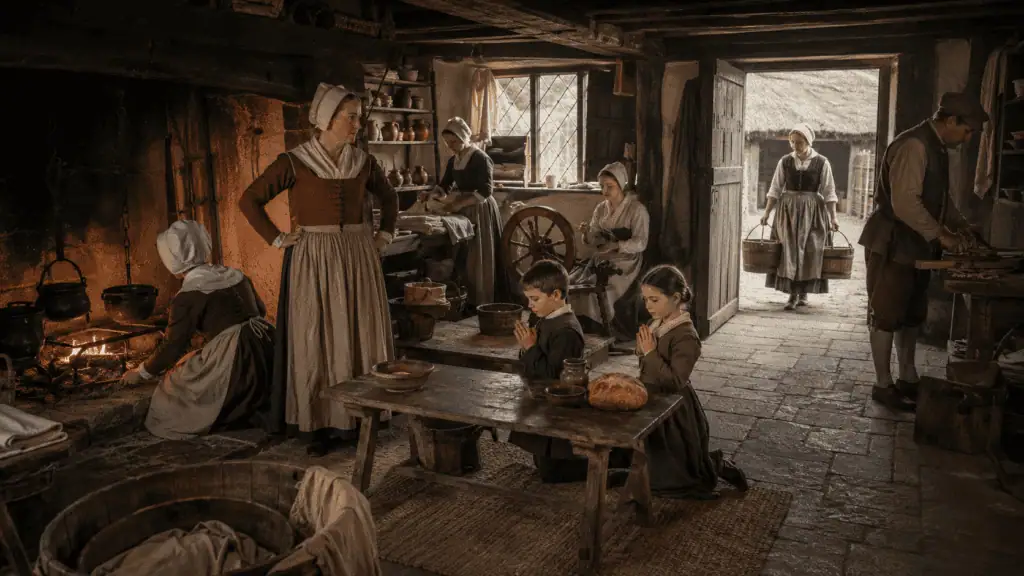
Behind every Tudor household was a dedicated team of staff, essential to the household’s smooth operation. Noble households required a well-organised hierarchy of servants, each with specific roles. From the butler, who managed the household’s provisions, to the maid, who looked after the mistress’s needs, these staff members were vital cogs in the daily functioning of upper-class households.
The structure of servant roles varied significantly between noble and lower-class homes. In higher society, servants often enjoyed job security and specific titles, while in lower-income households, family members frequently assumed these roles, combining work with familial responsibilities. These distinctions underline a sense of status and privilege, with noble households representing the epitome of refinement and social hierarchy.
Understanding the complexities of household management reveals how power dynamics operated within domestic spaces. Staff members often forged close relationships with their employers, and their loyalty could significantly influence both personal and political matters. The balance of power was delicate, and conflicts could arise that might echo beyond the household walls.
These intricate relationships and roles have shaped perceptions of service and obligation. They illustrate how the Tudor household was a theatre of power and hierarchy where domestic and social conventions intertwined.
The Impact of Religion on Tudor Households
Religion played a pivotal role in shaping Tudor households. The Protestant Reformation marked a significant shift, influencing both spiritual and everyday practices within homes. Families navigated these changes, often using belief systems to reinforce their social structures and identities.
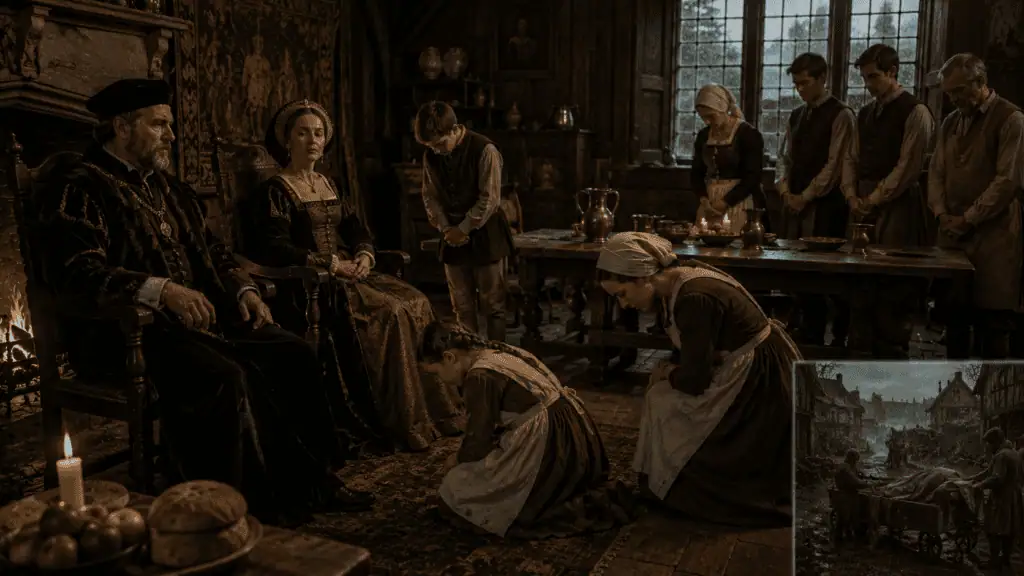
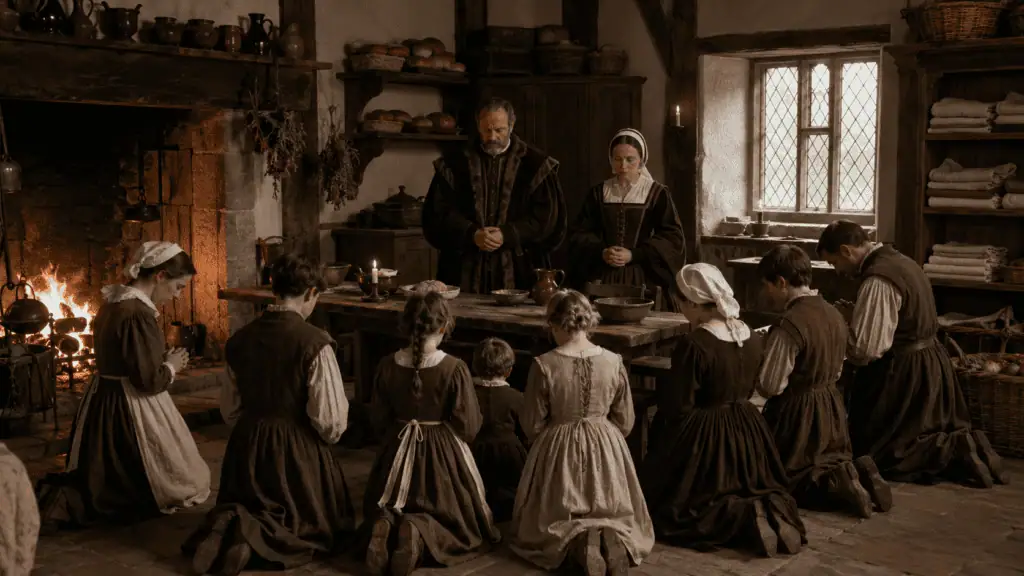
In Catholic households, rituals and saint veneration prepared families for significant life events—births, marriages, and deaths. Prayers and household blessings established the family’s connection to their community and faith. Each meal might begin with a prayer, embedding religion deeply within daily routines.
Conversely, in Protestant homes, emphasis shifted to personal faith and scripture, profound changes in communal worship, and a retreat from the elaborate liturgical practices that characterised Catholicism. Families took on the responsibility of reading the Bible and cultivating a personal relationship with God, challenging centuries-old practices and priorities.
The importance of religion went beyond spiritual expression; it shaped family identity and influenced personal relationships. Households became sites of religious debate and tension, reflecting wider societal changes and conflicts. Understanding the impact of religion on Tudor households provides key insights into the cultural upheavals of the era.
The Influence of Politics on Households
Tudor households were not isolated from the currents of political life. In fact, they stood at the confluence of personal and political relationships. Political alliances often dictated marriage arrangements and influenced social status, shaping the landscape of power in early modern England.
Noble families employed their households as platforms for political manoeuvring. Marriages were strategic, with unions often sealing alliances that enhanced territorial control and economic benefits. As such, household gatherings served dual purposes: nurturing familial alliances while fostering valuable political connections.
Lower-class households, while seemingly far removed from these larger machinations, were not unaffected. Political decisions impacted local economies, taxes, and even the availability of resources. Households needed to adapt, often relying on community support and cooperation to manage the consequences of shifting political tides.
Acknowledging the intersection of household and politics enriches our understanding of Tudor societies and the motivations behind individual actions. It illustrates how personal lives were often mediators of public affairs, reflecting the intertwining of civic duty and domesticity.
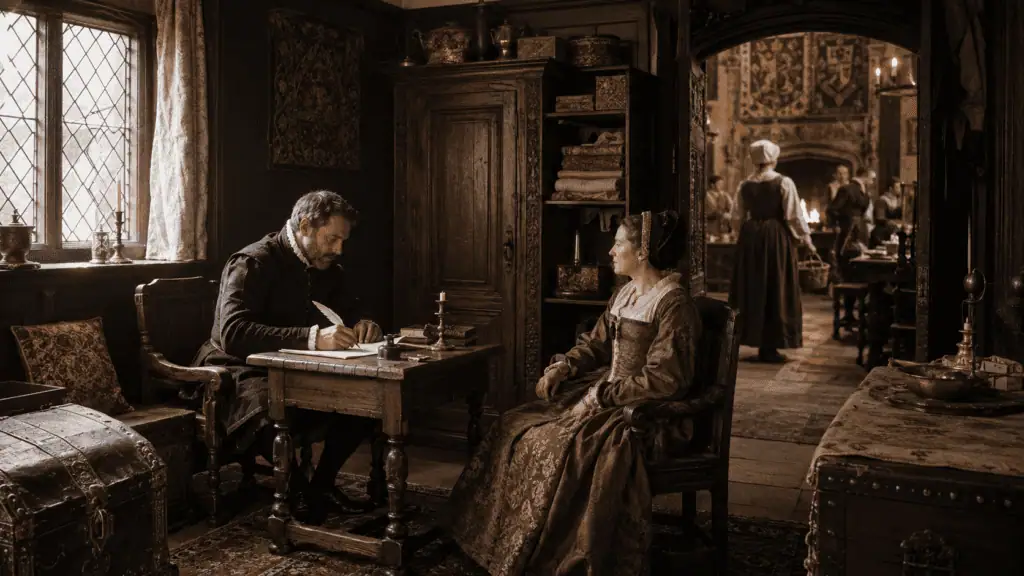
The Legacy of Tudor Households
The legacy of Tudor households extends far beyond their time, shaping cultural narratives and societal structures for centuries to come. These homes were foundational in defining concepts of family, gender roles, and social interaction. They became central to how people viewed their places within society.
In art and literature, depictions of Tudor life often reflect the grandeur of nobility, overlooking the equally crucial everyday experiences of lower classes. Yet these everyday narratives enrich our understanding of societal norms and generated dialogues about class and identity.
Moreover, Tudor practices regarding authority, familial ties, and even household management found their way into subsequent generations. The family structures, household organisation, and roles established during this period influenced how later societies would develop their understandings of home and family dynamics.
In essence, the Tudor household stands not only as a symbol of its time but as a testament to the enduring nature of domestic life and the complexities of human relationships. By examining these households, we uncover layers of history that speak to the very heart of early modern England and its lasting imprint on our contemporary world.