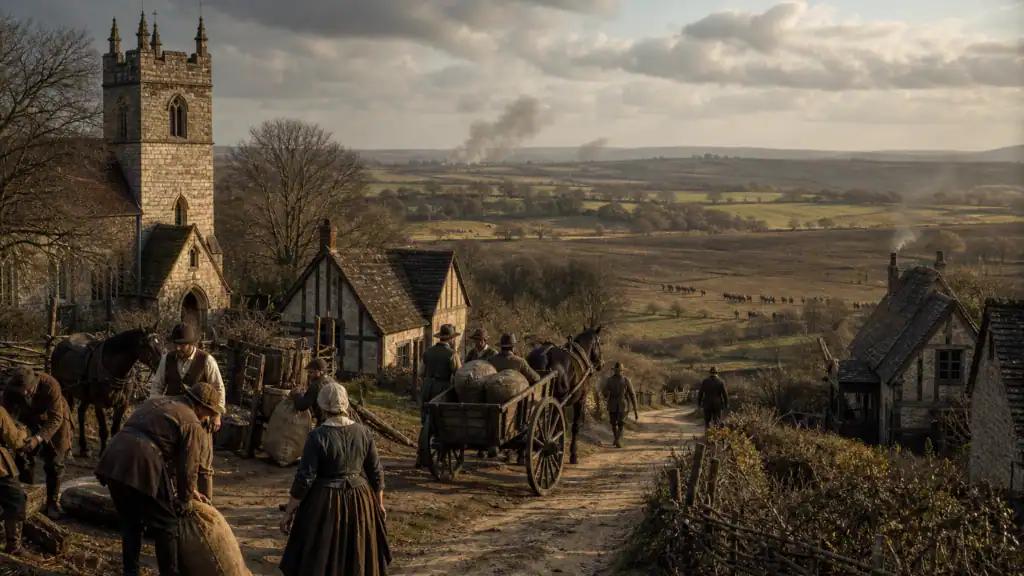

When we picture the English Civil War on the home front, the mind often leaps to commanders in armour, banners snapping in the wind, Parliament in argument, and the fate of kings decided on a battlefield. Yet for most people living through the crisis between 1642 and 1651, war did not arrive as a grand constitutional drama. It arrived at the door. It came with hoofbeats in the lane, with carts groaning under sacks, with soldiers needing bread, horses, firewood, and a place to sleep. It came with rumours before dawn and with the anxious knowledge that a parish could be made to serve both armies in the same month.
That is why the home front matters more than many histories allow. If we want to understand what the Civil War did to Stuart England, we must begin not in Westminster but in kitchens, barns, churches, markets, and muddy lanes. The conflict fractured the ordinary rhythms that held local life together. It changed what it meant to keep a household running. It altered the meaning of loyalty, because allegiance to King or Parliament did not remove the need to feed a family, protect livestock, or endure one more demand from armed men. It also changed the texture of authority. Power was no longer something distant and settled. It arrived through taxation, billeting, requisition, confiscation, and the constant pressure of survival.
This is a history of people who were not meant to be central, yet became essential. Women managed households under strain, negotiated with soldiers, hid goods, carried messages, and petitioned for relief. Men who had never expected to think politically had to decide when to comply, when to resist, and when silence might keep a family alive. Parish churches became places where belief and politics were inseparable. News moved slowly and unreliably, which meant that rumour could be almost as powerful as fact. Even after the execution of Charles the First, the war did not end neatly in the lives of those who had carried its cost.
If we look closely at the home front, we see that the English Civil War was not simply fought by armies. It was sustained, endured, negotiated, and remembered by communities. That is the deeper story. And it reveals why this conflict reshaped ordinary life with a force that has too often been overlooked. Professor Amelia Harcourt takes us through the story of how the Civil War was won in kitchens as well as fields.
A Parish Under Pressure
Night Sounds in Naseby
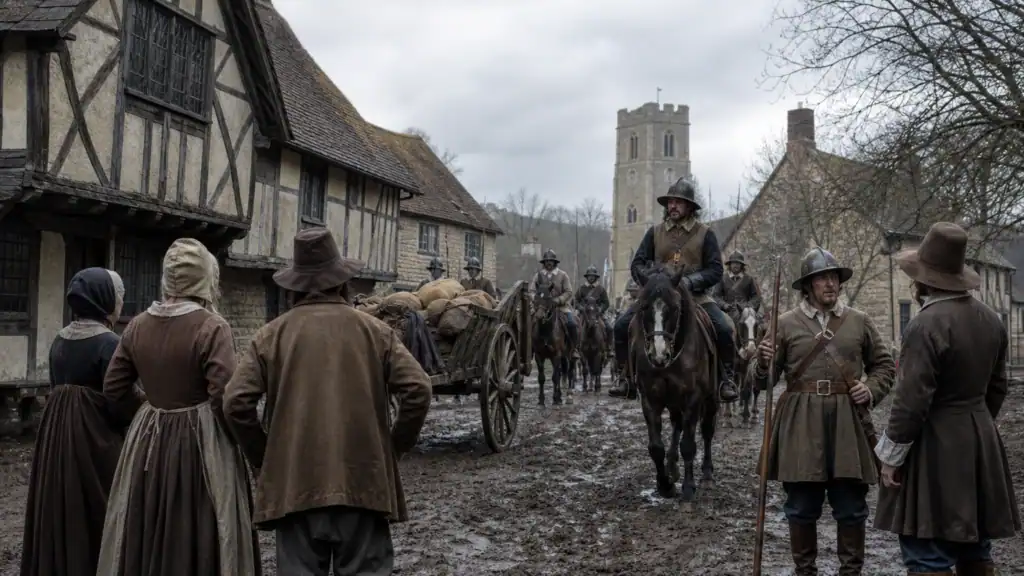
Before sunrise in a village like Naseby, Northamptonshire, the first sign of war was not a trumpet blast but a sound in the dark. Hooves on frozen ground. A cart wheel catching in a rut. Men shouting beyond the hedges. In such moments, a woman at a cottage door did not need a map of the kingdom or a speech from Parliament to understand that danger had arrived. The war was already inside the parish, because the parish was where the war was lived.
That is the power of this history. It strips away the illusion that conflict begins only when armies meet in famous places. For villagers, war meant intrusion. It meant that the contents of a larder could be treated as military supply. It meant that a horse needed for ploughing might be taken in an instant. It meant that children were taught to sleep in their clothes, ready to flee. The line between home and battlefield disappeared because there was no secure boundary to preserve it.
A village like Naseby also reminds us that local experience mattered even when national events were changing rapidly. A battle might be remembered by later generations as decisive, but for the people nearby, the immediate issue was whether their bread would last, whether their doors should be barred, and whether the next demand from soldiers would be made by men who claimed to serve the King or Parliament. In practice, the difference could feel secondary to the fact of being vulnerable to armed force.
Why the War Felt Real at Home
The English Civil War became real in domestic spaces because that is where state power touched everyday life. A kitchen was not just a place to prepare food. It was the first site of strain when grain was seized, when fuel was scarce, or when a family had to host soldiers it did not invite. A barn was not simply agricultural storage. It was part of a military economy, vulnerable to requisition and pillage. A church was not merely a building of worship. It was where neighbours heard announcements, arguments, and prayers shaped by political allegiance.
This is where the home front reveals its importance. If we focus only on Westminster and the great battles, we see decisions taken by elites. We miss the people who bore the consequences. We miss the fact that armies could not move without the cooperation, coercion, and endurance of local communities. We miss the emotional reality of uncertainty. A family did not know whether the sounds outside signalled friendly troops, hostile troops, a recruiter, or a gang that had simply found war useful for its own purposes.
That uncertainty mattered because it shaped behaviour. Families hid what they could. They shared what they could not conceal. They judged whether resistance would bring punishment greater than compliance. They listened for news, even when news could not be trusted. The war therefore entered the smallest routines of life. It altered how people slept, stored food, sent children to church, and spoke to strangers on the lane.
The home front is not a background to the war. It is one of the places where the war became legible. That is why ordinary life, under pressure, tells us more about the conflict than a neat list of battles ever could.
The War Arrives at the Door
No Clear Line Between Soldier and Civilian
In Stuart England there was no modern front line separating soldier from civilian. Armies moved through settled country. Garrisons occupied towns. Local officials were ordered to gather money and supplies. A household could wake loyal to one side and end the day feeding the other. The idea of a protected civilian sphere simply did not exist in the way it does today.
That meant war was experienced as a series of demands. Soldiers needed billets, carts, horses, grain, ale, firewood, and information. They needed roads, bridges, and local knowledge. A parish could be forced to feed troops one week and accused of disloyalty the next. A town might be held for Parliament, then suffer pressure from Royalist forces, or the reverse. The people who lived there could not escape the conflict by declaring neutrality, because neutrality itself was rarely respected when force needed provisions.
This is why home front history changes our understanding of the Civil War. It shows that armies depended on the very society they unsettled. The military could not function in a vacuum. It required the labour of civilians, often extracted under threat. The movement of troops meant disruption to planting, harvesting, trading, and transport. A road was not only a route of movement. It became a channel through which authority, fear, and scarcity travelled together.
The result was a deeply unstable daily life. People learned to listen for signs in the distance. They watched the roads. They hid valuables. They judged which authorities might be temporary and which might return with force. Such knowledge was practical, but it was also political. It taught communities that the state was not remote. It was something that could arrive suddenly, hungry and armed.
Allegiance, Geography, and Survival
Support for King or Parliament did not remove the pressures of geography and survival. Some counties saw repeated campaigning and occupation. Others experienced raids, confiscations, and the grinding burden of supply. A person living in a strategically important region had fewer choices than one in a quieter area, though even quiet places could be drawn into the war through taxation or recruitment. Proximity to a garrison, a road, or a contested town could shape daily life more than any grand theory of allegiance.
Kinship also mattered. Families were rarely politically uniform. One branch might lean Royalist, another Parliamentarian. A neighbour might be connected by marriage to the local gentry, while another depended on the goodwill of parish officers. These ties affected how people interpreted risk. A household could not always act as if ideology were the only consideration. It had to think about who might protect it, who might punish it, and who might quietly help when need was greatest.
That is why survival so often overrode purity of conviction. It is too easy to imagine that people simply chose sides and held to them. In reality, many moved carefully between pressures. They complied when resistance would cost too much. They negotiated when there was room to do so. They concealed their real feelings when open speech would endanger a family. Such conduct was not apolitical. It was the politics of endurance.
This also helps explain why the Civil War produced so many small acts of adaptation rather than only dramatic declarations. People were not passive. They were constantly judging the balance between principle and survival. That judgment was shaped by local circumstance, not abstract ideology alone. If you want to understand the war as lived experience, you have to begin there.
Paying for a Divided Kingdom
Taxation, Billeting, and Requisition
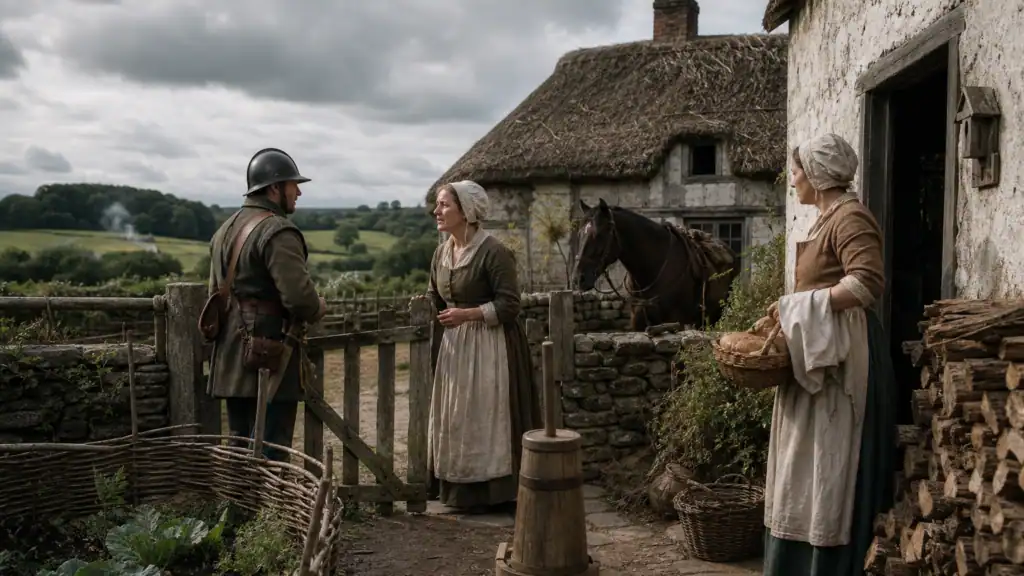
War costs money, and in the seventeenth century money came from communities. Parliament raised funds through local assessments. Royalist authorities made their own demands where they could. Soldiers were billeted in towns and villages, which meant that households were expected to provide lodging, food, drink, firewood, and transport. The burden could be accompanied by receipts and promises of payment, but paper did not keep a family warm, and a signed note did not fill an empty pantry.
This financial strain was not incidental. It was one of the main ways the war reached ordinary people. A household might lose a horse needed for work, a supply of grain intended for the winter, or even the use of a room to house soldiers. Receipts often offered only uncertain compensation. The delay itself became part of the hardship. In a time of scarcity, waiting for reimbursement could mean ruin.
Wealthier households had more to lose in visible goods such as horses, plate, and stored produce. Poorer families, by contrast, often lost labour and basic security. The disappearance of a son into militia service could mean a missing wage earner. The occupation of a room could crowd an already cramped household. Requisitioning could take the very animals and tools that sustained a farm. Even when the loss was smaller in money terms, it could be larger in human terms.
That is why supply systems matter so much in Civil War history. They remind us that military campaigns were built from the ordinary resources of life. Armies did not simply march across England. They consumed England as they moved. The home front was not outside that process. It was its foundation.
Unequal Burdens Across the Community
The burdens of war fell unevenly. A landowner could lose valuable livestock, but still possess reserves that allowed recovery. A small tenant farmer might lose the one horse that made the holding viable. A tradesperson could find customers unable to pay because their own resources had been drained by military demands. Parish officers stood between angry neighbours and armed authorities, trying to collect assessments that no one wanted to pay while also maintaining local order.
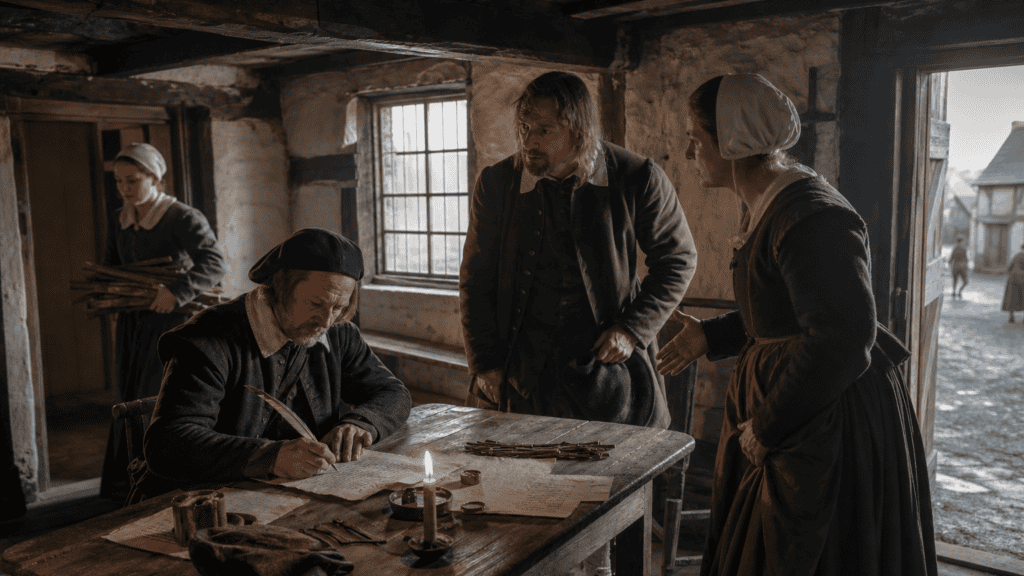
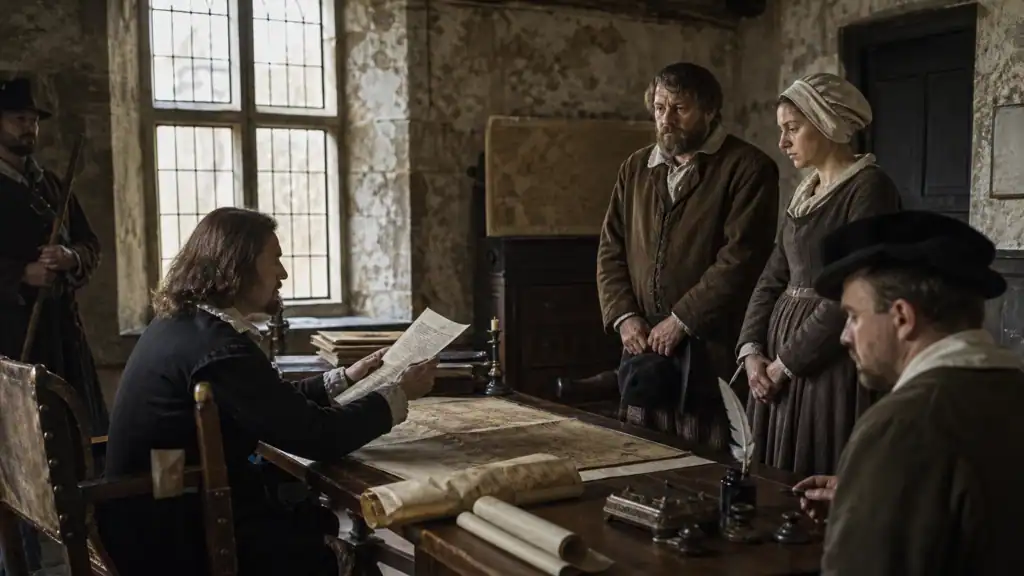
This is one of the most revealing aspects of the home front. It shows that war altered the meaning of authority in daily life. Power was no longer abstract. It appeared in the hand of the tax collector, the note of the quartermaster, the constable at the door, or the captain with an order sealed in ink. People learned to ask which command could be negotiated, which could be delayed, and which would bring punishment if resisted.
In that sense, the Civil War became a daily political education. It taught communities that government was not just law in principle. It was force, paperwork, coercion, and compromise in practice. People did not merely obey or rebel. They calculated. They bargained. They endured. They learned the price of saying no.
And the costs were not only financial. Requisitioning altered trust within communities. If one household surrendered goods and another resisted, resentment could follow. If a local official appeared too compliant, he might be accused of favouritism. If he resisted too hard, he might bring violence upon his neighbours. The war therefore strained the social fabric at every level. It was not only a contest between kingdoms. It was a test of whether local life could absorb repeated extraction without breaking.
Women, Families, and Survival
Women as Managers and Negotiators
Women were central to the home front because households depended on their work when men were absent, conscripted, imprisoned, or killed. They managed food, clothing, children, elderly relatives, livestock, and whatever remnants of stability remained. They also negotiated with soldiers, sought the release of relatives, carried messages, concealed goods, and sometimes confronted authorities with petitions written in the language of loyalty and distress.
That language mattered. Women often had to present themselves as dutiful subjects rather than open challengers. A petition could speak of hardship, obedience, and the need for protection. Yet beneath those formal words was a hard political reality. A woman asking for a husband’s release or for relief from billeting was making a claim about justice, entitlement, and the responsibilities of power. She was insisting that authority should preserve the household rather than destroy it.
Crowd protest could also include women. They were not simply acting as exceptions to normal politics. They were defending the practical conditions of survival. When prices rose, provisions were seized, or local demands became unbearable, women could gather with others to make their distress visible. Later commentators often described such action as disorder. Yet disorder is sometimes what survival looks like when formal channels have failed.
The significance of this is profound. A war often written as a story of kings, parliaments, and generals also depended on unpaid, uncelebrated labour inside the home. The hidden work of feeding, mending, carrying, and persuading kept families together under extraordinary pressure. That work deserves to stand at the centre of the story.
Divided Households and Shared Strain
Civil war entered the household not only through material strain but through divided loyalty. Brothers could serve opposing causes. A father might hide a son from recruitment while another son fought openly. Religious differences could sharpen domestic tension, especially where one member of the family preferred traditional forms of worship and another supported more radical reform. The war did not merely split the nation. It pressed its divisions into intimate space.
The result was a profound reorganisation of domestic responsibility. When men left home, women absorbed more labour. When property was seized, families had to adapt quickly. When debt mounted, choices became harsher. A widow could find herself exposed to men who assumed she was easier to pressure because she stood alone. A wife whose husband was away in an army might have to act as manager, negotiator, and protector all at once.
This is why the home front should be studied as a social transformation, not just a military one. It changed the distribution of work within the household. It made women’s labour more visible in practice, even when it remained formally undervalued. It also revealed how fragile family security could be when public conflict moved inside domestic life.
The Civil War did not create the household from nothing, but it redefined what households had to do to survive. That change endured beyond the immediate fighting, shaping memory, expectations, and the social meaning of endurance itself.
Belief, Fear, and the Local Community
The Parish Church as a Political Space
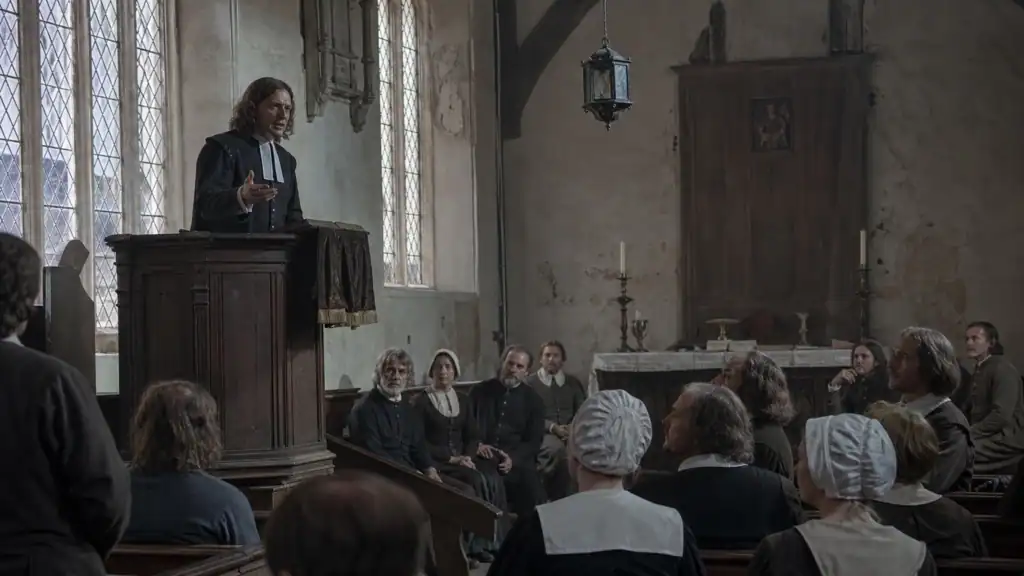
In the seventeenth century the parish church was among the most important places in local life, and during the Civil War it became a place where politics and religion were impossible to separate. Ministers preached for Parliament or for the King. Prayers changed. Furnishings might be attacked by those who saw them as signs of corruption, or defended by those who valued their sacred presence. For congregations, worship was never just worship. It was also a statement about order, loyalty, and the future.
That made the church a site of anxiety. A sermon could reassure frightened listeners, but it could also sharpen suspicion. A prayer altered in line with new authority might comfort one household and alarm another. The same pew could hold people who feared Catholic influence around the King, others who feared the destruction of tradition, and others who wanted only peace and the return of familiar worship.
These tensions were not abstract theological quarrels. They were lived in communities where neighbours had to see one another daily. When a church became a battleground of symbols, the congregation itself became a map of the kingdom’s uncertainty. Religious disagreement entered family life, local reputation, and even the way people interpreted suffering.
This is why the home front cannot be separated from belief. The war was fought not just over rule but over what kind of religious community England should become. That question reached the parish more quickly than it reached any court decision. It was felt in the way people prayed, listened, and judged one another.
Compromise, Conviction, and Exhaustion
Local loyalties rarely fit into tidy categories. Some people were deeply committed to one cause. Many more were shaped by compromise, caution, and fatigue. A person might support Parliament but resent its taxes. Another might favour the King but fear what his troops would take from the parish. A household could shelter a relative from one side while paying assessments to the other. Mixed feeling was common because the war itself was mixed in its demands.
This complexity matters because later histories often flatten local life into a simple division of Royalist and Parliamentarian. Real communities were not so orderly. They contained conviction, certainly, but also argument, opportunism, and exhaustion. People wanted peace, familiar worship, protection from arbitrary power, and the chance to live without repeated intrusion. Those hopes could attach to either side depending on what a community had suffered.
The emotional cost of this should not be underestimated. Constant pressure wore people down. Uncertainty made every rumour heavier. Repeated demands made trust brittle. When authorities on either side claimed righteousness, local people often cared most about whether those authorities left their fields, homes, and churches in something like working order.
That is why the parish matters so much. It was the place where national conflict became neighbourly tension, and where neighbourly tension sometimes became a matter of survival. The home front shows us the war not as a clean ideological contest but as a world of bruised loyalties and practical compromise.
Resistance Without a Battle
Everyday Acts of Defiance
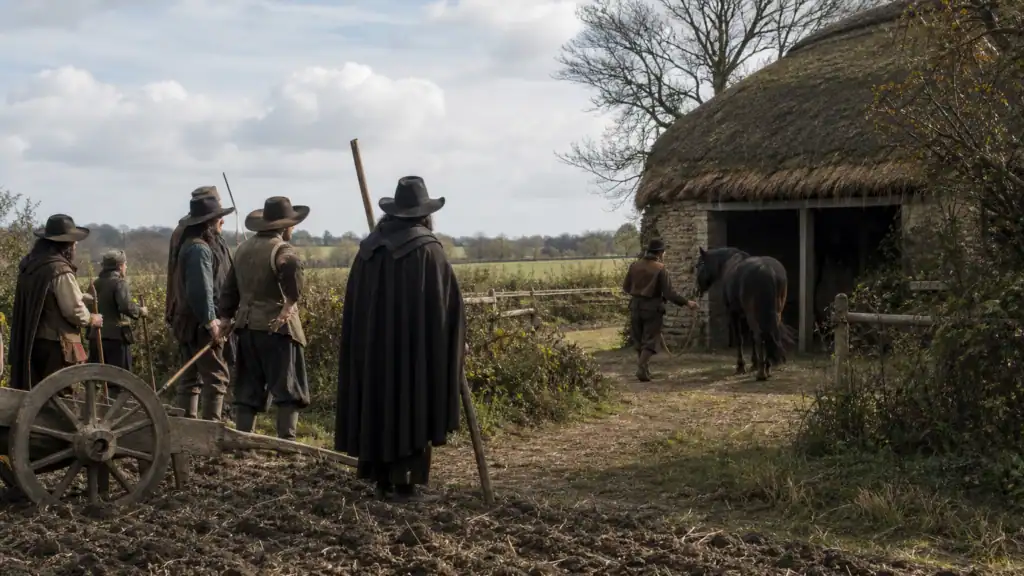
Resistance on the home front did not always mean raising arms. It could mean hiding a horse, delaying a payment, concealing a letter, or giving soldiers false directions. It could mean refusing to identify a neighbour or quietly protecting goods from seizure. Such acts were small in appearance, but they could be vital in practice. A horse hidden from requisition might keep a farm running. A letter concealed from an officer might save a family from arrest. A false answer could protect a village from further intrusion.
This kind of resistance is politically significant because it shows that ordinary people were not merely acted upon. They made choices. They assessed risk. They used what little power they possessed. Their actions were often local and immediate, but they had broader consequences because armies depended on compliance. A successful campaign required intelligence, transport, and supply. To hinder any of those was to shape the war in modest but real ways.
There is also a moral economy here. People often understood resistance as a defence of custom and fairness rather than rebellion for its own sake. They believed that a legitimate authority should not consume the community it claimed to serve. That conviction turned everyday acts into statements about what power ought to be. In the conditions of Civil War England, that was a deeply political position, even if it did not use the language of constitutional theory.
Clubmen and Local Defence
In some regions, local groups known as clubmen formed to defend communities from raids and requisitions. They were not always committed to one national side. Their first loyalty was often to the safety of fields, homes, churches, and families. That fact matters because it challenges the assumption that civil war forced everyone into a binary choice. Many people sought a third path, one defined by local protection rather than national allegiance.
Clubmen reveal the limits of central power. They also reveal the persistence of local identity. A valley, a parish, or a market town could become a unit of political feeling when people felt that both armies threatened them. Their aim was not necessarily to win the kingdom. It was to stop being plundered. That is a revealing measure of what the war had become for civilians.
But such defence had limits. Armed local groups could protect one place while leaving another exposed. A gentleman might shelter tenants from one army and assist the other later if circumstances changed. Flexibility could be sensible. It could also be condemned as treachery by those who preferred clearer loyalties. The home front was therefore a realm of constant negotiation.
That negotiation shaped the movement of armies and the endurance of communities. It shows that the Civil War was not only decided by battle and policy. It was also shaped by what villages and towns would tolerate, delay, conceal, or refuse.
News, Rumour, and Memory
How Information Travelled
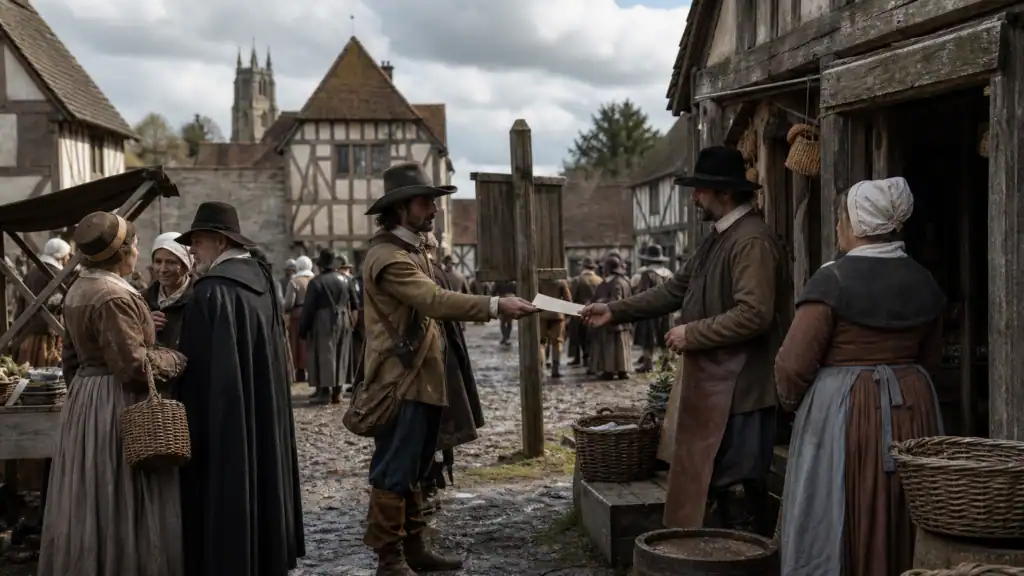
News in Civil War England moved by letter, printed pamphlet, market gossip, parish announcement, and the testimony of returning soldiers. It was slow, partial, and often unreliable. Victories were exaggerated. Defeats were softened. Atrocities spread quickly because fear travels fast, especially when people already expect the worst. A town might celebrate a triumph that had never happened, or mourn a loved one who was alive but unable to send word.
That uncertainty was not a side issue. It shaped decisions. If people believed an army was approaching, they might hide valuables, send children away, or refuse to move goods in case they were seized. If they believed the war was nearly over, they might relax too soon, spend scarce money, or reject a demand that later proved dangerous to resist. Rumour could destabilise a community, but it could also give suffering a frame that made sense of events.
This helps explain why the home front was so psychologically demanding. People were forced to make practical choices without reliable information. They had to act on fragments. In such conditions, trust became precious. So did local knowledge. A parish that had learned to read roads, rumours, and passing strangers had developed a form of political intelligence grounded in survival.
What Communities Remembered
Memory preserved some things and allowed others to fade. Great battles entered national record. Executions and constitutional turning points became familiar markers. But the smaller humiliations of billeting, hunger, unpaid labour, fear, and loss were more likely to survive in family stories, parish records, letters, and scraps of testimony. That uneven memory has shaped history ever since.
The result is that the home front can seem less visible than it truly was. Yet when we recover those quieter records, the war becomes more human and more disturbing. It is no longer just a sequence of military engagements. It becomes an accumulation of encounters. A confiscated cow. A crowded lodging room. A petition signed by distressed neighbours. A child taught to sleep ready to flee. Each one altered the relationship between people and power.
That is why remembering the home front matters. It restores the ordinary people who sustained the war whether they wished to or not. It also shows how local suffering became part of the larger political transformation of the seventeenth century. If you want to keep exploring this period, Digging Deep Histories offers further reading on Stuart England and the monarchy, the causes of the English Civil War, religion and reform in seventeenth century England, Parliament and political power in the Stuart period, and women’s lives in early modern England.
Conclusion
The English Civil War did not belong only to generals, ministers, and kings. It belonged to the woman listening at the cottage door before sunrise, to the farmer who found his horse requisitioned, to the widow trying to keep a household intact, to the parish officer trapped between neighbours and armed demands, and to the congregation hearing altered prayers beneath the church roof. That is the history the home front reveals. It tells us that the war was not simply fought across England. It was lived inside England, in the daily arrangements that made life possible and in the repeated disruptions that made life fragile.
This matters because it changes the scale at which we understand the conflict. If we look only at battlefields and political declarations, we can miss how war actually endured. Armies needed food, transport, money, lodging, and information. Those things came from local communities. Ordinary households did not stand safely apart from the conflict. They supplied it, resisted it, concealed from it, bargained with it, and survived its demands as best they could. That is not a minor detail. It is the mechanism through which the war became possible. It is also the reason the war left such deep marks on social life.
The home front also altered the meaning of authority. People learned that power could be challenged, negotiated, delayed, and judged by its effects. They discovered that petitions, refusals, and local defence could matter. They learned that a government was not just a distant institution but a force that might preserve or consume the community it claimed to govern. Those lessons did not vanish when the fighting eased. They entered memory, shaped expectations, and helped define later arguments about rule, religion, and obligation.
Even after Charles the First was executed in 1649, the disruption did not simply disappear. Scarcity, division, and uncertainty remained part of lived experience. The war’s aftermath was not clean because the damage had been social as well as political. Families had been stretched, households reordered, and communities taught what it cost when state power came close enough to touch the table, the stable, and the church door.
That is why the home front matters more than people often realise. It is not the background to the Civil War. It is one of its most revealing frontiers. If this perspective has opened the period for you, explore more Digging Deep Histories articles on Stuart England, political power, religion, women’s lives, and the causes of the war, and continue the conversation by reading the next chapter in this story.