

Introduction to Elizabeth I’s Spy Network
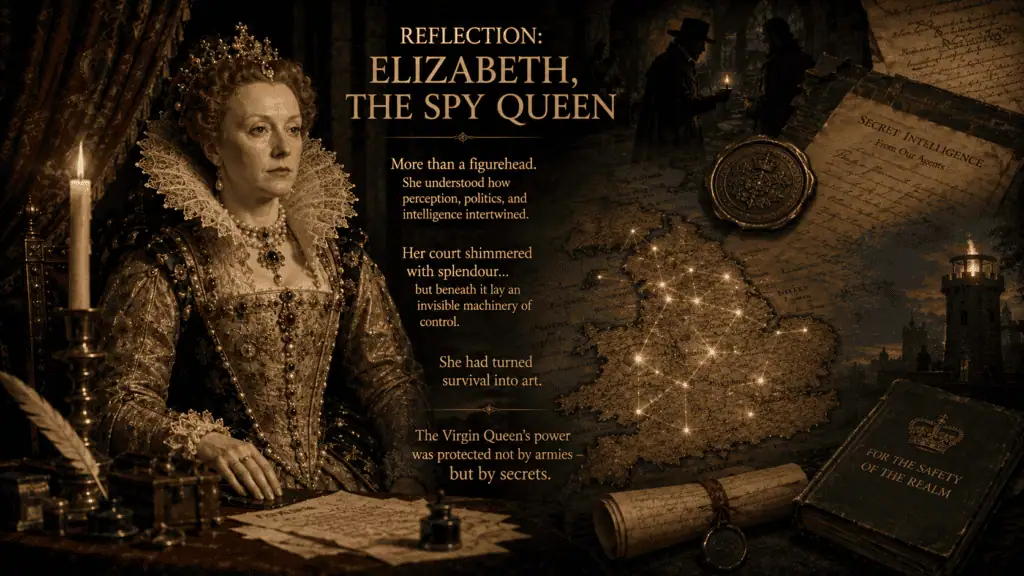
Elizabeth I’s spy network is often remembered as one of England’s most iconic moments. Elizabeth 1’s ruled from 1558 to 1603. Her reign, known as the Elizabethan Era, was coloured by cultural flourishing and significant political challenges. Yet beneath this vibrant tapestry lay a darker, more intricate web of espionage that shaped her reign and the future of England. Elizabeth’s ability to navigate treacherous political waters, particularly with powerful rivals like Spain and France, was largely due to her clandestine network of spies. This intricate network has often been overshadowed by more prominent historical narratives, but its importance cannot be underestimated.
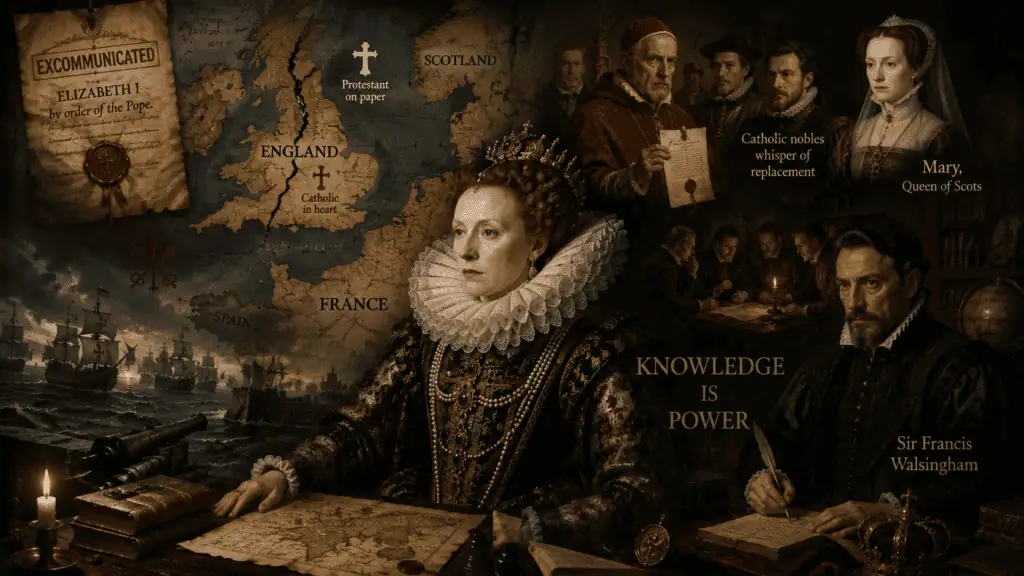
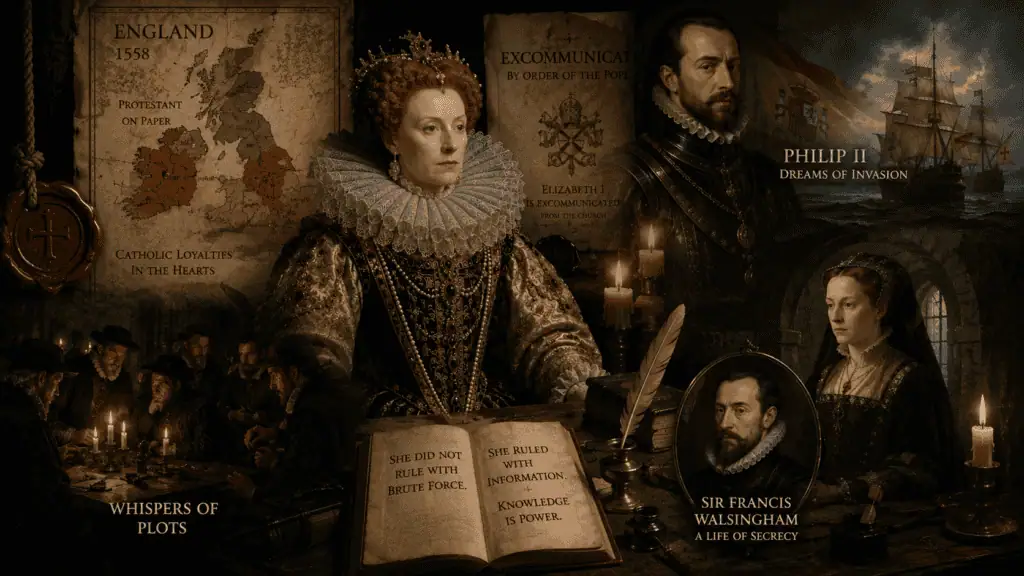
The threats facing Elizabeth were manifold. While her rule marked a high point in English cultural attainment, it was also a time rife with conspiracy and treachery, both domestic and foreign. The very foundations upon which Elizabeth built her kingdom were constantly under siege. The Papacy’s backing of Catholic plots, such as those by Mary, Queen of Scots, posed an existential threat to her Protestant rule. Crafting a tenable political strategy in such a volatile climate was no small feat, and Elizabeth’s success lay not only in her political acumen but also in her espionage tactics.
The era saw the rise of a sophisticated strategy of gathering intelligence that would inform royal policy and international relations. The figures that populated this world of shadows played a significant role in determining the course of events, leading one to ponder how a spy network could shape a nation’s destiny. The lessons learned during this tumultuous time resonate even today, highlighting the enduring significance of intelligence in governance.
As we delve into the formation and mechanics of Elizabeth’s spy network in the Tudor era, its role in diplomacy, and its broader impact on both domestic policies and future statecraft, we see a story richer than many might realise. This is not merely a tale of espionage; it is about survival, loyalty, and the very essence of power in an uncertain world

The Formation of the Spy Network
The foundations of Elizabeth’s spy network were laid in a world that thrived on subterfuge. Early in her reign, Elizabeth faced immediate plots against her life. With a plethora of threats looming, it became evident that England needed a reliable source of intelligence. Elizabeth’s awareness of her surroundings, both political and social, prompted the establishment of a network that combined state-sponsored spies and informants from various backgrounds.
Sir Francis Walsingham, Elizabeth’s principal secretary, emerged as a pivotal figure in the creation of this espionage system. Not only did he coordinate intelligence operations, but he also recognised the power of information in shaping political landscapes. Walsingham assembled a small army of spies and trusted informants who documented the activities of foreign powers and disloyal subjects alike. He demonstrated how the flow of information could wield more power than armies or fortresses.
By the time of Walsingham’s involvement, Elizabeth’s intelligence apparatus had started to take shape. This network was not merely a group of spies; it was a carefully structured system that involved risk, rewards, and penalties. Informants were compensated for their efforts, while betrayal could lead to severe consequences. Under Walsingham’s direction, the network developed into an efficient mechanism for gathering crucial data and disseminating it among trusted circles.
The information gathered was urgently needed, as England had to contend with numerous enemies both inside and outside its borders. The careful cultivation of assets and the establishment of a chain of communication became a hallmark of Walsingham’s approach. The interconnections formed within this network set a precedent for modern intelligence operations, laying the groundwork for what espionage would mean in governance.
Walsingham’s Role
Sir Francis Walsingham was not just Elizabeth’s chief advisor; he was the architect of her espionage strategy. Recognising that knowledge is power, he devoted himself to gathering intelligence on both foreign adversaries and domestic threats. By utilising methods that were unusual at the time, he drew from a range of sources, including diplomats, merchants, and sailors. His meticulous documentation of information would prove invaluable in safeguarding Elizabeth’s reign.
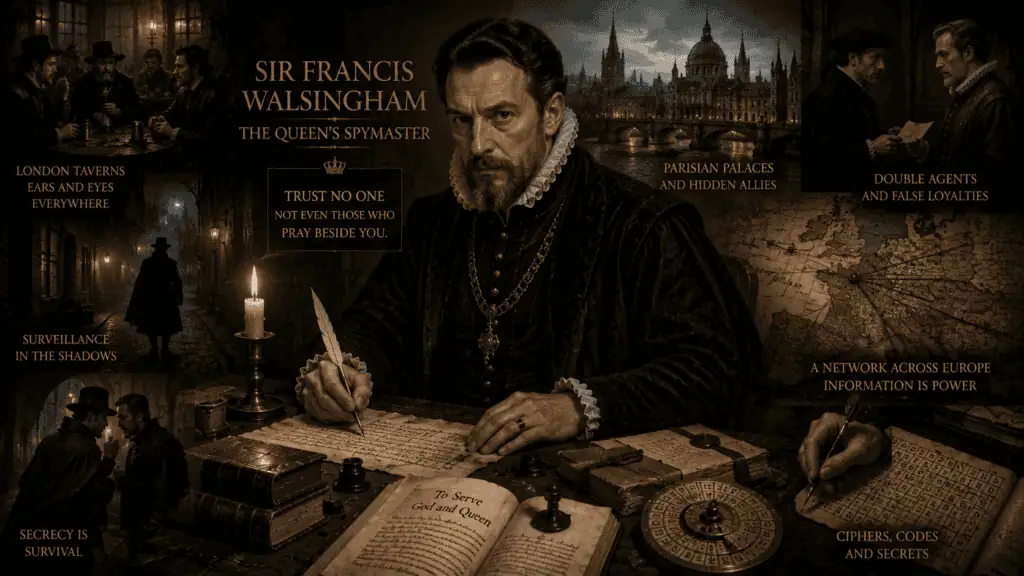
With a keen eye for talent, Walsingham employed a variety of spies, including actual agents who infiltrated foreign courts and common informants who conducted surveillance nearer to home. These agents were embedded in the very societies they were tasked with observing, which allowed them to gather nuanced intelligence. The degree to which Walsingham understood the dynamics of human behaviour gave him a significant edge in gathering accurate data.
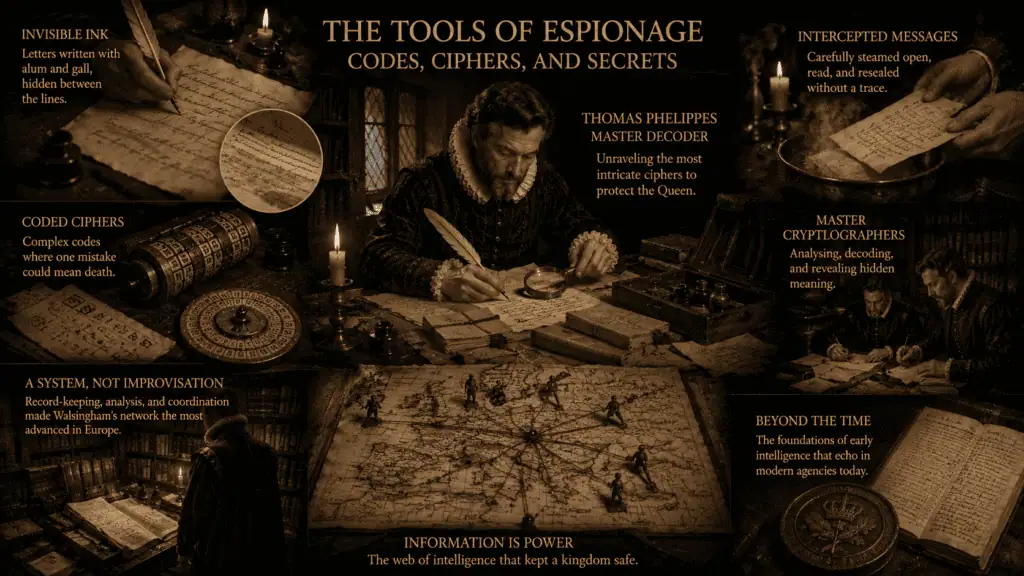
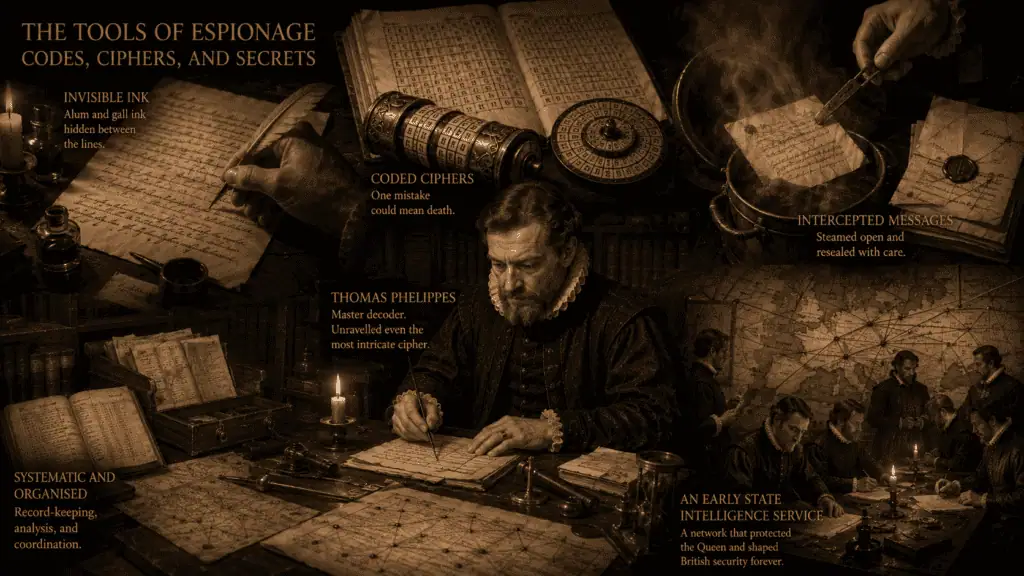
Walsingham also recognised the value of technology and communication in establishing a robust spy network. Channelling the power of coded messages, he developed sophisticated methods to convey sensitive information securely. This emphasis on encryption not only fortified the communication lines within the network but also prevented vital information from falling into the wrong hands.
Moreover, Walsingham’s strategies extended beyond mere surveillance; he was adept at transforming the information he gathered into actionable strategies. His counsel would shape military strategies and foreign policy, often influencing Elizabeth’s decisions directly. As a result of Walsingham’s foresight, Elizabeth maintained a firm grasp on the turbulent politics of her time, underscoring the critical role a well-organised spy network could play in governance.
Successes of the Network
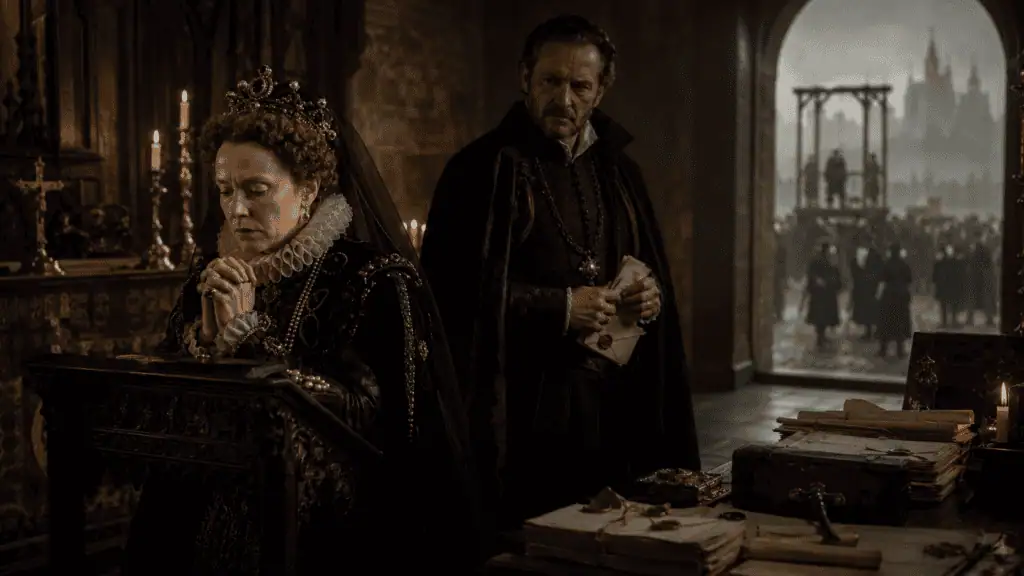
The success of Elizabeth’s spy network can be traced back to its ability to preempt threats and secure insights that would influence significant events. One of its most notable achievements was the discovery of the Babington Plot in 1586. This plot aimed to assassinate Elizabeth and place Mary, Queen of Scots, on the English throne. Walsingham’s spies had intercepted letters that detailed the scheme, allowing Elizabeth to take swift action against the conspirators. As a result, several key figures were executed, and Mary was imprisoned, thus neutralising a serious threat to Elizabeth’s rule.
The intelligence gathered also served to inform Elizabeth’s foreign policy. For instance, upon learning of Spain’s intentions to invade England, Walsingham provided timely alerts that allowed for military preparedness. The information gathered through espionage enabled Elizabeth to not only avert immediate dangers but also to craft diplomatic alliances that would benefit England in the long run.
Moreover, Walsingham’s network placed significant emphasis on psychological warfare. The dissemination of misinformation was a common tactic, designed to create discord among enemies and weaken their resolve. The ability to manipulate how events were perceived across enemy lines was a powerful tool that afforded Elizabeth an advantage in political manoeuvres.
The enduring success of the network relied on continuously adapting to new challenges. It became increasingly adept at recruiting informants, using new technologies, and reacting swiftly to emerging threats. Each success not only fortified Elizabeth’s reign but also laid the groundwork for an intelligence agenda that would outlive her and influence future leaders.
The Role of Espionage in Diplomacy
Espionage is more than just the collection of intelligence; it plays a foundational role in diplomacy. During Elizabeth’s reign, the turbulent waters of international politics required a deft hand to navigate. Espionage provided Elizabeth with the information needed to craft strategic alliances and inform her actions on the global stage. The ability to foresee potential threats or opportunities allowed her to maintain England’s sovereignty amid competing interests.
Intelligence gathering and analysis empowered Elizabeth to understand the appetites and ambitions of rival powers. Spain was arguably England’s most formidable enemy, and its ambitions to restore Catholicism and challenge Elizabeth’s rule required vigilant observation. Through a network of spies operating in Spanish territories and at their court, Elizabeth received insights into plans that could otherwise have been disastrous.
Walsingham’s foresight in establishing these connections cannot be overstated; he ensured that the network extended to key diplomatic circles in Europe. This expansive reach allowed England to stay updated on shifting alliances and emerging threats. In many cases, timely intelligence enabled Elizabeth to forge alliances with neutral powers, providing a buffer against more aggressive adversaries.
Furthermore, the intelligence gained often allowed for pre-emptive diplomatic measures. For instance, when Elizabeth learned about Spain’s intentions to monopolise trade routes, she took steps to counteract these moves diplomatically, employing both hard and soft power tactics. The deft intertwining of intelligence with diplomatic strategies became a hallmark of Elizabeth’s governance, reflecting a nuanced understanding of how diplomacy works.
Intelligence-Shaped Alliances
The establishment of pivotal alliances during Elizabeth’s reign was heavily influenced by actionable intelligence. In particular, Elizabeth’s relationship with Protestant states in Europe stemmed from an understanding of their mutual interests against Catholic monarchies. Spies operated in various European courts, gathering necessary information that helped strengthen these relationships.
Walsingham recognised the importance of forming alliances with foreigners who shared Elizabeth’s vision for England. By ensuring that support was solicited from the likes of the Dutch Protestants, Walsingham was able to create a counterbalance against Spanish aggression. The intelligence gathered on enemy movements allowed Elizabeth to extend her influence without direct military engagement, employing diplomacy as a strategic weapon.
Effective espionage also mitigated the dangers of unexpected betrayals. Information regarding the intricate political machinations at play among rival powers allowed Elizabeth to navigate these treacherous waters. Armed with knowledge, she could leverage support from allies more effectively while keeping potential adversaries at bay.
The alliances forged during this tumultuous time allowed Elizabeth to harness the collective strength of Protestant nations. The successful management of these relationships emanated from the clandestine information flowing through her spy network. Elizabeth’s astuteness in diplomacy, empowered by her intelligence apparatus, set the stage for her to reclaim influence in an era fraught with challenges.
Strategic Interventions
Espionage did not merely inform alliances; it was also instrumental in facilitating strategic interventions. The intelligence gathered by Walsingham’s network was often the tipping point that convinced Elizabeth to take decisive military action. Strategic interventions, driven by intelligence insights, were essential for securing England’s position in a rapidly changing world.
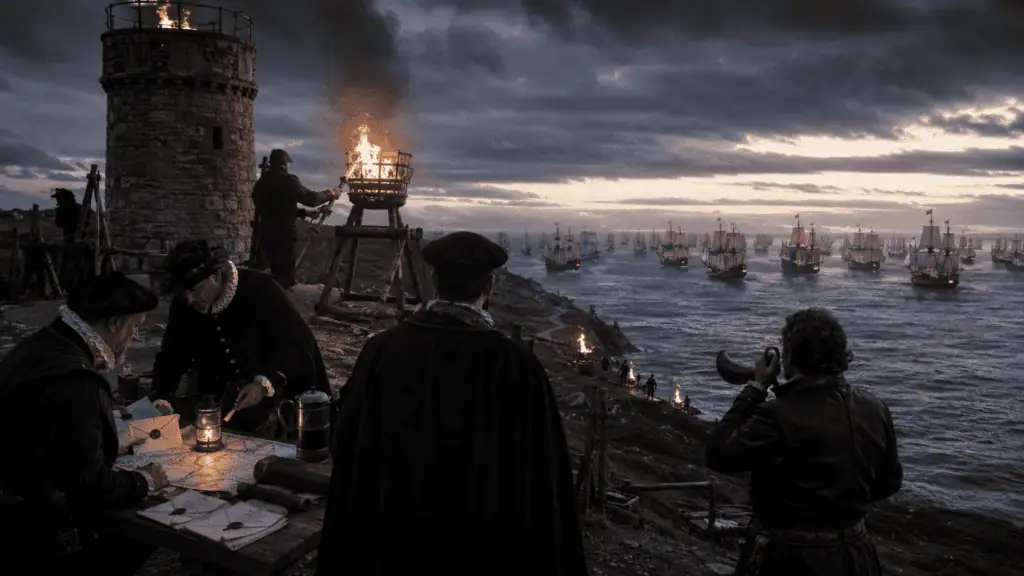
One noteworthy example occurred during the Anglo-Spanish conflicts. When reports indicated that Spain was planning an imminent invasion, Elizabeth had the information she needed to prepare a defensive strategy. The timely delivery of intelligence allowed the English navy to ready itself, ultimately culminating in the successful defeat of the Invincible Armada in 1588. Here, espionage transformed into a powerful asset for national defence.
Intelligence also paved the way for England’s expansion into new territories. Information about potential colonies in the Americas provided the impetus for establishing settlements that would enhance England’s global standing. By identifying areas ripe for colonisation, Elizabeth positioned England as a formidable player in international trade.
Moreover, the effectiveness of these interventions underscored the power of espionage in broader strategic thinking. Each military engagement was informed not only by troop movements but also by an understanding of enemy morale and intentions. The precision with which Elizabeth’s forces struck was often a result of well-timed intelligence reports from her spy network.
In an era marked by uncertainty and conflict, the seamless integration of espionage into military strategy contributed to Elizabeth’s success. Her ability to conduct interventions based on informed decision-making laid a framework that future leaders would not only admire but emulate.
Intelligence and the Spanish Armada
The Spanish Armada stands as one of the most significant military confrontations of Elizabeth’s reign. The failure of this vast armada to conquer England was not merely a result of naval prowess; it was also a testament to the effectiveness of Elizabeth’s intelligence operations. Intelligence played an instrumental role in dismantling this imposing threat and securing a lasting legacy for the queen.
The first step in the intelligence-led approach was the gathering of critical data regarding the Armada’s size, strength, and intended strategies. Walsingham’s spies operated across Europe but had agents directly embedded within the Spanish courts. These spies provided timely updates about sailing schedules, shipbuilding efforts, and troop deployments, essentially painting a real-time picture of Spain’s looming plans.
With this critical intelligence, Elizabeth’s advisors were able to devise a comprehensive defensive strategy. The insights allowed for preparations far in advance of the Armada’s arrival, including the bolstering of coastal defences, gathering naval manpower, and deploying ships effectively. Each of these measures was directly influenced by the information that flowed through the spy network.
Further, misinformation tactics also played a crucial role. A series of false reports were disseminated to create confusion among Spanish commanders about the readiness of the English navy. By manipulating how the Armada perceived its strategic advantages, Elizabeth could buy time to prepare and fortify her forces without facing immediate confrontation.
When the iconic encounter finally occurred in 1588, the groundwork laid by Elizabeth’s intelligence strategies bore fruit. The English navy, supported by accurate forecasts of wind and weather patterns, engaged the Spanish fleet with a newfound confidence that had been bolstered by previously gathered intelligence. The outcome was hastened by strategic decisions driven by the unyielding flow of information, marking a seminal moment in British history.
The Gathering of Critical Data
The importance of data collection during the Spanish Armada conflict cannot be overstated. Walsingham’s network of spies meticulously gathered key information about the Spanish fleet’s preparations, including ship designs and troop compositions. Each snippet of intelligence was like a piece in an intricate puzzle, helping commuters in Elizabeth’s court understand the magnitude of the threat they faced.
By utilising a range of methods, Walsingham ensured that intelligence reached the heart of decision-making circles. Spies and informants were vital in transporting information across borders. They often employed disguises and travelled clandestinely to deliver messages that could change the course of events. This coordinated approach underscored the importance of having eyes and ears across enemy territory.
Moreover, the information not only provided a timeline for the anticipated invasion but also offered insights into the Spanish command structure. Knowing the weaknesses and strengths of the adversary allowed Elizabeth to adjust her military strategies accordingly. These adjustments would not only be about numbers but would also consider morale, ship readiness, and naval tactics.
This focus on gathering critical data laid the groundwork for Elizabeth’s eventual triumph. The spies became an extension of her military, working not just for her but for England itself. Without the comprehensive understanding of enemy capabilities offered by this intelligence, the outcome could have been vastly different. The techniques and strategies developed during this period were unparalleled, setting standard practices for intelligence operations in the centuries to follow.
Misinformation Tactics
The Spanish Armada conflict also highlighted the significance of misinformation in warfare. Walsingham understood that managing perceptions was as essential as the collection of hard data. A strategic misinformation campaign was orchestrated to create an unhindered narrative that would confuse and mislead the Spaniards.
One notable tactic involved feeding false information about English naval strength to Spanish intelligence. As the Spaniards gathered reports suggesting that Elizabeth’s fleet was far larger than it actually was, their commanders hesitated to launch a full invasion. This psychological warfare created a paralyzing doubt among Spanish leaders, which allowed Elizabeth to manoeuvre her forces more freely.
The use of misinformation extended to the portrayal of the English public’s sentiment towards the impending invasion. Propaganda was employed to manipulate the perceptions of both the Spanish court and the English populace. By suggesting widespread support for military action against the invaders, Elizabeth reinforced the resolve of her own people while dispelling any notions of panic.
Walsingham also made use of coded messages to further obscure the true intentions of the English. By conveying mixed signals, he was able to mislead Spanish commanders about England’s military readiness and strategies. This layered approach to deception betrayed an astute understanding of both warfare and intelligence, demonstrating that vital information was not merely about the truth but also the narratives that enveloped it.
The success of Elizabeth’s misinformation tactics against the Spanish Armada transformed not just the immediate military landscape but also redefined how nations would engage in warfaregoing forward. It was a savvy implementation of psychological tactics intertwined with physical military strategies, illustrating that control of the narrative can often be just as potent as direct action.
The Domestic Impact of Espionage
While much focus has been directed towards Elizabeth’s foreign policy and military alliances, the impact of espionage on domestic affairs was equally profound. The spy network that Walsingham orchestrated served not just to watch over foreign threats, but to keep a tight grip on dissent and opposition within England. The very fabric of Elizabethan society was intricately woven with the threads of surveillance, influencing political stability during her reign.
Surveillance played a pivotal role in controlling dissent. Figures within her court and the general populace were ever-watchful, aware that any sign of disloyalty could be reported and scrutinised. Walsingham’s spies were not only operating in the shadows of foreign lands; they also infiltrated the homes and lives of potential dissidents. The intelligence haul from these domestic operations helped Elizabeth quell potential uprisings and curb plots against her rule.
The consequences of espionage on governance were profound. Information gathered about individuals who expressed dissatisfaction or sympathy for Catholicism allowed the crown to act swiftly before any plots could take root. The imprisonment of figures like Mary, Queen of Scots, is a quintessential example of how espionage informed decisions ranging from incarceration to execution, emphasising that the stakes were not merely political but often life or death.
This atmosphere of surveillance fostered a complex relationship between leaders and subjects. While some viewed the network as a protective mechanism ensuring stability, others saw it as an invasive and oppressive presence in their daily lives. The balance between safety and fear reflected a broader theme in governance, where citizens were coerced into loyalty by the spectre of reprisal from a vigilant state.
The domestic impact of espionage during Elizabeth’s reign also ushered in an era of increased state control. The techniques employed for surveillance and intelligence gathering would go on to define methods used by future regimes. The reliance on spies and informants became a template for governing that extended well beyond Elizabeth’s time.
Surveillance and Control of Dissent
The methods employed for surveillance during Elizabeth’s reign were multifaceted and sophisticated. Walsingham and his network utilised a variety of mechanisms to gather information on suspected dissidents and conspirators. Letters, intercepted communications, and even eavesdropping in taverns provided insights into attitudes against the crown. This constant vigilance offered Elizabeth a clear picture of discontent brewing beneath the surface.
Fear was a powerful motivator, and the knowledge that one could be watched at any moment helped suppress dissent. Potential traitors lived in a state of paranoia, which worked to Elizabeth’s advantage. The perception that multiple eyes were scrutinizing every action served to deter rebellious sentiments and reinforce loyalty to the monarchy.
Walsingham’s spies were also deployed to gather information from the ranks of political opponents. By monitoring conversations and analysing networks of connections, they could preemptively disrupt plots before they gained momentum. This form of preventive governance helped maintain stability in an age when a single miscalculation could accelerate into a full-blown crisis.
The meticulous gathering of information on domestic affairs illustrated the breadth of the spy network’s reach. This approach would soon establish a level of state control through intelligence gathering that became a norm in governance. Elizabeth’s reign thus set a precedent for future regimes, embedding surveillance as an essential strategy for maintaining political authority.
Deterrence and Loyalty
The role of espionage in enforcing loyalty during Elizabeth’s reign cannot be overstated. The atmosphere of surveillance created a sense of insecurity that discouraged discontentment. Those who might have opposed Elizabeth’s rule were often deterred by the swift punishment meted out to traitors. The executions and imprisonments of high-profile dissenters served as public reminders of the consequences of disloyalty.
Moreover, the information gathered allowed Elizabeth to reward loyalty effectively. Those whom her spies reported as being supportive of her rule were often favoured with land, titles, or positions within her court. This system of reward and punishment solidified a network of individuals who were motivated to protect the interests of the queen and her government. The delicate balance of fear and favour helped foster an environment in which loyalty could flourish.
This intricate system of loyalty also extended into quieter realms of society. Ordinary citizens learned to align themselves with the crown out of concern for their safety, understanding that expressing dissent would not only put their welfare at risk but could also threaten the well-being of their families. In a society rife with uncertainty, susceptibility to state narratives became a key factor in maintaining public order.
Elizabeth’s strategic use of espionage ultimately crafted an effective programme of deterrence, ensuring her reign was marked by relative stability despite external pressures. The sophisticated intelligence network not only served to monitor enemies abroad but also transformed how governance operated within England. Future leaders would look to this model, merging surveillance and loyalty as cornerstones of statecraft.
The Rise of the Secret Service
The legacy of Elizabeth’s espionage practices would ripple through the corridors of time, giving birth to what we now recognise as the modern Secret Service. The challenges of Elizabeth’s reign gave rise to innovative methods of intelligence gathering, which would evolve into ways of operating that remain influential even today.
The expansion and formalisation of espionage techniques during Elizabeth’s reign established a precedent for future intelligence organisations. The intertwining of information gathering, analysis, and covert operations became standard practice, allowing subsequent regimes to adopt these strategies as they navigated their own political landscapes.
The rise of the Secret Service was inextricably linked to the lessons learned during Elizabeth’s rule. The effectiveness of Walsingham’s techniques left an indelible mark on future generations of spies and intelligence officers, who took cues from his methodologies. Operating in secrecy, they would utilise various means—ranging from human intelligence networks to modern technology—ensuring that intelligence services became indispensable for any government.
Moreover, the notion of a state-sponsored protection force rooted in intelligence gathering derived from the success of Elizabeth’s spy network. As nations faced emerging threats, the imperative for states to adopt espionage capabilities became undeniable. The complexity and global nature of modern threats would eventually see intelligence operations evolve into sophisticated agencies designed for rapid response and adaptive strategies.
As nations grappled with shifts in power dynamics, the first rudiments of a cohesive intelligence community began to crystallise. The cultural ethos surrounding intelligence operations carried complexities that influenced how states viewed both their enemies and allies. This evolving understanding of espionage would lay the groundwork for statecraft in the centuries to come.
Evolution of Espionage Methods
The evolution of espionage techniques during Elizabeth’s reign set the stage for a transformation in how intelligence work would be conducted in the future. Walsingham’s innovative methods—such as the incorporation of coded messages and the use of double agents—inspired later practices that would shape military and governmental operations across the globe.
Advancements in communication technology also played a role in reshaping espionage. The growing use of postal systems enabled faster and more reliable communication, making it easier to disseminate intelligence throughout Elizabeth’s court and to military commanders. This marked a significant evolution from traditional, slower means of communication, ultimately leading to the modernisation of intelligence operations.
Moreover, the establishment of secure lines for transmitting information illustrated a proactive approach to espionage. The development of encryption techniques became an essential strategy for safeguarding secrets, allowing for the subtle transmission of sensitive information without risk of interception. These advancements bore fruit not only in Elizabeth’s time but also in the centuries that followed, with encryption continuing to play a crucial role in intelligence work today.
The reliance on spies and informants also laid the groundwork for what we now recognise as agent recruitment. The ethos of nurturing relationships with sources, understanding their motivations, and managing their information and safety would come to define intelligence operations. As information became increasingly valuable, the necessity for a well-organised network of human intelligence would become clear for governments worldwide.
This evolution represented a fundamental shift in the practice of statecraft. As empires expanded and international relations grew more complex, the lessons learned during Elizabeth’s reign about the value of intelligence would resonate across generations and across borders, embedding espionage deeply into the fabric of governance.
Future Implications
The implications of Elizabeth’s espionage strategies extend far beyond the Elizabethan Era. The successes and failures of her spy network would influence how future powers understood intelligence’s role in governance and diplomacy. As the world became more interconnected and competition for resources and influence intensified, the need for robust intelligence services became paramount.
In contemporary governance, the principles that governed Elizabeth’s spy network remain relevant. The blend of intelligence gathering, information analysis, and strategic intervention continues to serve as a framework for understanding modern statecraft. National security agencies worldwide owe their existence, in part, to the foundational ideas that emerged during Elizabeth’s reign.
Moreover, the infrastructure established for espionage paved the way for the intricate web of international intelligence-sharing alliances that we see today. Countries have realised that cooperation in intelligence matters enhances security and promotes stability in an increasingly unpredictable world.
The evolving landscape of global politics, where information can sway public opinions and influence geopolitical decisions, underscores that intelligence will continue to play a central role in governance. Elizabeth’s intricate web of espionage became a template for future intelligence operations, illustrating that the delicate balance of power hinges heavily on who holds the information and how it is employed.
The Legacy of Elizabeth’s Spy Network
The legacy of Elizabeth I’s spy network is profound and multifaceted. It laid the groundwork for modern intelligence operations, redefining the very essence of governance and statecraft. The lessons learned during this crucial period serve as a reminder of the complexities of power dynamics and the significance of information.
Through the establishment of sophisticated intelligence methods, Elizabeth’s reign set a standard for how future regimes would approach threats. The emphasis on gathering, analysing, and acting upon intelligence became central to state governance, influencing leaders and policymakers for generations.
The impact of Elizabeth’s spy network is pervasive, influencing everything from military strategy to domestic policy. The methods employed during her reign have become embedded into the principles of modern governance. The way states understand and employ espionage today is a direct reflection of the pioneering strategies employed by Elizabeth and her advisors.
As we reflect on the significance of intelligence studies, we realise that the shadows of Elizabeth’s spies continue to cast a long shadow. The intersections of strategy, loyalty, and secrecy, originally navigated through Elizabeth’s spy network, remain as relevant today as in her time.
Redefining Intelligence Gathering
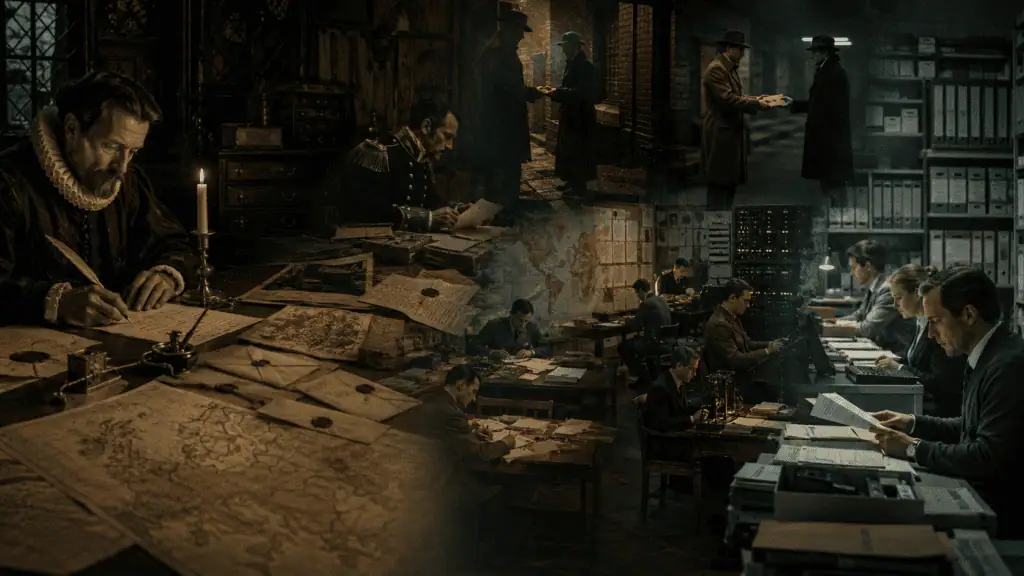
The experience of Elizabeth’s reign ultimately contributed to a redefinition of what intelligence gathering meant for governing powers. The intricate spy network demonstrated the importance of understanding both the overt and covert aspects of state interactions. By placing emphasis on information as a pivotal asset, Elizabeth’s advisors reshaped the landscape of governance.
The approach that Walsingham devised underscored that intelligence is no longer merely a tactical asset but a strategic necessity. States realised that the protection of sovereignty depended not just on military might but also on the capacity to observe and interpret unfolding events. This understanding ushered in a new age of intelligence wherein various methods were employed to gather information, establish networks, and engage with both allies and adversaries.
Furthermore, the intense scrutiny of domestic and international affairs fortified state authority while empowering leaders to act decisively. The institutionalisation of espionage not only transformed how intelligence was perceived but also how it fundamentally altered the relationship between the ruler and the ruled.
The legacy of this paradigm shift extends beyond No. 10 Downing Street and the White House. Nations globally adopted principles honed during Elizabeth’s time, recognising intelligence as a crucial factor in preserving national interests, cultural identity, and political stability.

Influence on Modern Governance
Elizabeth’s spy network holds significant implications for modern governance beyond the realm of intelligence. The intricate balance of power, surveillance, and loyalty serves as a foundational pillar upon which governments operate today. Espionage is now recognised as a tool that shapes national policy, influences public opinion, and fortifies international relations.
In contemporary contexts, good governance is often defined by a government’s ability to gather insights and respond proactively to emerging threats. The principles established during Elizabeth’s reign laid the groundwork for the advanced intelligence communities we see today, influencing not only defence policies but also educational and social initiatives aimed at fostering security.
Additionally, the very ethics of intelligence gathering have transcended centuries. The debates surrounding privacy, surveillance, and state control are direct echoes of the choices made during Elizabeth I’s reign. The mechanisms that were originally designed to control dissent and manage threats have evolved into complex dilemmas for contemporary governance structures, forcing leaders to navigate the balance between security and civil liberties.
As nations consider issues of diplomacy and international relations, they continue to draw from Elizabeth’s legacy. Espionage as a concept has reshaped political interactions, and the lessons of the past inform today’s strategies. The interplay between trust, intelligence, and authority remains as critical to modern governance as it was under Elizabeth I, solidifying her spy network’s lasting impact on the way nations function today.
Conclusion: Why This Matters Today
The enduring relevance of Elizabeth I’s spy network is a profound reflection of how intelligence shapes governance. Understanding the intricacies of espionage provides insightful lessons about the nature of power and authority. In a world that continues to face complex challenges, the foundations laid during Elizabeth’s reign resonate with modern leaders grappling with uncertainty and the relentless pursuit of national security.
The intricate web of intelligence that emerged under Elizabeth served not only as a means of survival but also as a catalyst for change in how states engage with each other and how they manage domestic affairs. The blend of surveillance, loyalty, and strategic decision-making set a template that remains essential for contemporary governance.
As we navigate the complexities of our own time, the lessons from Elizabeth’s world remind us of the importance of information, strategy, and adaptive responses. In a landscape where espionage continues to unfold, the legacy of Elizabeth I’s spy network serves as both a historical marker and a guiding principle for how we understand and engage with power dynamics today. Thus, delving into the intricacies of her espionage practices offers a rich tapestry that enriches our comprehension of history and its ramifications in the modern age.