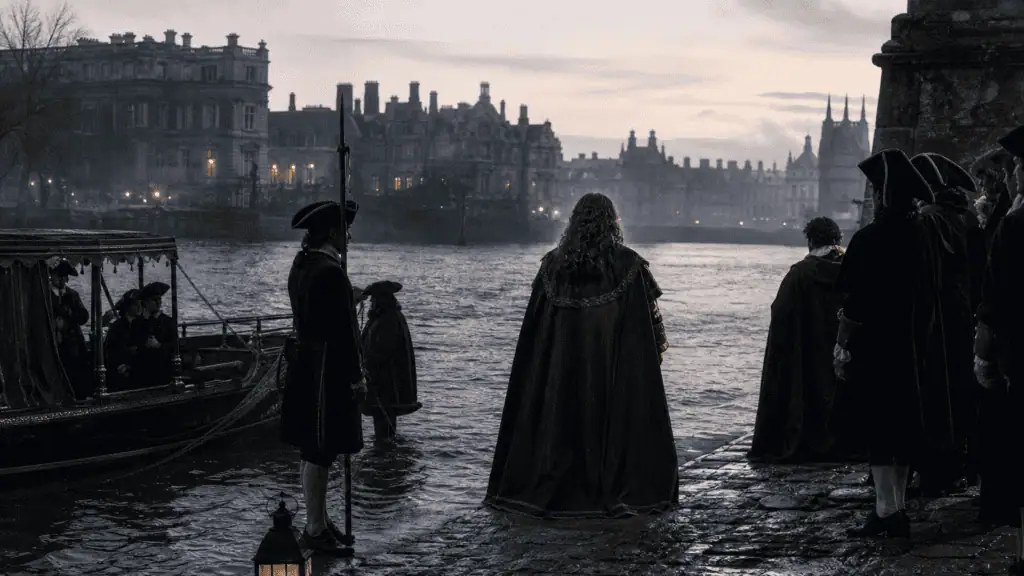

The Glorious Revolution and the New Meaning of Royal Power. It is easy to treat the Glorious Revolution as a tidy moment in British history, a bloodless swap of monarchs, a constitutional adjustment, a chapter that can be filed neatly between the reigns of James II and William and Mary. That would be a mistake. In Stuart England, between 1688 and 1689, the crisis went far deeper than a question of who wore the crown. It forced contemporaries to confront a more unsettling issue: where did authority actually come from, and who had the right to decide when a king had overstepped it?
That question mattered because James II did not simply inherit a throne. He inherited a political world shaped by the memory of civil war, by suspicion of Catholicism, by long struggles over Parliament, and by arguments about whether monarchy was absolute or conditional. When he tried to rule as though royal will could overrule law, institutions, and custom, he revealed the fragility of the old settlement. His opponents were not all united, nor were they all driven by the same fears, but they shared one conviction that changed British politics permanently. A king could be resisted. A throne could be declared vacant. Parliament could speak with authority about the limits of monarchy.
That is why this event mattered more than people often realise. The revolution of 1688 and 1689 was not merely a constitutional tidy up after a difficult reign. It altered the political imagination of Britain. It helped turn obedience into a matter of law rather than unquestioning deference to a sacred person. It strengthened Parliament, tied government more closely to finance and credit, and laid down a principle that rulers remained bound by an order larger than themselves.
Yet the story is not simple triumph. The settlement was made by elites, not by a modern electorate. It brought exclusion as well as restraint. And outside England, especially in Ireland, it meant war, dispossession, and bitter memory.
If we want to understand the Glorious Revolution properly, we must see both its drama and its consequences. We must follow James to the river, William across the Channel, Parliament into debate, and the British state into a new constitutional age. Only then does the scale of the change become clear.
The River at Night and a King in Flight
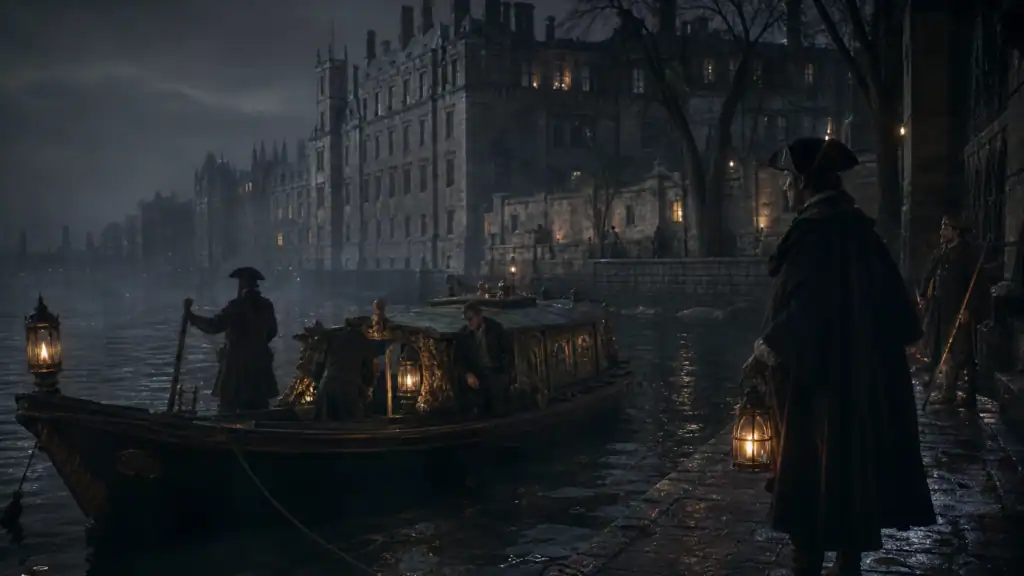
When James II tried to leave Whitehall in December 1688, the symbolism was devastating. The Thames lay dark before dawn, and with it seemed to dissolve the old confidence that kings stood above political uncertainty. A monarch moving by stealth, seeking escape rather than command, was a startling image in a world that still associated kingship with dignity, visibility, and authority. His brief flight, and his return after being recognised and brought back, captured the humiliation at the heart of the crisis. James could no longer assume that his presence alone guaranteed obedience.
This moment mattered because Whitehall was not merely a residence. It was the centre of the Stuart state, the place from which orders radiated outward to councillors, officers, and officials. When the king vanished from it, London entered a state of political suspension. Courtiers whispered, servants carried candles, and the city waited without knowing who really governed. A monarch who could not command the capital had already lost something essential, even if he still wore the crown.
The significance of this scene lies in what it revealed about legitimacy. Power was no longer being measured only by title or inheritance. It was being measured by whether men believed the king could still act effectively, lawfully, and with support. That was a profound change in political thought. If a king could be absent in substance while remaining nominally present in office, then monarchy itself had become conditional in a way that older theories of divine right disliked.
This is why the river scene is more than dramatic opening material. It is the visible sign of a deeper collapse. James had not yet been formally removed, but the confidence needed to sustain his rule was already breaking apart. Noblemen were changing sides. Churches were divided. Dutch forces had entered the kingdom. Ordinary people did not yet know whether they were witnessing rescue or invasion, but they could see that the old certainty had gone. The Glorious Revolution began not with a declaration, but with a failure of authority that everyone in London could feel.
James II’s failed escape from Whitehall
James’s attempted escape exposed the weakness of his position better than any parliamentary debate could have done. A king who has to flee his own capital is not simply unlucky. He has become politically vulnerable in a way that invites interpretation by his enemies. In Stuart England, where monarchy still carried the weight of sacred tradition, that was a serious collapse. The failed escape suggested that James’s body could move away from Whitehall, but his authority could not. It had already detached itself from him.
The episode also shows why the event mattered far beyond the immediate drama. If a king can be intercepted on the river and returned by common men, then royal status no longer guarantees immunity from public action. The psychological effect was enormous. It suggested that political order depended on consent, practical support, and the willingness of institutions to continue recognising the crown. Without those, monarchy became fragile.
James II and the Crisis of Obedience
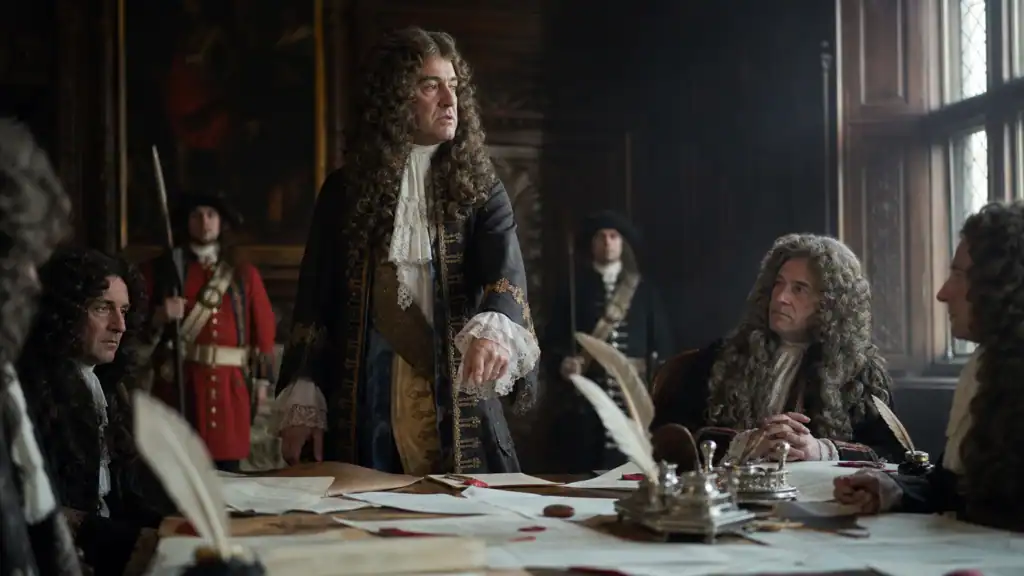
To understand why the kingdom reached this point, we must begin with James himself. He became king in 1685 after the death of Charles II, and unlike many rulers who drift into power, he knew exactly what he believed monarchy required. He thought obedience should be disciplined, predictable, and complete. He also believed that the king should not be trapped by parliamentary obstruction. In that sense, he was a ruler of conviction, not of hesitation.
His problem was that he was openly Catholic in a political nation dominated by Protestants. That fact alone would not necessarily have doomed him. Many of his subjects were prepared to tolerate a Catholic king if he preserved order. The memory of civil war still haunted the kingdom, and a stable succession seemed preferable to renewed turmoil. What changed matters was the way James used power. He enlarged the standing army, appointed Catholics to positions that the law and political custom had long denied them, and claimed the right to suspend laws by royal authority. These moves alarmed not just his enemies, but many who had initially accepted him.
The central issue was not simply religion. That is the trap that can flatten the whole crisis into sectarian complaint. Religion mattered because it revealed the constitutional question beneath it. Could the king place himself above law when he judged it necessary? Could he dispense with statutes, ignore parliamentary limits, and govern through personal will? James answered yes. His opponents answered no. That disagreement struck at the heart of the Stuart political order.
The tension became sharper because James did not present himself as an experimenter. He saw his policies as proper exercises of sovereignty. He believed that monarchy had to be active, authoritative, and unyielding. But in doing so, he turned inherited fear into political resistance. Supporters began to wonder whether obedience to the king might require disobedience to the constitution. That is a dangerous place for any ruler to stand.
This was why the crisis could not be contained by compromise. James did not merely appear harsh. He appeared to be redefining the relationship between crown and law. Once that happened, opposition could justify itself in institutional terms, not only in confessional ones. The conflict was no longer about whether Catholics should be tolerated, though that remained part of it. It was about whether executive power had limits at all.
Royal authority tested by policy
James’s policies did not collapse because they were isolated errors. They formed a pattern that convinced observers he was trying to govern without sufficient regard for Parliament. The standing army suggested coercion. Catholic appointments suggested disregard for existing rules. Suspensions of law suggested that the king believed legality could be postponed whenever it proved inconvenient. Each step intensified suspicion. Together they created the impression that James wanted not reform, but domination.
The Opposition Forms a Secret Plan
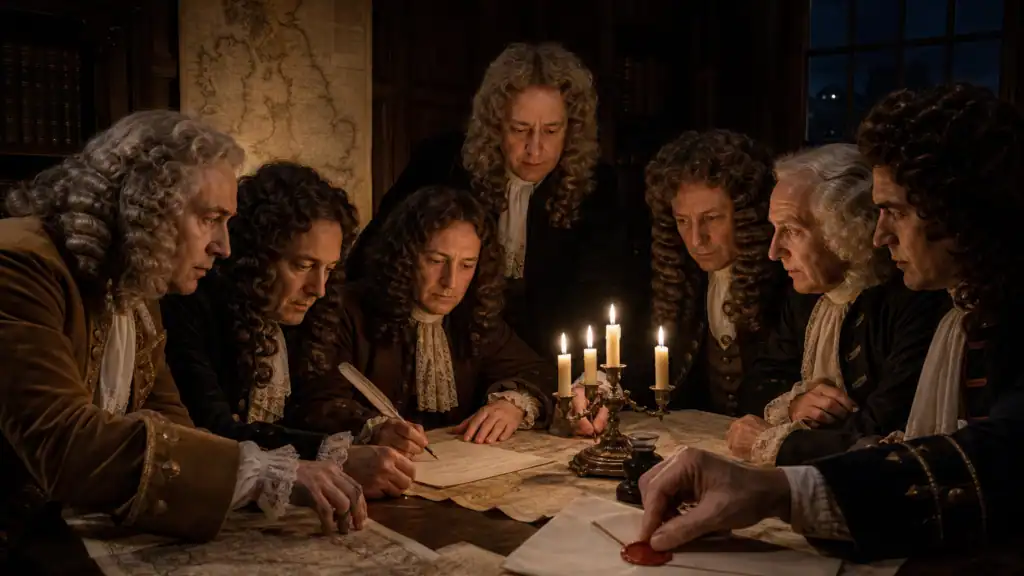
By June 1688, opposition had become organised, though not yet unified. Seven English politicians sent a secret invitation to William of Orange, the Dutch ruler and husband of James’s Protestant daughter, Mary. The letter was an extraordinary act of political risk. Treason was not an abstract possibility. If James regained control, the signatories could face ruin or death. Yet they judged the danger of inaction greater than the danger of intervention.
What makes this episode so important is the mixture of fear, calculation, and principle behind it. Some of the men involved feared Catholic government. Some feared arbitrary power. Some wanted Parliament’s authority preserved. Some wanted a new settlement entirely. They were not a neat ideological party. They were a coalition bound together by the belief that the current system could not safely correct itself from within. That is one reason the Glorious Revolution is so revealing. It was not a popular uprising in the modern sense. It was a political intervention by elites who believed the constitutional order was breaking under pressure.
Then came the birth of James’s son on 10 June 1688. This altered everything. Before the birth, many opponents assumed the crown would pass to Mary after James’s death. That at least offered a familiar and Protestant future. The arrival of a male heir meant that Catholic rule might continue for a generation. It created urgency where uncertainty had already existed. Rumours circulated that the child was not really the queen’s son, but those rumours were political weapons rather than reliable evidence. What mattered historically was that succession, once seemingly straightforward, had become a live constitutional problem.
The invitation to William was therefore not an isolated conspiracy. It was the moment when opposition moved from complaint to action because the future no longer looked self correcting. The men who wrote that letter were effectively asking a foreign prince to intervene because they no longer trusted the kingdom to resolve the crisis by ordinary means. That tells us how severe the breach had become.
The invitation to William of Orange
William was not chosen at random. He was Protestant, militarily capable, and linked by marriage to the Stuart dynasty. Those features made him acceptable to men who wanted change without revolution in the deepest sense. Yet even then, the invitation remained a gamble. If he failed, those who called him could be destroyed. If he succeeded, he would enter England not as a private claimant but as a political solution to a constitutional emergency.
The birth of the young prince changes everything
The birth of James’s son transformed the succession from a temporary concern into a structural one. Until then, many believed they could wait the crisis out. After June 1688, waiting meant accepting the possibility of a Catholic dynasty. That was more than a religious issue. It threatened to make James’s style of rule permanent. The crisis therefore became about the future shape of the kingdom, not just the fate of one ruler.

William Lands and the Royal Collapse
William landed at Torbay on 5 November 1688 with a substantial Dutch and allied force. The date itself carried symbolic weight, falling on the anniversary of the Gunpowder Plot discovery. That was politically useful. William could present himself not as a conqueror seeking a throne, but as a defender of Protestantism, law, and the safety of the realm. In political terms, presentation mattered almost as much as force.
His army moved east, and James gathered troops at Salisbury. But the campaign rapidly exposed the emptiness of royal confidence. Men who had sworn loyalty began to hesitate. Officers defected. Noblemen declared for William. The most striking defection came from Princess Anne, James’s younger daughter, whose move to the opposition signalled that dynastic loyalty had fractured at the highest level. If even the king’s own family could not be relied upon, the crisis had entered terminal territory.
This was not because William simply won a battle and James lost one. In fact, the revolution is often misunderstood when reduced to military narrative. There were armed confrontations, arrests, fears of disorder, and the genuine possibility of civil war. But the crucial shift came before any decisive clash. Authority drained away from James because the political nation stopped believing that he could command obedience effectively. Armies do not remain loyal merely because orders are issued. They remain loyal when those orders seem legitimate, sustainable, and backed by a viable political future.
James’s return to London did not restore confidence. He tried again to govern, but the situation had changed too far. In December, he fled once more. William allowed him to escape, and that choice was astute. A captured or killed king might become a martyr to resistance. An absent king could be treated as having abandoned his responsibilities. The revolution was therefore completed not only by William’s arrival, but by James’s disappearance.
Here again, the meaning is larger than the event itself. The old assumption that kingship was unbreakable had been shattered. Legitimacy now depended on more than inheritance. It depended on whether the political nation accepted the ruler as capable, lawful, and fit to govern. That idea would shape the next century of British politics.
Defections and disintegration
The collapse of James’s support showed that political authority is relational. It exists only so long as key actors continue to recognise it. Once officers, nobles, and members of the royal household began to defect, the state itself became unstable. The flight of Anne was especially important because it demonstrated that the crisis had entered the royal family. That made the collapse harder to reverse.
Parliament, Vacancy, and the Question of Who Chooses a King
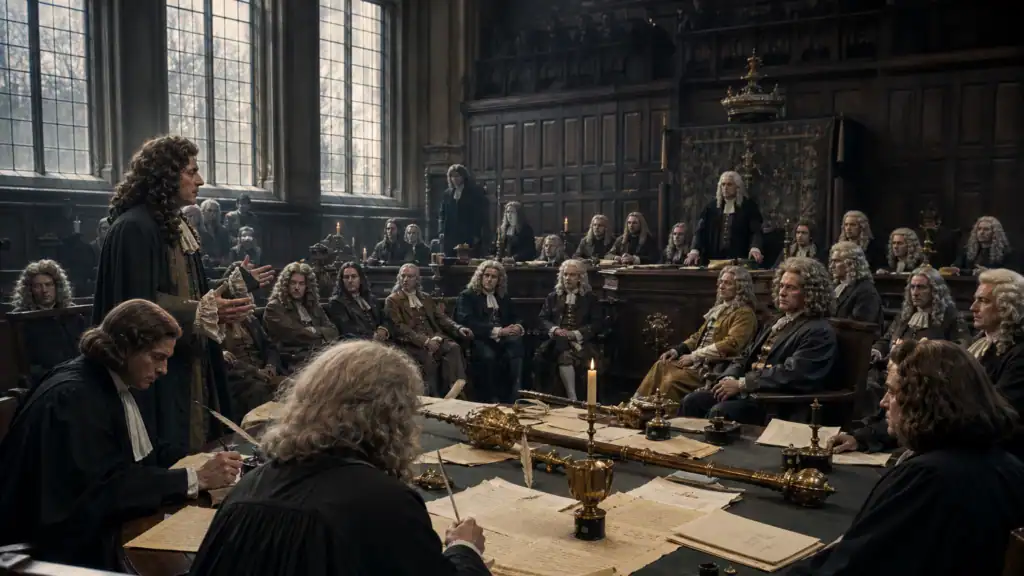
Once James had gone, Britain faced a constitutional puzzle unlike anything in recent memory. If the throne was hereditary, then James remained king regardless of his behaviour. If he had abdicated, who had the authority to say so? And if Parliament could declare the throne vacant, did that mean Parliament stood above the crown? These were not abstract legal games. They were the central questions of government.
A specially assembled Convention Parliament addressed them in early 1689. The wording they chose was crucial. The Commons argued that James had attempted to subvert the constitution and had withdrawn from the kingdom. The Lords were more cautious about declaring outright abdication, but they eventually accepted the practical truth that the throne was vacant. William and Mary were then offered the crown jointly. That settlement was significant not because it was democratic in the modern sense, but because it converted a dynastic crisis into a matter of public law.
This distinction matters enormously. The electorate was narrow. Women were excluded from political power. Most subjects had no direct voice in choosing the monarch. Nevertheless, the settlement established that the succession could be interpreted and settled through parliamentary action. That was a major constitutional innovation. It did not destroy monarchy. It redefined it.
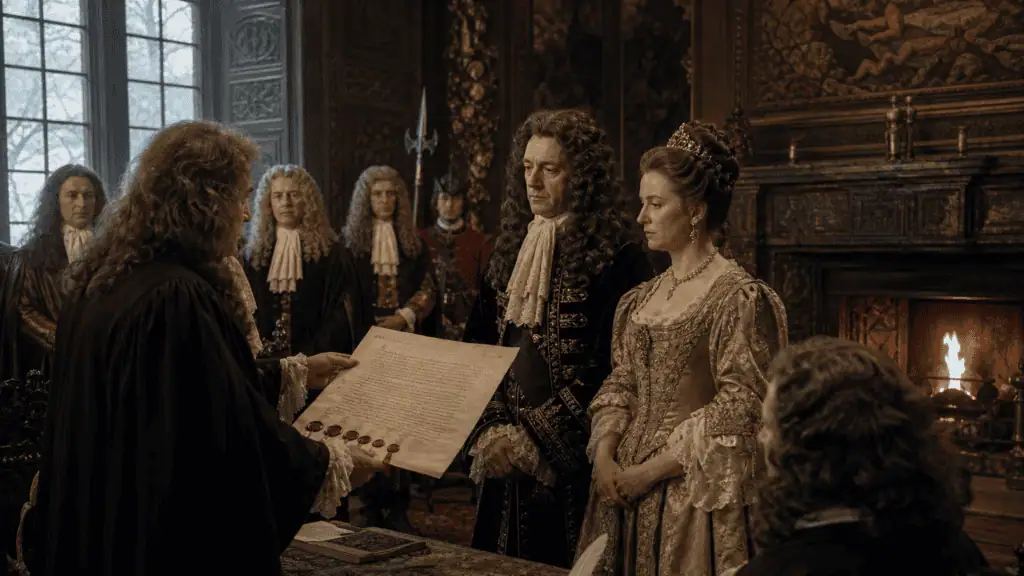
The Declaration of Rights, later enacted as the Bill of Rights in December 1689, made the new order explicit. It condemned the suspension of laws without parliamentary consent, taxation without parliamentary approval, the maintenance of a standing army in peacetime without agreement, and interference with parliamentary debate. It also required regular parliaments. In short, it turned the crisis into principle.
This is one reason the Glorious Revolution matters so much more than a simple change of monarchs. It created a language for lawful resistance and constitutional government. A king could no longer treat Parliament as a nuisance to be bypassed whenever convenient. Nor could a future critic claim only that he disliked the monarch. He could argue that the monarch, or his ministers, had violated the settlement itself.
The Declaration of Rights and the Bill of Rights
The Bill of Rights did not establish equality, democracy, or tolerance in any broad modern sense. But it did fix important limits. Royal will was no longer enough. Law required consent. Taxation required parliamentary authority. Government had to work through institutions. For Stuart England, that was a profound shift in the balance of power.
A New Kind of Monarchy
After 1689, the crown remained important. William and Mary were not figureheads. The monarch still influenced ministers, foreign policy, patronage, and the conduct of war. But the key change was that these powers now existed within a constitutional settlement. The king could not simply suspend law because he found it awkward. He had to work through Parliament and accept that authority was shared, negotiated, and limited.
This mattered because it changed the moral and political vocabulary of resistance. Before 1688, resisting a monarch could be framed as rebellion against the person anointed by God. After 1689, resistance could be argued as defence of lawful government against a ruler who had broken the settlement. That shift did not make politics peaceful. It made them more contestable. It gave future generations a precedent for challenging executive overreach without abandoning monarchy altogether.
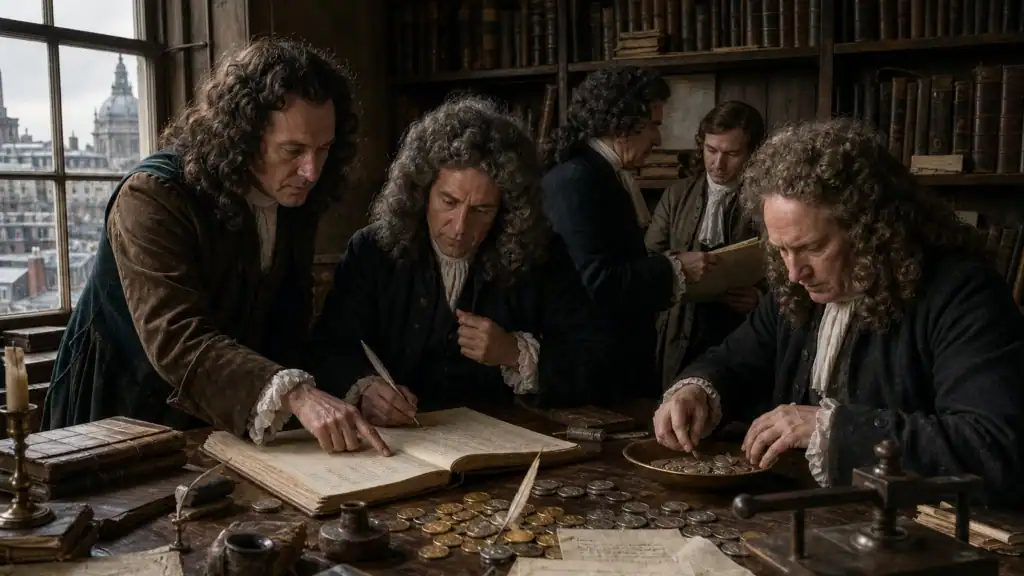
The revolution also had practical consequences in finance and war. England needed money to fight France and defend the new regime. That meant regular taxation, dependable credit, and institutional trust. Parliament became more closely tied to public finance. The foundation of the Bank of England in 1694 was not an accidental side note. It was part of a broader transformation in which the state became better able to borrow, spend, and sustain military power. The settlement after 1688 helped build a stronger fiscal state.
That did not make Britain democratic. It made it more administratively capable. It also strengthened the machinery that would support global conflict and imperial expansion. The same constitutional order that restrained the crown also enabled the state to mobilise resources on a larger scale than before. That is one of the most important reasons the Glorious Revolution deserves attention. It was not just about rights. It was about capacity.
If you are looking for the longer story of the history of parliament in Britain, this is one of its decisive turning points. Parliament was no longer a body summoned at royal convenience alone. It became central to the management of money, law, and military power. That change would echo across later centuries.
Finance, war, and the strengthening of Parliament
The revolution linked consent to capacity. Once taxation and borrowing depended on parliamentary confidence, Parliament gained structural importance. War against France required money. Money required credit. Credit required trust. Trust required a constitutional framework in which rulers could not simply seize resources at will. That chain of dependence transformed the state.
Why the Revolution Was Not Glorious for Everyone
The word glorious can obscure as much as it reveals. In England, the transfer of power was remarkably swift compared with earlier civil conflict. But the Stuart monarchy ruled multiple kingdoms, each with its own political traditions and tensions. Scotland and Ireland did not experience 1688 and 1689 in the same way as England. Their histories remind us that constitutional settlements are not evenly felt across a composite monarchy.
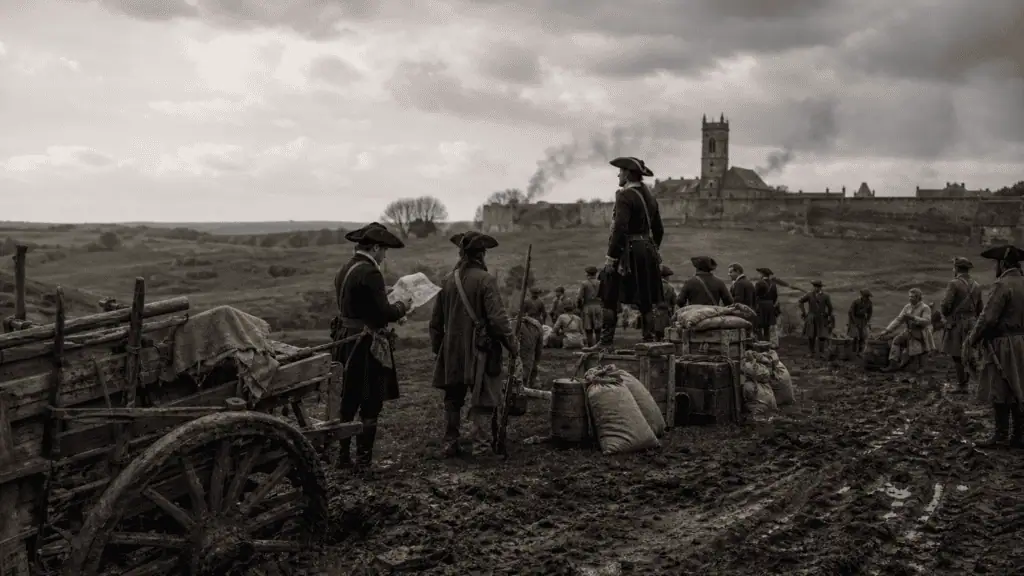
In Ireland, James tried to recover his throne with French support, and the result was war. The Battle of the Boyne in 1690 is often remembered as if it neatly concluded the crisis, but that is misleading. Fighting continued until the Treaty of Limerick in 1691, and the consequences shaped religious division, land ownership, and political memory for generations. For many Irish Catholics, this was not liberation from arbitrary rule. It was conquest and the consolidation of Protestant power. The revolution that limited royal authority in England could mean something very different elsewhere.
Scotland also experienced its own upheaval. The settlement there involved separate negotiations and its own constitutional tensions. This matters because it prevents us from treating Britain as a single political experience. The Stuart monarchy governed through overlapping kingdoms, not one uniform state. The Glorious Revolution therefore had multiple endings, some of them violent, some of them uneasy.
Jacobite resistance prolonged the contest. Supporters of James and his descendants continued to believe that the throne had been seized unlawfully. Others accepted the new regime only because they feared renewed instability more than they trusted royal principle. That divided response is historically revealing. The revolution did not settle every argument. It established a new framework within which disputes would continue.
To call the revolution glorious without asking who paid the price is to flatten history into national myth. A more honest account holds two truths together. The settlement restrained monarchy in England and helped create a constitutional order of lasting significance. It also preserved hierarchy, exclusion, and coercive power. That tension is part of the event’s historical meaning, not a complication to be ignored.
Scotland, Ireland, and competing kingdoms
The Stuart crown was never a simple unit. Different laws, different elites, and different religious balances meant that the same change in sovereignty could produce stability in one kingdom and conflict in another. The Glorious Revolution must therefore be understood as a British event with uneven consequences, not as a single English achievement.
War, memory, and Jacobite resistance
The defeat of James at the Boyne and the later settlement at Limerick did not end political memory. Jacobitism remained alive as a challenge to the post revolution order. The struggle over legitimacy continued long after the immediate crisis had passed.
Conclusion
Let us return to the Thames in darkness, because that image captures the heart of the matter better than any abstract summary. James II’s failed escape was not simply a dramatic episode at the end of a troubled reign. It was the visible sign that an older certainty had broken. A king had tried to leave his capital, and in doing so he revealed that monarchy depended on more than birth, ceremony, and divine language. It depended on confidence. It depended on institutions. It depended on whether the political nation still believed his authority could hold.
That is why the Glorious Revolution mattered so much. Its importance does not lie only in the replacement of James by William and Mary, though that was the immediate outcome. It lies in the deeper argument it settled, or at least made impossible to ignore. Authority in Britain was no longer understood as something living purely in the body of the monarch. It was shared, limited, and increasingly mediated through Parliament and law. That change reshaped government, taxation, war, credit, and the entire constitutional future of the kingdom.
Yet we should be careful not to romanticise it. This was not a democratic revolution. It did not open power to the whole population. It left many people excluded, especially women, Catholics, the poor, and those outside the political nation. In Ireland, it brought conflict and dispossession rather than liberation. Even in England, the post revolution settlement reinforced hierarchy as well as restraint. The crown remained strong, but it could no longer pretend to stand above the order that sustained it.
That combination is what makes the event so significant. It limited the crown while strengthening the state. It reduced the possibility of personal rule while increasing the capacity of institutions to tax, borrow, legislate, and wage war. It offered a new language for lawful resistance and a durable model of constitutional monarchy. The consequences reached far beyond 1689, shaping later debates over parliament, succession, finance, and political legitimacy.
If you want to understand Britain’s political development, you cannot treat the Glorious Revolution as a footnote. It was one of the moments when the meaning of power changed. And if you want to explore more of that story, stay with Digging Deep Histories. There is much more to uncover in the long struggle between rulers, institutions, and the people who lived under them.