

The English Civil War Campaigns are often remembered as a conflict of symbols. Cavaliers and Roundheads. King against Parliament. Pride, principle, and the dramatic language of a kingdom divided against itself. Yet if you want to understand why the war changed England so profoundly, you must look beyond the familiar images and into the campaigns themselves. The war was won and lost not simply through isolated moments of heroism, but through movement, supply, command, discipline, and the stubborn problem of keeping armies alive in the field.
That is the real story behind the fighting of Stuart England between 1642 and 1651. It was a war in which neither side began with a fully formed national army. Both were forced to build power from local resources, county loyalties, and improvised systems of recruitment and finance. Commanders had to think about roads, rivers, magazines of powder, food for horses, and the morale of soldiers who often had more enthusiasm than training. A battle might open with thunder and smoke, but the campaign that surrounded it determined whether that battle changed anything lasting.
At Edgehill in October 1642, the first major clash of the war, that reality was already visible. Men advanced into confusion, cavalry scattered, and commanders struggled to understand what had happened before night fell. The fight did not settle the conflict. Instead, it revealed how difficult it would be to force a decisive conclusion in England. The king could not simply win one field and expect the country to submit. Parliament could not assume that control of London alone would secure victory. The war would stretch across several theatres, each linked by logistics and political risk.
I am Professor Steven Carmichael, and in this article I want to guide you through the campaigns as a military problem. Where armies moved matters. Why they moved matters even more. And once you see the war in those terms, the English Civil War becomes more than a struggle of slogans. It becomes a contest over how power was organised, how it was sustained, and who could impose a working military system on the fractured kingdoms of the 1640s.
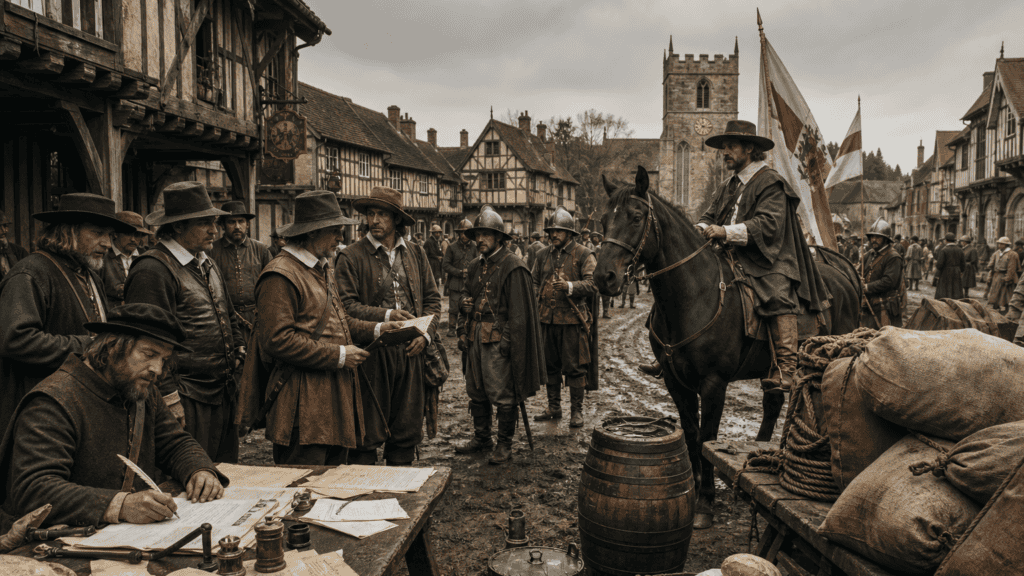
Edgehill and the opening campaign crisis
The first shock of battle in Warwickshire
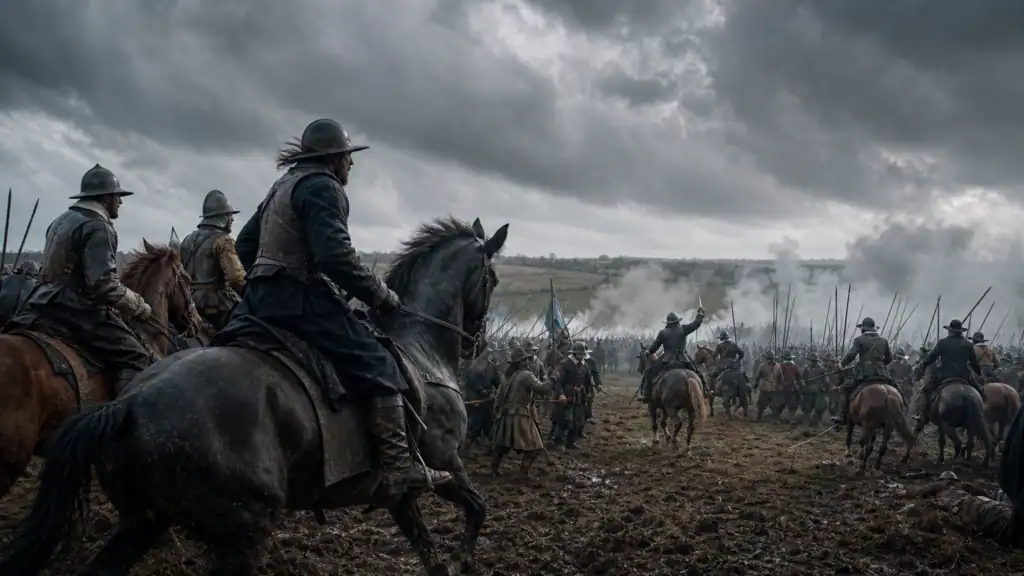
On the hillside above Edgehill, the first great battle of the English Civil War unfolded in conditions that denied clarity at every turn. The light was fading over Warwickshire, the ground was wet with autumn rain, and smoke from matchlock muskets drifted low across the field before tearing apart in the wind. That mattered. Early modern battle was not a clean exchange of blows conducted at distance. It was a world of partial sight, noise, sudden movement, and uncertainty. Men could hear the pounding of cavalry before they properly saw the attack. They could lose sight of their own units in the press of dust and smoke. Orders had to be passed through shouting, riders, and visible movement, not through any secure system of command.
The weapons themselves reinforced that confusion. Pikes were formidable in the hands of disciplined infantry, but they required cohesion and space. Muskets offered firepower, but slowly and irregularly, and the smoky discharge made it hard to judge what was happening even a short distance away. Cavalry could crash through a line or sweep past it, but only if the horses and riders maintained their nerve. When those elements collided, the battlefield became a living system of shock and interruption.
This is why Edgehill mattered far beyond the immediate casualties. The royal standard above Charles’s army may have signalled authority, yet authority did not make an army invincible. On the opposite ridge, Parliamentarian forces were still learning how to stand in battle at all. Many were inexperienced, and the first charge of royalist cavalry could shake even determined men. But confusion cut both ways. Royalist horsemen who pursued too far could lose the chance to exploit success. Units that broke through smoke might become isolated. By the time messages reached commanders, the shape of the field had already changed.
What the viewer or reader should see here is not merely a famous battle, but the opening of a military learning process. The English Civil War campaigns began with the discovery that courage alone did not determine outcomes. Formation, timing, and recovery after impact were just as important as personal bravery. That lesson would shape every later campaign.
Why no side could finish the war in 1642
The most important strategic truth revealed by Edgehill was not who could claim the field at dusk. It was that no one could yet finish the war. A battle could damage an army, but it did not automatically destroy the political order that sustained that army. Charles I hoped that battlefield success would create momentum and then pressure London into submission. That was an understandable royalist expectation. If the king could advance quickly, show strength, and convince Parliament that resistance was hopeless, then the war might end before it hardened into a national struggle.
But the campaign reality was harsher. Parliament still held the capital, and with it came access to financial networks, civic authority, and the practical machinery of mobilisation. That meant the king could not simply win a battle and expect the country to collapse behind him. He had to sustain a field army, protect routes of advance, secure food and powder, and maintain the loyalty of the regions through which he passed. Each of those tasks was difficult. None could be solved by battlefield momentum alone.
The march after Edgehill exposed this problem. The royalists moved towards London, hoping that military pressure and political fear would work together. But Parliament was able to gather a defensive force and block the road at Turnham Green. That moment did not produce the dramatic climax that popular memory sometimes expects. There was no decisive clash, no grand royal breakthrough, no sudden end to the war. Instead, the king withdrew. That withdrawal mattered more than a dramatic charge would have, because it revealed the limits of royalist strategy.
Once London remained out of reach, the war became a contest of endurance. Charles needed victories that could open territory and secure supplies. Parliament needed to prevent him from achieving that kind of strategic breakthrough. From that point on, the English Civil War was no longer a matter of one side overpowering the other in a single thrust. It was a campaign war, and campaign wars reward those who can sustain pressure longer than their enemy can bear it.
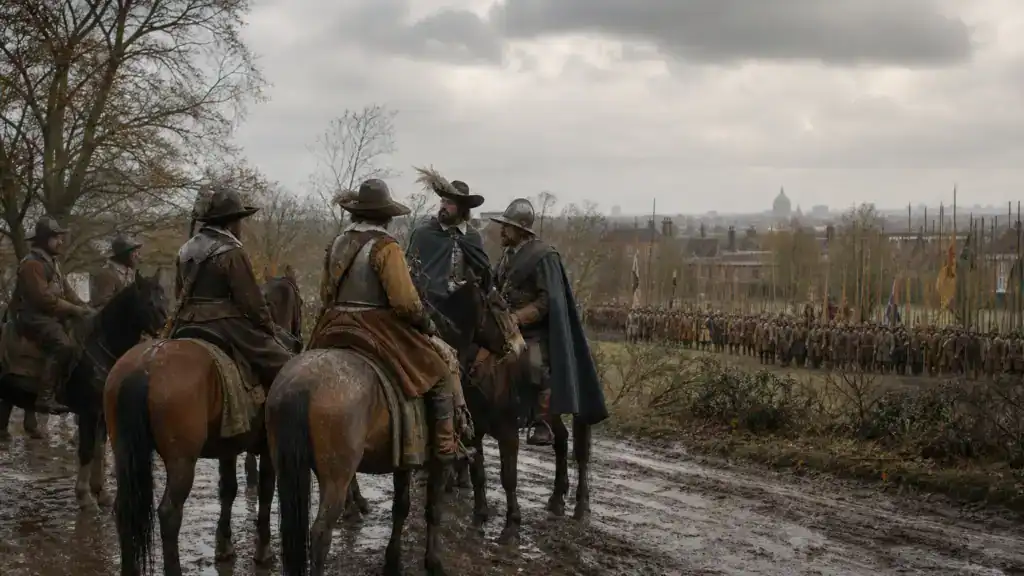
Why the campaigns mattered more than the symbols
Beyond cavaliers and roundheads
The familiar labels attached to the English Civil War can be useful as shorthand, but they also conceal the nature of the conflict. Cavaliers and roundheads suggest costume, attitude, and allegiance, yet they do not explain how the war was actually fought. This was not a pageant of rival identities. It was a military and political process that forced both sides to solve practical problems under extreme pressure.
The campaigns mattered because they converted political authority into armed force, and then tested whether that force could be kept alive. A king might claim legitimacy, but legitimacy did not automatically produce horses, powder, wagons, or reliable infantry. Parliament might control the capital and much of the south east, but it still had to persuade counties, towns, and local elites to raise men and provide supplies. Every troop movement therefore involved negotiation as well as command. A county that was politically sympathetic could still be militarily weak. A town that supported one side could still be too exposed to sustain a garrison. A road that looked promising on a map could become unusable once the weather turned.
That is why the war must be understood as a system rather than a sequence of iconic clashes. Commanders were judged not only by whether they won battles, but by whether they could move armies to the right place at the right time, keep them fed, and prevent them from dissolving through desertion or disease. In that sense, campaign warfare was as much about administration as about combat.
There is also a broader consequence here that reaches beyond England itself. The campaigns of the 1640s helped transform the relationship between military power and government across the British Isles. The war created pressure for more centralised organisation, more reliable revenue, and more disciplined forces. It also revealed the weakness of depending on local loyalty alone. Once that lesson had been learned, it could not be forgotten. The wars of the Stuart period were helping to decide what sort of state could survive the demands of modern conflict.
The war as a military problem
If you want a clear way into this history, ask the question a commander would ask. Where did armies move, and why? That question sounds simple, but it opens the entire war. It forces attention onto geography, logistics, and decision making. It also reveals that war is rarely decided by what one side wants in the abstract. It is decided by whether leaders can translate ambition into movement and movement into sustained strategic advantage.
As I have argued throughout, the campaigns were where the war’s real shape emerged. At first, both sides had to improvise. There was no ready made national army waiting to impose order. Men had to be recruited from counties, equipped from local stocks, and paid through unreliable means. Officers had to learn how to coordinate infantry and cavalry, how to maintain discipline under fire, and how to exploit success without losing control. Each campaign became a test of learning.
This is why the war’s central question was never simply who was right, but who could exert authority in practice. Charles I possessed kingship, yet he lacked the military machine that would make kingship decisive. Parliament possessed a strong political base, yet had to turn that base into arms, movement, and endurance. The campaigns forced both sides to discover the difference between commanding in theory and commanding in the field.
That difference also explains why battles had consequences beyond their immediate results. A battle could alter morale, expose weakness, or destroy the confidence needed for further action. A successful campaign could strip an opponent of options without annihilating every soldier he possessed. In the English Civil War, strategic depletion often mattered more than theatrical victory. That is why the campaigns deserve attention equal to, and often greater than, the famous battle names attached to them.
A kingdom without a single front
Fragmented power in 1642
In 1642, neither Charles nor Parliament commanded a modern central army in the later sense. This is a crucial point, because it explains both the shape of the war and its duration. Charles had the authority of the crown, but authority was not the same as military capacity. It did not automatically generate men, money, horses, gunpowder, or provisions. Parliament had influence in London and the south east, but influence still had to be translated into consent, recruitment, and supply. In both cases, the war began as a political order trying to become a military one.
That process was uneven from the start. Counties responded differently depending on local leadership, religious loyalties, economic pressure, and fear of what the other side might do. Some communities raised troops enthusiastically. Others complied only reluctantly. Many tried to minimise damage by appearing useful to whoever happened to be stronger nearby. The result was a conflict in which political allegiance and practical capacity often pulled in different directions.
This was especially important because the English Civil War did not have a single continuous front. It fractured into several theatres, each with its own character and constraints. The north mattered because control of York and the surrounding counties shaped access to resources and local authority. The west mattered because it contained regions where fortified houses, old family loyalties, and difficult terrain encouraged sieges and local campaigning. The south east mattered because of London, the ports, and the financial heart of Parliamentarian power. The industrial districts also mattered because they could support weapon production and broader wartime supply. Roads, rivers, and magazines of powder were as strategically important as any prominent hill.
When the rebellion in Ireland erupted in 1641, the war’s geography became even more complicated. Fear of Irish developments intensified political mistrust in England and Scotland, and military commitments began to overlap across the three kingdoms. What looked like a domestic conflict was already becoming a wider crisis of Stuart authority. That broader context helps explain why campaigns in one region could influence decisions in another, and why victory in one theatre might still leave the overall war unresolved.
Theatres of war across England and beyond
Because power was fragmented, campaigns had to be designed around access rather than simple confrontation. A commander might fight to secure a river crossing, because that crossing opened a route to supplies. He might besiege a town not because it was glamorous, but because the town controlled a road network or a magazine of weapons. He might avoid a battle entirely if his army was too weak to survive the loss of a few experienced troops.
This is one reason the war lasted so long. Battles were not enough on their own. A town could hold out for months, absorbing men and matériel. A castle or fortified house could delay a campaign, pinning down troops that might otherwise have been used elsewhere. A county that appeared conquered could still produce fresh recruits if the political climate shifted or if a relieving army arrived. In other words, the war was a contest over circulation as much as territory.
The fragmented geography also meant that no single victory could automatically close the war. Even when one theatre became unstable for the royalists, another might still require attention. When the fighting widened beyond England itself, the problem only deepened. Scotland and Ireland were not side issues. They were part of the same dynastic and confessional crisis. That is why the campaigns of the 1640s must be read as connected operations within a three kingdom struggle, not as isolated English episodes.
Once this is understood, the war begins to look less like a sequence of famous set pieces and more like a protracted attempt to solve a structural problem. Who could build enough military capacity, in enough places, for long enough to force the other side into submission? That was the true question the campaigns kept asking.
Marston Moor and the struggle for the north
The relief of York and the risks of speed
By 1644, the north had become one of the most important strategic theatres in the war. York was under siege by Parliamentarian and Scottish forces, and the royalist command faced a dangerous choice. Relief had to come quickly, but speed itself created risk. Prince Rupert’s march was impressive, and in a purely tactical sense it represented the sort of energetic movement that had often served royalist hopes. Yet rapid movement can also produce overextension. An army that hurries to a relief battle may arrive tired, uneven, and forced to fight before its formations are fully secure.
That was the danger at Marston Moor. The battlefield was broad and wet, which made command harder and movement more uncertain. In such conditions, the side that could maintain coherence after contact would gain a major advantage. Fighting on ground like this did not reward mere aggression. It rewarded organisation. Men had to keep alignment. Cavalry had to remain under control. Infantry had to hold their ground when smoke and confusion threatened to break the line.
The battle therefore became more than a contest of numbers. It was a contest of battlefield discipline, with major strategic consequences hanging on whether the armies could preserve themselves after the first shock. Rupert’s speed brought him to the field, but it did not guarantee success once the fighting began.
Parliamentarian cavalry and the collapse of royalist power
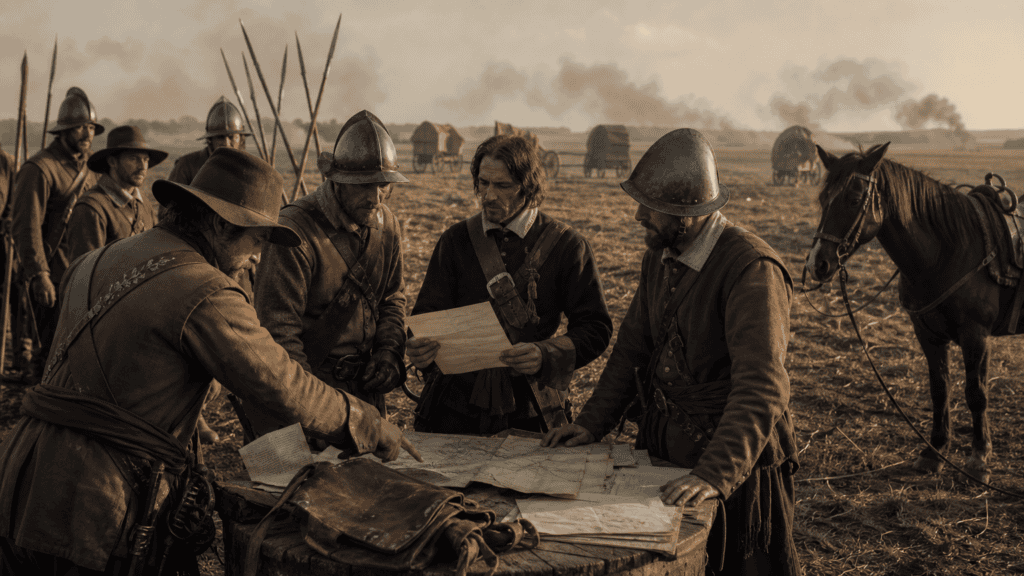
At Marston Moor, Oliver Cromwell’s cavalry proved decisive not because it performed a single dramatic act, but because it held together. That is the key point. Cavalry that stays coherent can recover from an initial setback, rally, and return to fight again. Cavalry that pursues too far, or loses formation, may remove itself from the battle entirely. Cromwell’s horse defeated its opponent on one wing and then came back into the struggle. That return altered the whole course of the action.
The royalist right may have achieved early success, but the centre could not hold with sufficient steadiness to recover. Once that structure began to fail, the battle moved rapidly towards collapse. The result was catastrophic for royalist power in the north. York fell, and with it went a major centre of royal authority. The strategic map changed at once. Parliament and its Scottish allies gained control of territory, roads, and resources that Charles could not easily recover.
Marston Moor also revealed a deeper transformation in warfare. Personal bravery still mattered, but it was no longer enough. Discipline had become the crucial quality. A force that could preserve order under stress had a much better chance of surviving the violence of battle and the uncertainty that followed it. In that sense, Marston Moor was not simply a victory for Parliament. It was a demonstration that the war was rewarding a different sort of military culture.
The importance of this should not be underestimated. When one side begins to understand conflict as a problem of structure and recovery, while the other side remains dependent on momentum and reputation, the strategic balance begins to shift. Marston Moor was one of the clearest moments when that shift became visible.
The New Model Army and the new logic of war
Building a national force
By 1645, Parliament had drawn the obvious lesson from earlier campaigning. Regional armies, each with different interests and competing commanders, could not reliably defeat a king whose power still depended on mobility and opportunism. The answer was the New Model Army, created through the Self Denying Ordinance and built under centralised command. This was a major moment in military history because it represented more than a new set of commanders. It represented a new logic of war.
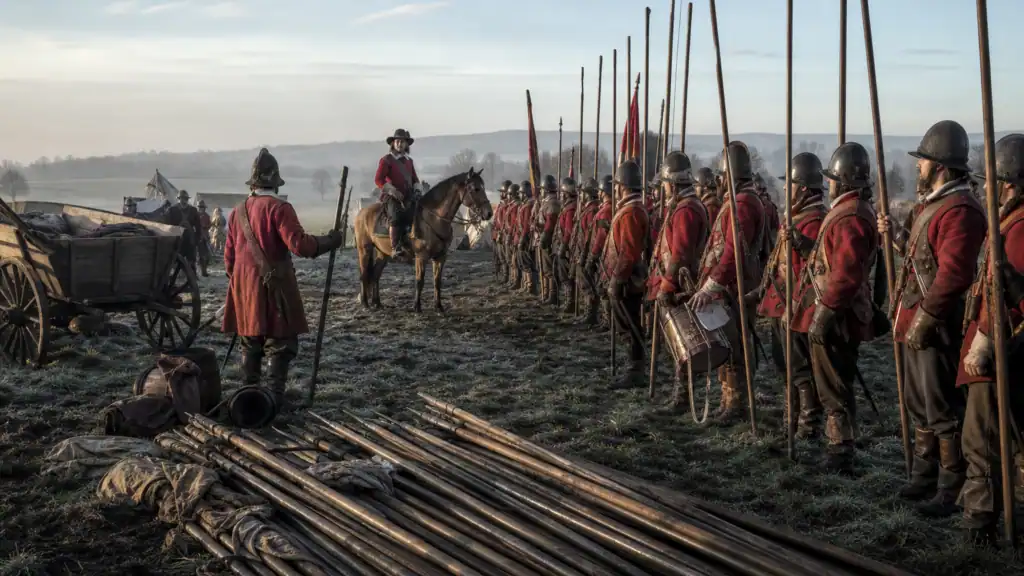
The New Model Army was not modern in every respect, but it was far more organised than the improvised forces that had fought earlier in the conflict. Soldiers were recruited, paid, trained, and moved as part of a national force. That mattered because war is expensive not only in the moment of battle but in the months between battles. An army that cannot be fed or paid will not remain an army for long. Parliament’s ability to create a more reliable military structure gave it a decisive advantage.
Central command also meant concentration. Instead of scattering strength across several competing theatres, Parliament could increasingly bring force together where it mattered. That is the operational logic behind the later campaigns. If you can assemble a stronger force at the decisive point, then you force the enemy to fight on unfavourable terms. If you can recover after initial setbacks, then you deny him the chance to turn a partial success into a strategic breakthrough.
This was the great lesson Parliament learned: war rewards systems. Not just courage, not just legitimacy, but systems that can recruit, pay, move, and sustain soldiers. The New Model Army was the practical expression of that lesson.
Naseby and the decisive defeat of the king’s field army
At Naseby in June 1645, Charles tried to strike before the Parliamentarian army could fully gather its strength. That decision tells us a great deal about his strategic position. He still had initiative, but it was becoming increasingly difficult to use. The royalists gained an early advantage against one wing, but the Parliamentarian army recovered. Its cavalry struck back, and the infantry held long enough for the battle to turn decisively.
Naseby mattered because it destroyed the king’s field army as a serious instrument of war in England. Men were lost, yes, but so were weapons, experienced troops, and the ability to operate as a major mobile force. Just as important, royalist papers were captured. Those documents damaged Charles politically, revealing diplomatic contacts and plans that undermined his credibility. Military defeat and political exposure came together.
This is why Naseby is often treated as the decisive battle of the first Civil War. Yet even that label can be too narrow if it encourages us to imagine a single heroic stroke. What really decided the issue was concentration, recovery, and organisation. Parliament had built a force that could absorb shock and then counterattack. The royalists could still resist in places, but they could no longer impose their will on the campaign as a whole.
If you want to understand the significance of the English Civil War campaigns, Naseby is the clearest example. A battlefield did not merely mark a victory. It revealed which side had solved the military problem of the age and which side had not.
After Naseby, defeat becomes a national problem
Royalist strongholds and the burden of garrisons
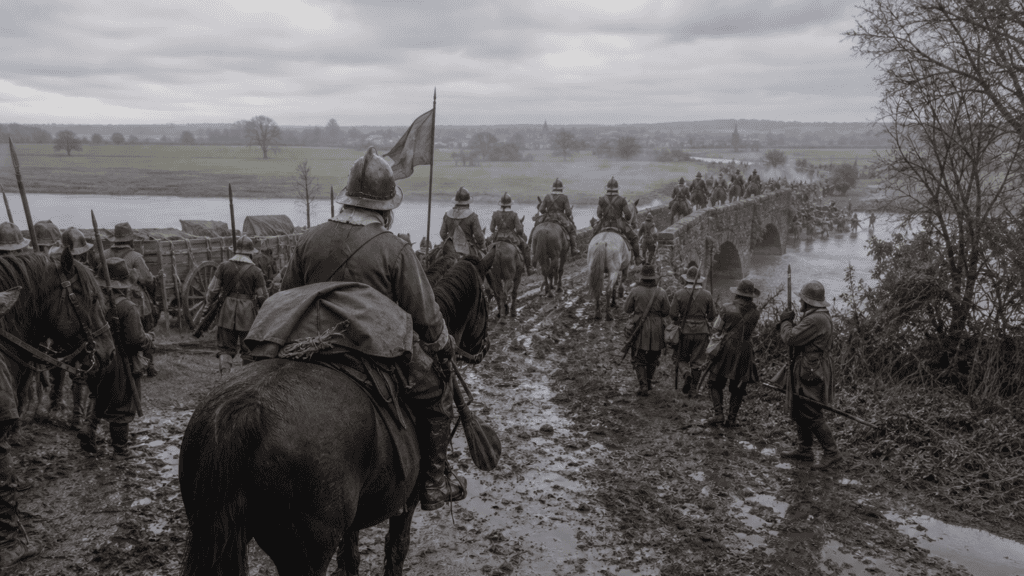
After Naseby, Charles was not instantly powerless. He still possessed supporters, strongholds, and the possibility of negotiation. But the strategic balance had changed beyond repair. Parliament’s armies could move with greater confidence from one theatre to another, while royalist strength increasingly broke into isolated garrisons and scattered groups that lacked secure supply. That shift transformed the war from a contest between two field armies into a problem of reduction and containment.
The western campaign illustrates this perfectly. Royalist resistance remained stubborn in places such as Bristol and in fortified houses across the region. Yet a fortress could delay an enemy more easily than it could reverse the war. Every garrison needed food, powder, replacements, and hope of relief. Without those things, it became a burden. It tied down men, consumed stores, and forced commanders to think defensively. A fortress that once symbolised strength could become a drain on the wider cause.
That is what attrition really meant in this war. It was not simply a slow numerical decline. It was the steady destruction of strategic choice. Once Charles could no longer decide where to concentrate his main army, he had lost a central element of command. Parliament, by contrast, could choose which resistance to contain, which garrison to bypass, and which to besiege. That asymmetry was fatal.
This stage of the war also shows why campaigns matter more than symbols. A heroic image of royalism could not sustain an isolated stronghold. The practical needs of war were relentless. Food had to arrive. Powder had to be kept dry. Horseflesh had to be replaced. Relief had to be organised. When those tasks failed, ideology became weightless.
The surrender at Newark and the end of the First Civil War
In 1646, Charles surrendered to the Scots at Newark. That event marked the end of the First Civil War, but not the end of the political crisis. The king’s military position had been broken, yet the underlying disagreement over authority remained unresolved. In that sense, the surrender was a military conclusion without a political settlement.
Charles had lost his freedom of action. He could no longer move as a commander with a viable field army behind him. That was the real significance of his defeat. A monarch who cannot command militarily may still possess the crown, but he cannot easily determine the course of events. The campaigns had stripped him of the ability to impose his will.
And yet the absence of a settlement meant the war’s deeper problems continued to simmer. Parliament had won the field, but it now faced the more difficult task of governing a kingdom altered by occupation, violence, and contested legitimacy. Military victory did not provide an easy constitutional answer. It created a new political landscape full of danger.
That unresolved condition would bring the war back.
The Second Civil War and the crossing of borders
Rising danger in 1648
The conflict resumed in 1648 because defeat had not produced agreement. Royalist risings occurred in several places, and the Scots entered England in support of Charles under the Engagement. This was not merely a replay of the earlier war. It was a new strategic threat, because it combined internal uprising with external military pressure. In other words, the danger was not simply local rebellion. It was the possibility of coordinated action across the kingdoms.
That is why this phase of the war matters so much. It shows how the struggle over Charles’s authority had widened beyond England into the politics of the British Isles as a whole. Dynastic claims, religious fears, and military alliances all came together. A campaign in one part of the island could no longer be understood in isolation from developments elsewhere. The war had become genuinely multinational within the Stuart composite monarchy.
Parliament’s response depended on speed. If the enemy could link forces, then the whole strategic position might unravel. If those forces could be kept separate and pressured before they concentrated, then the uprising could be broken. The issue was therefore one of operational tempo. Who could move faster, and who could prevent the other side from combining? This was a military question with the highest possible political stakes.
The year 1648 revealed how dangerous incomplete victory could be. If a war ends without a settlement, it returns in another form. That is exactly what happened here. The campaigns resumed because the constitutional crisis remained alive beneath the military pause.
Preston and the politics of speed
At Preston, from 17 to 19 August 1648, Parliament’s commanders showed how decisive rapid movement could be. John Lambert contained resistance in the north, while Oliver Cromwell marched quickly from Wales towards the advancing Scottish army. The enemy was badly stretched across difficult ground, and that mattered more than raw numbers. An army spread out and forced to manoeuvre under pressure is vulnerable even if it appears large on paper.
Cromwell maintained pressure instead of allowing the Scots time to recover and combine their forces. That persistence was essential. Battle after battle in this war shows the same truth: if you can deny your opponent time to reorganise, you can turn a difficult encounter into a decisive one. The fighting at Preston was exhausting, but the strategic effect was clear.
This campaign also underlined the wider meaning of the war. Preston was not just an English affair. It was part of the intertwined fate of England, Scotland, and Ireland. Military decisions in one kingdom reverberated in the others. The war had become a conflict over the political shape of the British Isles. That is one reason it mattered so much more than a simple struggle between two English parties.
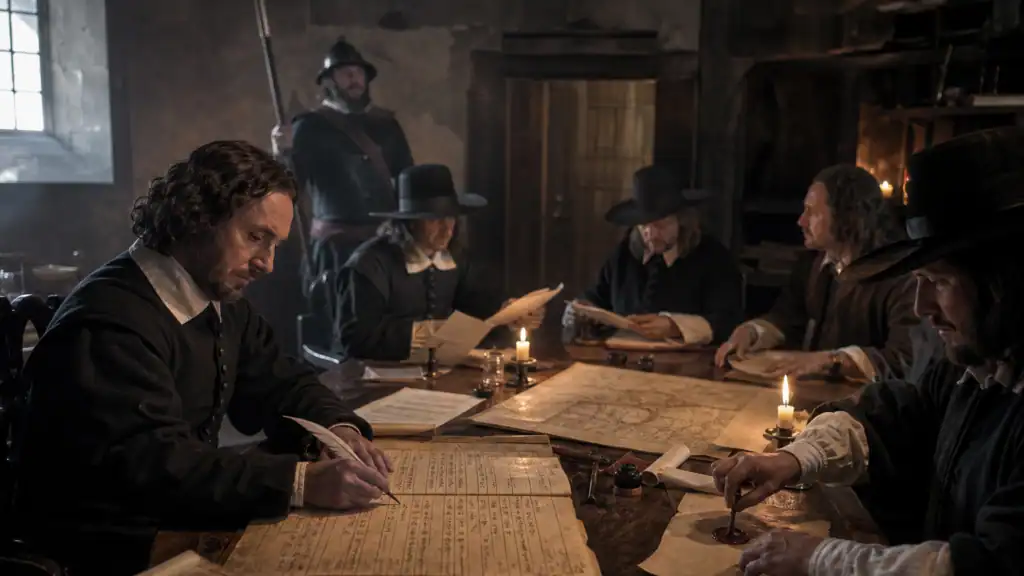
The political consequences were severe. With many Parliamentarians now convinced that further negotiation merely prolonged danger, Charles was brought to trial and executed in 1649. That act cannot be separated from the campaigns that preceded it. The battlefield had become an argument about sovereignty, and the argument had ended in regicide.
Worcester and the long consequences of victory
The final royalist rising
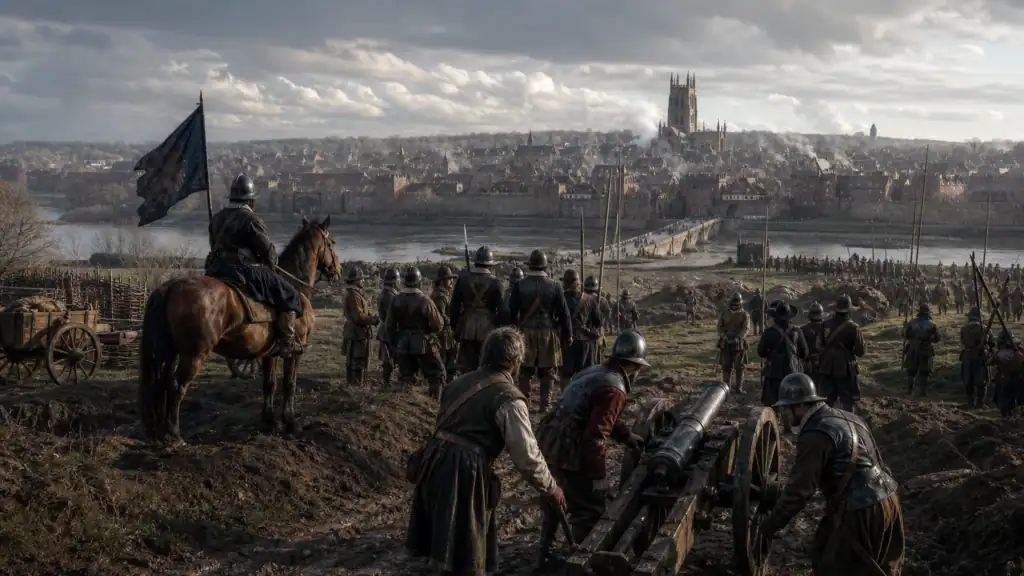
Even after the king’s execution, military conflict did not disappear. Cromwell’s campaigns in Ireland were followed by the final royalist rising around Charles the Second. In 1651, the young king entered England with a Scottish army and moved towards Worcester. Once again, the campaign question was whether a rival force could be prevented from gathering strength. Cromwell answered it by securing crossings, assembling a larger force, and attacking the city from several directions.
Worcester mattered because it broke the last organised royalist field threat. This was not merely another battle in a long series. It was the closing military act of the Civil War phase of the Stuart crisis. Charles the Second’s escape afterwards became famous, but the legend of concealment should not obscure the military reality. His army had been beaten. Its ability to challenge the regime was over.
Worcester also shows the enduring importance of logistics and operational planning. A crossing secured here, a route blocked there, a concentration of force at the right moment. Those are the details that decide campaigns. They may not sound glamorous, but they determine who can survive long enough to fight another day. At Worcester, Cromwell used those practical realities with devastating effect.
What the campaigns changed in British politics
The campaigns of the English Civil War changed more than who won battles. They changed who could wield power at all. The war demonstrated that an army supported by taxation, administration, and central command could defeat the traditional authority of the crown. That did not mean military force replaced politics. It meant politics now had to reckon with a much more organised form of force than before.
The consequences were profound. Governments could no longer assume that local loyalty alone would hold a kingdom together under pressure. Command structures mattered. Revenue systems mattered. The relationship between centre and locality mattered. The war had exposed the fragility of a political order that depended on personal monarchy without robust military and administrative support.
At the same time, the conflict left behind deep damage. Occupation, religious division, and competing memories of loyalty would continue to shape Stuart England after the fighting ended. Victory did not erase the social and political scars of the war. It merely shifted the terms on which those scars would be argued over. The campaigns had solved one military crisis while creating a new political landscape.
That is why the English Civil War campaigns matter more than people realise. They were not just a backdrop to grand constitutional drama. They were the mechanism through which the crisis was made real, prolonged, and finally resolved by force. Battles mattered because of the systems that produced them and the systems they destroyed. Worcester closed the military story, but it also left England with a new understanding of power, one built on the hard lessons of campaigning.
Conclusion
If we step back from the smoke of Edgehill, the relief of York, the disciplined charge at Marston Moor, the concentrated power of the New Model Army, the destruction of Charles’s field forces at Naseby, the grinding reduction of royalist strongholds, the cross kingdom threat of 1648, and the final defeat at Worcester, a clear pattern emerges. The English Civil War was not decided by one dramatic moment. It was decided by campaign after campaign, each of them testing whether a political cause could be turned into a practical military system.
That is why these campaigns matter more than the popular memory of cavaliers, roundheads, and heroic stand offs. The war’s outcome depended on whether armies could be fed, commanded, concentrated, and kept in the field long enough to break the opposition’s options. Edgehill showed that no one could end the war quickly. Turnham Green showed that London could not be taken lightly. Marston Moor showed that discipline was overtaking bravado. Naseby proved that organisation could defeat royalist initiative. Preston revealed that the conflict had become a three kingdom crisis. Worcester demonstrated that the last royalist challenge could still be shattered by operational control.
What followed was not simple peace. The campaigns had transformed the machinery of government, the meaning of authority, and the practical relationship between centre and locality. They had also exposed the limits of monarchy when it lacked the structures needed for sustained war. Charles I lost because he could not master the military problem before him. Parliament won because it learned how to solve that problem better than the king did.
For the student of Stuart England, that is the lasting lesson. Battles matter, but only when we understand the campaigns that gave them purpose. The war changed Britain not because men fought, but because the fighting forced a new kind of state into being.
If you would like to go further, explore more Digging Deep Histories articles on the English Civil War overview, the Battle of Edgehill, Oliver Cromwell and the New Model Army, Stuart England politics, and the Battle of Worcester.