

Understanding the War of the Roses
Introduction to the War of the Roses
The War of the Roses was not merely a clash of swords and armies; it was a battle for the very soul of England. Spanning from 1455 to 1487, this tumultuous period saw rival factions vying for the English throne, as the houses of Lancaster and York clashed in a series of brutal conflicts. Yet, its significance stretches beyond the bloodshed. This conflict reshaped English society, governance, and even the arts. Understanding why this war mattered more than we realise requires a dive into the historical undercurrents that fueled it.
Most people may perceive it as a simple feud between two royal houses, yet at its core was a deep-seated struggle for power and legitimacy. The repercussions of the War of the Roses extended far beyond the battlefield, influencing everything from family dynamics to national identity for generations to come. The social and political fabric of England was irrevocably altered, laying the groundwork for the Tudor dynasty and triggering cultural shifts that would echo through history.
This war, with its intricate web of alliances, betrayals, and shifting loyalties, provides valuable lessons about authority and governance, echoing relevant themes for our modern society. The battles fought and the lives lost serve as a reminder of how quickly stability can crumble and how fragile power can be. The stakes were high, and the consequences were profound, making it a pivotal chapter in English history that deserves our attention.
The Prelude to War
The Roots of Discontent
To understand the War of the Roses, one must first delve into the roots of discontent that plagued England in the mid-15th century. The English monarchy had become synonymous with instability, marked by a series of weak rulers who failed to maintain order. King Henry VI, though crowned as a child, struggled with mental health issues and was unable to effectively manage his kingdom, leading to widespread dissatisfaction among the nobility and commoners alike. This vacuum of leadership created a fertile ground for ambition and rivalry.
Economic factors also contributed to the simmering tensions. The aftermath of the Hundred Years’ War left the kingdom in financial distress. High taxes and military failures further alienated the populace. The emerging bourgeois class resented the stranglehold that the nobility had on power. The brewing resentment gave voice to the factions that would soon erupt into violence, as nobles began plotting their paths to power without regard for the wellbeing of the realm.
Moreover, the disjointed nature of medieval politics meant that power was often contested not through established channels but through martial force. Traditional loyalties to land and kin became overshadowed by a more intense struggle for political influence. The divisions within the ruling class grew, ultimately pitting the Lancasters against the Yorks in a bitter rivalry that would see the country plunged into chaos.
Political Alliances and Rivalries
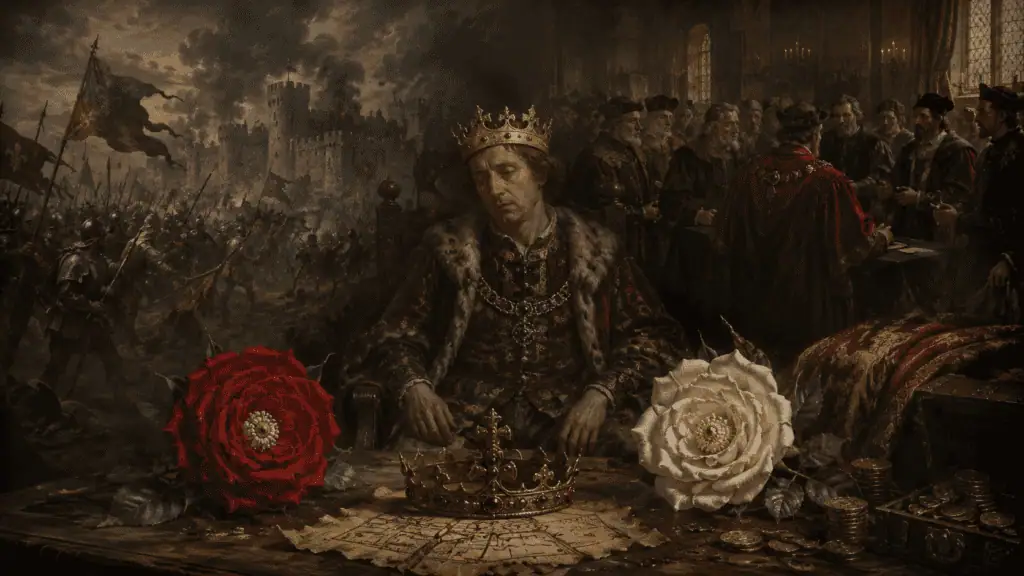
As discontent brewed, political alliances took shape, further entrenching the roots of conflict. The Lancastrians, proudly represented by their red rose, stood behind King Henry VI, who, despite his inadequacies, had a loyal base among the traditionalist nobility. The Yorkists, under the leadership of Richard, Duke of York, rallied around their white rose, promising a new order. Their ambitions were for reform, but they too would become enmeshed in the corrupt mechanics of power struggles.
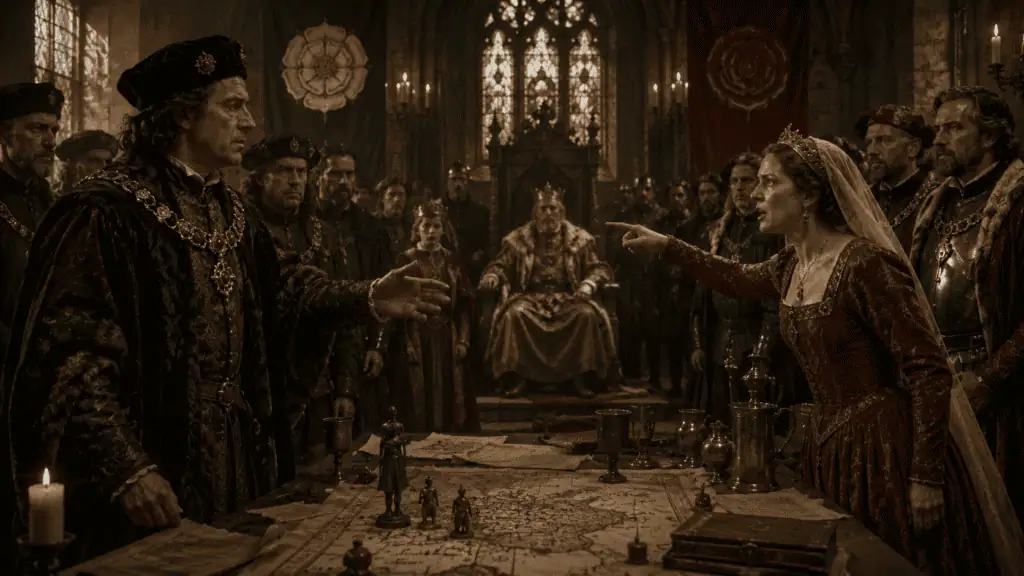
Strategic marriages became key tools in the political arsenal, shifting loyalties like sand in the wind. The powerful Yorkist Neville family, aligned with the Duke of York, became instrumental in solidifying this faction’s claim. Their support would prove vital. Alliances formed and crumbled quickly, leading to a chaotic political landscape where betrayal became commonplace. Nobles shifted their allegiances based on the winds of fortune, exacerbating tensions and creating a sense of inevitable conflict.
Tensions grew not just between the two houses but within them as well. Rivalries among noble families, most notably between the Nevilles and the Percys, further complicated the political landscape. Infighting only served to weaken the Lancastrian cause, allowing the Yorkists to gain momentum. Each skirmish blurred the lines of loyalty, showing that the path to power would be paved with blood and treachery.
The Outbreak of Conflict
The First Battle of St Albans
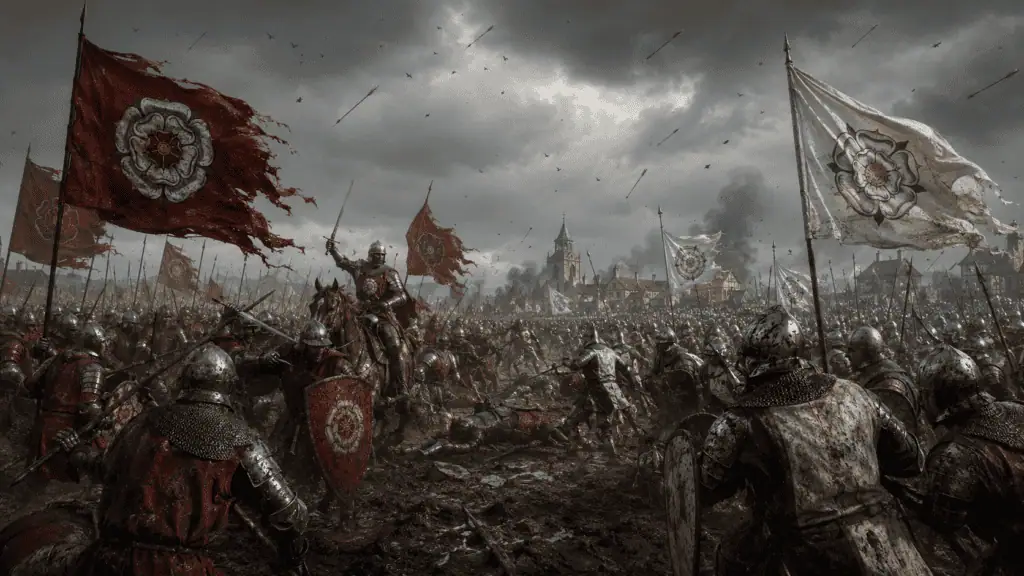
The simmering tensions finally erupted into open conflict at the First Battle of St Albans in May 1455. What began as a straightforward confrontation turned into a bloodbath that set the tone for the subsequent years of turmoil. York’s forces launched a surprise attack, engaging the outnumbered Lancastrians in fierce combat. The battle marked the beginning of what would become a long and bloody struggle for control of the throne.
Richard, Duke of York, emerged victorious, showcasing his military prowess and solidifying his position as a formidable contender for the crown. The Lancastrian forces suffered heavily, with many prominent nobles either killed or captured. This victory, however, did not lead to an immediate resolution. Instead, it fanned the flames of conflict, setting off a cycle of reprisals and retaliations that characterised the war.
The political fallout was significant. As York celebrated his triumph, tensions escalated within the royal court. King Henry VI, who had fled to London, was forced to reckon with the reality of a divided kingdom. The power struggle intensified, as both factions sought to consolidate their control. The atmosphere was thick with mistrust, as nobles aligned themselves with one house or the other, further polarising the political landscape.
From this initial skirmish, the stage was set for a series of bloody encounters. Bloodshed had become the language of power in England. Violence would define the War of the Roses, drawing in ambitious factions and ordinary soldiers alike, all eager to stake their claim to a brighter future.
The Cycle of Bloodshed
The aftermath of the First Battle of St Albans saw a notable increase in hostilities. While Richard of York had claimed a significant victory, the war quickly devolved into a protracted cycle of bloodshed. Each battle, whether a grand confrontation or a minor skirmish, took a toll on both the nobility and the common populace. The brutal reality of war solidified the notion that the contest for the throne would not only determine royal lineage but also shape the societal landscape of England.
In the following years, numerous confrontations unfolded, including the decisive battles at Blore Heath and Ludford Bridge. With each conflict, the stakes grew higher, the bloodshed more grim. Loyalties shifted and mingled amidst the chaos, as families were torn apart, friends became foes, and mercenary armies found employment in the desolate landscape. The violence spread far beyond the battlefield, instilling fear in the hearts of ordinary people who could only watch as their world crumbled around them.
Additionally, each battle brought with it a new cast of players. Lesser nobles and ambitious commoners saw opportunities to ascend social ladders through martial exploits. This created a unique tapestry of allegiances and rivalries that made the fighting unpredictable. Every victory was met with a fresh wave of vengeance from the opposing camp, leading to an endless cycle of aggression that would see both sides endure significant losses.
As leaders rose and fell, the nation began to breathe the air of despair. The War of the Roses was transforming England into a battleground where, for many, survival was the only objective. The nobility’s quarrels reverberated through the lives of the common people, illustrating how the fate of a nation can hang precariously on the ambitions of a few.
The Turning Tide: Key Battles
The Bloody Battle of Towton
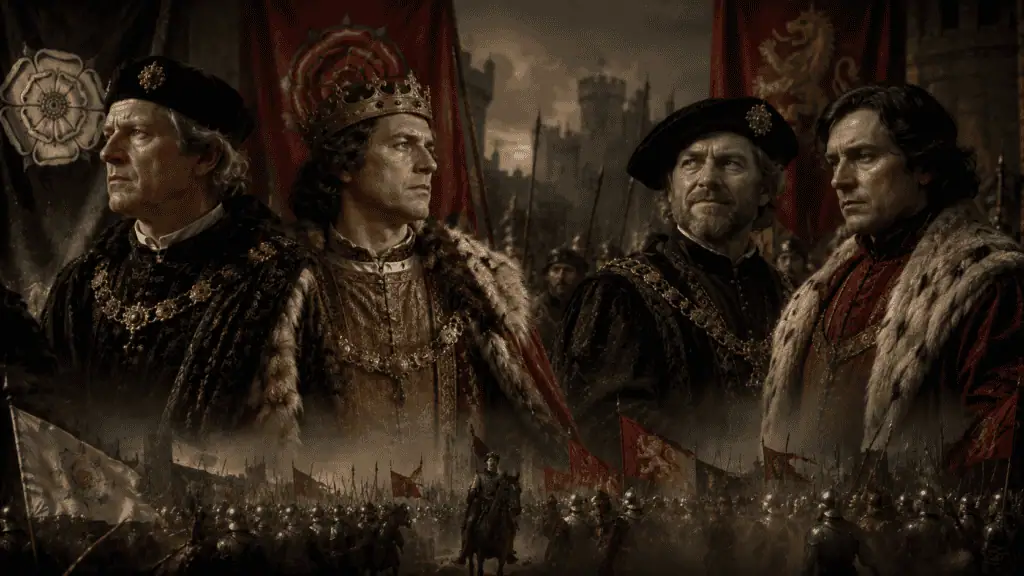
The War of the Roses reached a pivotal moment with the Battle of Towton, fought on 29 March 1461. This battle would become one of the bloodiest in English history, and it is often considered the turning point of the war. An estimated 38,000 soldiers stood on the frozen fields of Yorkshire, with the sun shining down in what would soon turn into a gruesome spectacle.
The Yorkists, confident after their recent successes, faced a Lancastrian army that was equally determined to reclaim the throne. The fighting was ferocious and relentless, resulting in a staggering number of casualties with estimates suggesting that up to 28,000 men were killed. The sight of the dead scattered across the field was a haunting reminder of the cost of ambition.
Victory at Towton catapulted Edward IV, son of the Duke of York, into a position of power that would alter the monarchy. The Yorkists secured the throne, but at a terrible price. While the immediate aftermath brought triumph, the ongoing civil strife hinted that the future was far from secure. Although the Lancastrian forces had been decimated, they were far from defeated, and the struggle for supremacy continued.
The repercussions of Towton were felt throughout England. The brutality of the battle created a rift not just among families and nobles but also within communities. Those who survived returned home, many forever changed by the horrors they witnessed. Paranoia and distrust proliferated as alliances shifted, leaving a trail of animosity that would have far-reaching consequences for generations.
The Battles of Barnet and Tewkesbury
Following the watershed moment at Towton, the conflict continued with further decisive battles. The Battles of Barnet and Tewkesbury in 1471 would both serve as vital chapters in the ongoing power struggle. Barnet, occurring on 14 April, witnessed a collision of forces in the early hours of the morning, where fog and confusion led to chaos amongst the Lancastrians.
Edward IV led his Yorkists into battle with renewed fervour, seeking to clear the way for his unchallenged reign. The outcome was devastating for Lancastrians, including the death of their significant leader, the Earl of Warwick, who had once been a powerful ally. Warwick’s death marked a severe blow to the Lancastrian cause, signalling a desperate shift in momentum.
Just months later, the battle at Tewkesbury on 4 May would further tip the scales. The Lancastrian forces, led by the young Edward, Prince of Wales, were met by a Yorkist army that was resolute in its determination to end the Lancastrian threat once and for all. This battle was equally bloody and saw the annihilation of the remaining Lancastrian hopes for retaking the crown. The prince was killed, and with him died the last viable path of the Lancastrians to regain power.
In the wake of these confrontations, the Yorkists – emboldened yet scarred by the toll of warfare – began consolidating their strength, ushering in an era where Edward IV embodied the power of a single, unchallenged monarch. Nonetheless, the sowing of resentment and bloodshed created seeds that could sprout chaos anew, leaving England at the mercy of the ambitions of the powerful.
The Role of Women in the War
Women as Influencers and Leaders
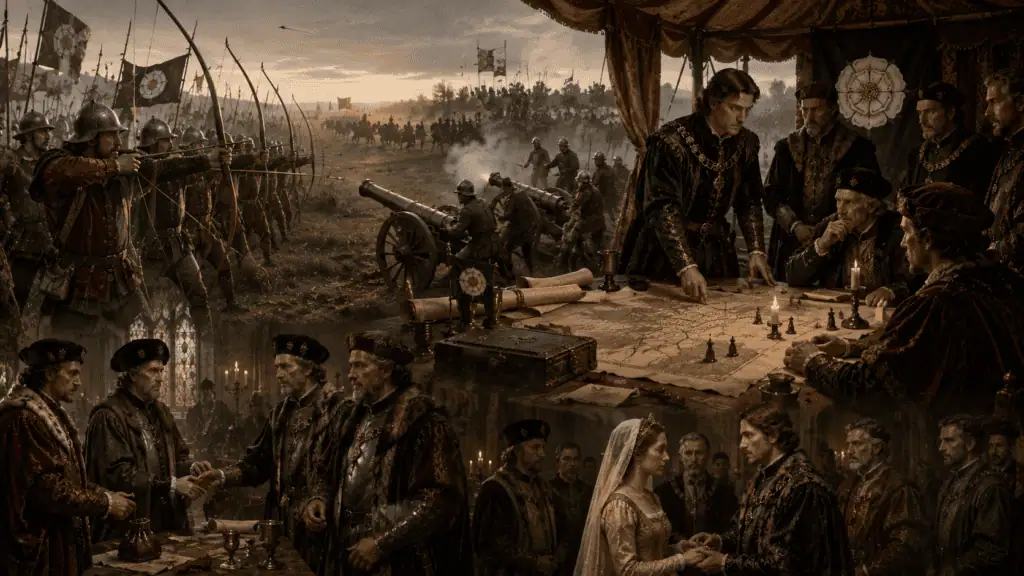
While the War of the Roses is often perceived as a male-dominated conflict, women played crucial roles that are frequently overlooked. Queens, wives, and mothers were not mere spectators; they were influencers, strategists, and at times, leaders in their own right. Margaret of Anjou, wife of Henry VI, epitomises the active role of women in this turbulent time.
With Henry mentally incapacitated, Margaret became the de facto leader of the Lancastrian cause, rallying support and resources to oppose the Yorkists. Her fierce loyalty to her husband and son propelled her into the centre of the conflict, defying the contemporary norms of female behaviour.
Moreover, women were often used as pawns in the political games of the nobility, through strategic marriages meant to forge alliances. Elizabeth Woodville, the widow of a Lancastrian supporter, became the wife of Edward IV. This union not only solidified Edward’s power but also transformed Elizabeth into a key figure within the Yorkist faction, showcasing how individual agency often played a critical role in shaping the outcomes of the war.
Additionally, women were present on the battlefield as supporters, tending to the wounded and managing supply lines. Their contributions allowed armies to remain operational, ensuring that however small, they played a part in the broader narrative of conflict. As the war dragged on, stories of women’s bravery emerged, portraying them as resilient figures capable of navigating the dangers of their time.
The influence of women during the War of the Roses indicates how gender roles were complex and malleable. Their actions challenged existing perceptions and opened the door to discussions about power and influence that would last for centuries. The stories of these women provide an enriched understanding of a period often defined solely by masculine conflict.
The Impact on Society
The impacts of the War of the Roses were not limited to the royal court or battlefields; they permeated through society, affecting the lives of everyday people. The invasions of noble armies brought devastation, uprooting communities and displacing families. Towns were pillaged, and the aftermath of battles resulted in widespread suffering. The social fabric of England was frayed, with fear and distrust spreading among the populace.
The aftermath of the war also saw shifts in class dynamics. The power struggles among nobles weakened traditional hierarchies, leading to rising discontent among commoners. Many ordinary people felt disenfranchised by the noble quarrels, as they bore the brunt of the conflicts’ consequences. The once-unquestionable authority of the nobility began to wane, as the populace saw their struggles as manipulated by aristocratic ambitions.
Moreover, wartime hardships fostered a sense of solidarity among local communities. In the face of adversity, ordinary people banded together to provide mutual support. Such experiences may have sown the seeds of a burgeoning English identity, ushering in a deeper sense of belonging that transcended the whims of noble rivalry. The shared suffering and communal resilience forged bonds that proved crucial in the formation of national identity.
Finally, as the war drew to a close, the reshaping of society mirrored the changes in governance. The new Tudor dynasty sought to establish order following the chaos of the previous decades. With fresh leadership at the helm, England would take steps toward political stability, fostering an environment for societal growth and development.
The Aftermath and the Rise of the Tudors
Henry Tudor’s Ascension
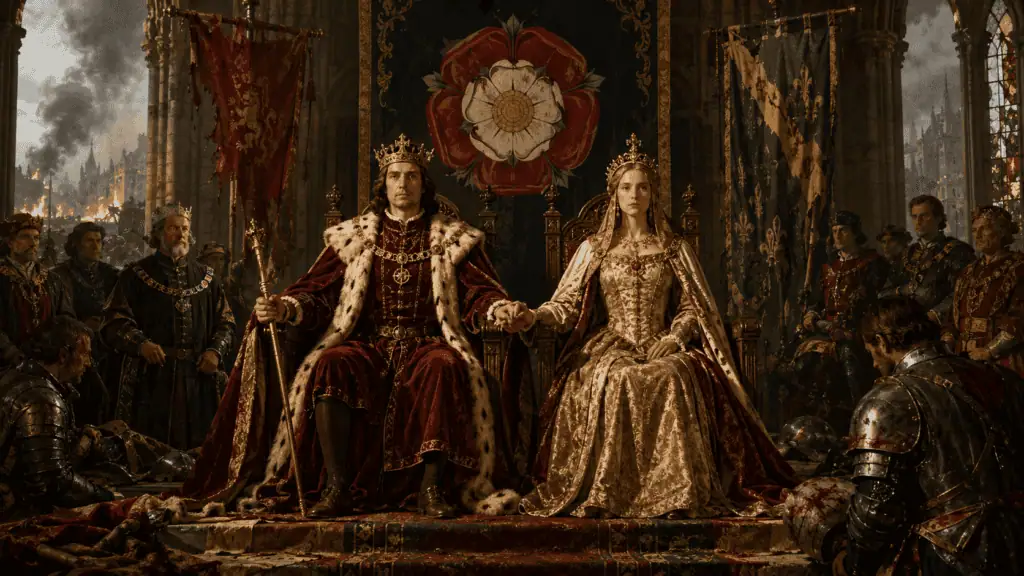
The ascendancy of Henry Tudor marked a significant turning point in English history following the chaos of the War of the Roses. Emerging as a unifying figure, Henry sought to put an end to the decades-long strife that had torn the nation apart. His victory at the Battle of Bosworth in 1485 symbolised a stunning conclusion to a protracted series of conflicts. With Richard III defeated and killed, the stage was set for a new era in England’s monarchy.
Henry’s ascent to the throne as King Henry VII signified not just a change in leadership but a fresh beginning for a divided country. By marrying Elizabeth of York, he cleverly linked the two previously warring houses, uniting the symbol of the red and white roses. This act served as a powerful statement, showing his intent to foster peace and reconciliation in a realm that had been marred by violence.
Yet, Henry’s reign was more than a mere political manoeuvre. He implemented reforms to stabilise the economy and restore faith in the monarchy. His focus on consolidating power within the crown allowed him to navigate threats to his leadership effectively, laying the groundwork for a prosperous England. The Tudor dynasty emerged as a symbol of stability—new institutions, legal reforms, and fiscal policies made lasting impacts that established a foundation for future governance.
However, the echoes of the past still loomed; the scars of conflict remained deep, underscoring the fragility of any newfound peace. For many, the transition from war to stability was a complex journey filled with uncertainty, marking Henry’s reign as pivotal in shaping the future of England.
Cultural and Governance Changes
With the rise of the Tudor dynasty came profound changes in governance and culture. The War of the Roses had exposed the flaws and vulnerabilities of the existing political framework. In response, Henry VII implemented sweeping reforms, focusing on centralising authority and enhancing the power of the monarchy. His approach aimed to tighten the grip on power, mitigate aristocratic influence, and reduce the risk of future uprisings.
The reformation of the administrative system led to the establishment of more efficient governance structures. Court policies were aligned to reinforce royal rule, and measures were taken to reduce the corruption that had plagued the previous regimes. This shift in governance reflected a broader trend towards modernisation that would define the Tudor period. It also laid essential groundwork for the political evolution of England in the decades and centuries to follow.
Culturally, the aftermath of the war encouraged the flourishing of the arts and literature—a reflection of societal change and stabilisation. The turbulent environment had inspired a creative renaissance, paving the way for influential figures such as William Shakespeare and the emergence of the English Renaissance. Literature began to explore themes of power, identity, and humanity, capturing the complexities of human relationships that had shaped this tumultuous era.
Additionally, the War of the Roses initiated a sense of national consciousness among the populace. It sparked discussions about governance, justice, and loyalty. The ensuing cultural shifts also brought with them questions about the nature of authority and the responsibilities of leadership, themes that have reverberated throughout history and continue to resonate in contemporary society.
Legacy of the War of the Roses
The Historical Significance
The legacy of the War of the Roses extends far beyond the events of its time. This conflict reshaped England, both politically and culturally, with impacts that continue to be felt today. It laid the groundwork for the Tudor monarchy, which would usher in one of the most dynamic and transformative periods in English history. The interplay between the Lancastrians and the Yorkists paved the way for a new understanding of power, governance, and national identity.
The shift from feudal allegiances to a more centralised form of governance can be traced back to these tumultuous years. Nobility learned that power could be fiercely contested but was ultimately subject to the will of the people. The cycle of war and peace that characterised the period illustrated that authority, once securely held, could quickly become tenuous. This lesson resonates throughout history, offering a timeless reminder of the fragility of power.
Moreover, the War of the Roses catalysed social change. It exposed the vulnerabilities in a system that held the aristocracy at its core, prompting movements toward reform in the way power and authority were distributed. This paved the way for future revolutions and changes in governance that would come later in British history.
In art and literature, the war inspired narratives that questioned morality, loyalty, and the human experience. These themes continued to dominate literature and the arts, impacting the trajectory of English cultural development long after the last battle had been fought. The conflict’s historical significance lies not just in its events but in how it shaped the very essence of English identity.
Lessons for Modern Society
The lessons drawn from the War of the Roses remain relevant for contemporary society. The internal divisions, shifting alliances, and the quest for power serve as cautionary tales about the consequences of factionalism. In an era marked by polarisation and political strife, understanding how these dynamics played out in the past provides critical insights into current events and issues.
The importance of unity and reconciliation cannot be overstated. Just as Henry VII demonstrated that peace could be forged through compromise and collaboration, modern societies are urged to seek common ground amidst differences. The reconciliation efforts of the Tudor dynasty offer a blueprint for resolving conflict in today’s complex political landscape, reminding us of the potential for healing after turmoil.
Lastly, the War of the Roses underscores the value of diligent and accountable leadership. The trials of both the Lancasters and the Yorks revealed how unchecked ambition and neglect could lead to societal collapse. Leaders must navigate the delicate balance of power, staying attuned to the needs and concerns of their constituents, lest they find themselves facing the wrath of discontented forces.
By reflecting on this complex chapter in history, we gain not only an understanding of the past but also invaluable guidance for navigating the challenges of the present and shaping the future.
Conclusion
The War of the Roses stands as a critical juncture in English history, one that changed the course of governance, divided families, and left an indelible mark on culture and society. Its significance lies not solely in the battles fought but in the lessons learned about power, loyalty, and the complexities of human ambition.
As we navigate our rapidly changing world, the echoes of this period serve as a reminder of the importance of unity, accountability, and the pursuit of peaceful resolutions to conflict. Through understanding the past, we equip ourselves to forge a future that is not mired in the mistakes of those who came before us. The War of the Roses was a brutal testament to the consequences of discord; let it also be a beacon guiding us toward a more harmonious existence.