

Spanish Armada 1588: Why the Campaign Mattered More Than People Realise
At first sight, the Spanish Armada can look like one of those neatly packaged moments that history likes to hand down and simplify. England survives. Spain fails. Storms do the rest. Bonfires burn. Portraits are painted. The tale seems complete. Yet that tidy version misses the real substance of the campaign, because the Armada was never only about ships firing at ships in the Channel. It was an invasion system, a logistical gamble, and a contest over whether Spain could project power across a narrow sea long enough to place an army on English soil.
That is why 1588 matters more than the familiar legend suggests. The campaign was not won by a single dramatic action, nor lost by one violent storm. It was decided by movement, timing, supply, and command. The English fleet, smaller and often more lightly built, did not need to smash the Armada in one blow. It needed to delay it, shadow it, disrupt it, and prevent it from joining with the Duke of Parma’s army in the Netherlands. Once that connection failed, the Spanish plan ceased to be an invasion and became a retreat. That distinction lies at the heart of the story.
For Elizabethan England, this was a test of survival, but also a test of statecraft. Could the kingdom defend itself against the greatest maritime power in Europe? Could a fleet operate effectively in hostile waters without surrendering initiative? Could command and logistics outweigh size and reputation? These were not abstract questions. They shaped how rulers, admirals, and soldiers understood war at sea. The Armada forced England to think of the Channel as a strategic frontier and the navy as an instrument of national security, not merely a collection of ships.
For Spain, the campaign exposed the difficulty of combining sea power with land invasion across a narrow timetable. It also revealed how much depended on coordination between separate forces operating under pressure from weather, enemy action, and distance. That is why the Armada deserves to be studied not as a patriotic triumph in isolation, but as a military operation whose failures changed the future of European warfare.
If we look closely, the story becomes far more interesting than the legend. It becomes the story of how strategy can fail, even when courage remains high.
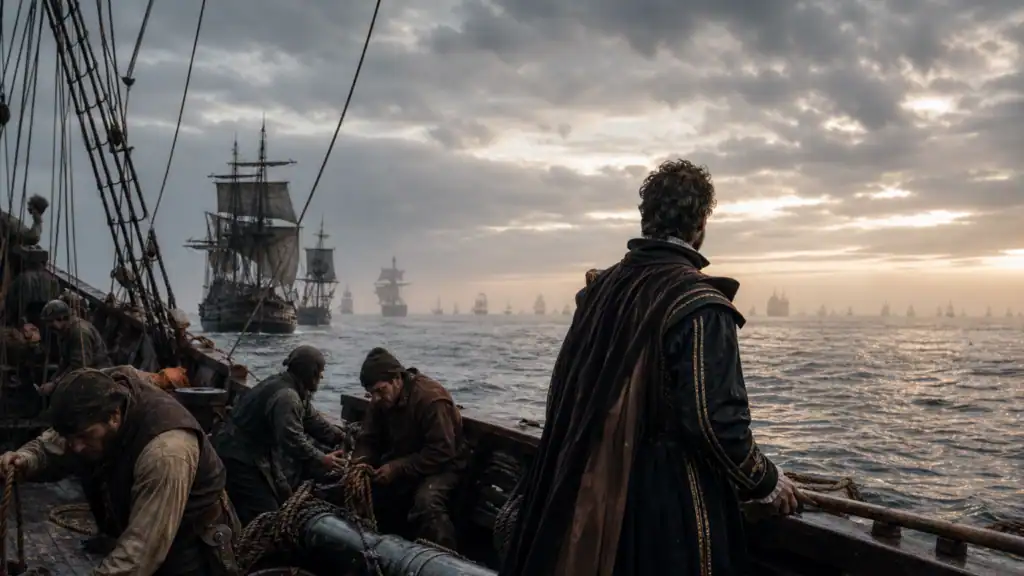
The Channel at Dawn
The English fleet at first light
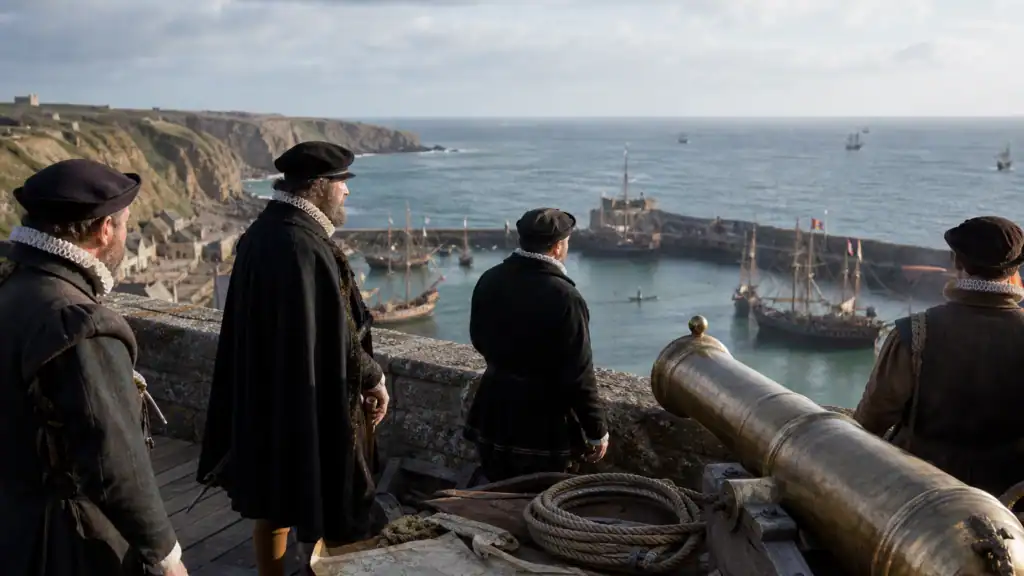
On the morning of 29 July 1588, the English fleet lay scattered across the Channel in a state of alert uncertainty. The water was cold, the sky pale, and the crews worked with the tense discipline that comes before a decisive encounter. Men hauled ropes, checked guns, and watched the horizon in silence, waiting for the first sign that the Spanish were near. Then a signal gun broke the stillness. The Armada was coming into view.
That moment matters in military history because it captures the pressure under which the English commanders operated. Lord Howard of Effingham, the Lord Admiral, had to decide whether to attack directly or continue shadowing the enemy. A direct assault might have satisfied expectations of boldness, but boldness was not the same as effectiveness. England did not have to destroy the Armada immediately. It had to prevent the Spanish from doing what they had come to do. That meant preserving the fleet, choosing when to engage, and refusing to be drawn into a fight on unfavourable terms.
This is one of the reasons the campaign is so often misunderstood. The English were not merely playing the role of heroic defenders in a set piece sea battle. They were managing a strategic problem. They had smaller ships, but those ships were faster and more manoeuvrable. They could tack more easily, move into and out of range, and force the Spaniards to keep adjusting their formation. In a campaign of this kind, control of tempo mattered as much as bravery.
The atmosphere on the flagship was therefore not one of triumph, but of calculation. Everyone knew that the next few days could decide whether England remained secure. That uncertainty gives the opening of the campaign its force. It was not a spectacle already understood in advance. It was a confrontation whose outcome still depended on choices made under pressure.
The Armada comes into view
When the Armada emerged through the mist, it did not present itself as a neat battle line. That is a misleading image, one shaped more by later imagination than by the reality of 1588. The fleet was a vast and awkward procession, bound together by the needs of wind, tide, and supply. Warships moved alongside transports, storeships, and troop carriers. The formation was not simply designed to fight. It was designed to carry an invasion army across the Channel and protect it while doing so.
That distinction is crucial. Spain was not sending a fleet merely to seek a naval engagement with the English. It was building a moving defensive wall, a corridor of protection through which Parma’s army was supposed to cross from the Netherlands. The Armada’s purpose was therefore dual. It was both weapon and shield. Its guns mattered, but so did its capacity to escort, protect, and endure.
The scale of the force made a strong impression on the English, and rightly so. This was a formidable concentration of power, the product of serious imperial resources and political will. Yet the very size that gave it presence also made it cumbersome. The fleet had to remain coherent under difficult conditions while carrying troops, equipment, food, powder, shot, and the expectations of a king who had committed himself to a great enterprise.
That is why the first sighting in the Channel should not be read as a simple moment of revelation. It was the visible form of a strategic gamble. The Armada appeared as a massive and threatening structure, but it had been assembled for a purpose that depended on perfect coordination. Once that coordination was threatened, the strength of the fleet itself could become a liability.
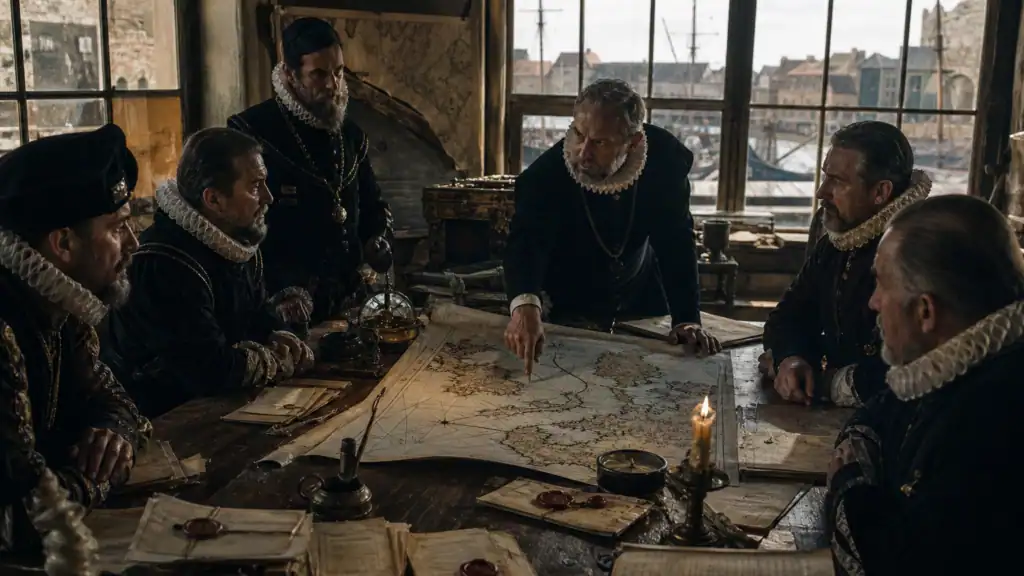
Spain’s Wider War Against England
Philip the Second’s strategic problem
To understand why Philip the Second launched the Armada, you have to begin with the wider war that had already been growing for years. England was not a neutral bystander. Elizabeth the First supported the Dutch rebels who were fighting Spanish rule in the Netherlands. English privateers attacked Spanish shipping, especially the cargoes that sustained imperial power. English troops also entered the Netherlands, making conflict with Spain more direct and more dangerous.
From Philip’s point of view, this was not merely a quarrel with one troublesome queen. It was a challenge to Spanish authority on several fronts at once. It threatened trade, communications, military control, and prestige. If Spain could not command the seas around the Channel and the Low Countries, then its wider system of power was vulnerable. That is why the Armada must be placed within the broader struggle over the Spanish Reformation and England’s Religious Conflict, where politics, faith, and military rivalry were tightly interwoven.
England’s actions mattered because they were strategically irritating and geopolitically significant. Privateering, in particular, was more than opportunistic raiding. It was a form of state backed pressure against Spanish wealth and sea routes. The effect was cumulative. Every captured cargo, every disrupted shipment, every challenge to Spanish movement across the Atlantic or into the North Sea was part of a larger contest for maritime advantage.
Philip’s answer was invasion. This was not an impulsive act. It was a calculated attempt to break the threat at its source by using a fleet to shield the movement of an army. In other words, Spain sought to solve a political problem through maritime coordination. That ambition tells us how high the stakes had become. England was no longer being treated as a nuisance. It was being treated as an obstacle to imperial control.
Why England mattered to Spain
England’s importance lay in geography as much as politics. It sat close to the Dutch provinces, across the routes that linked Spain to the North Sea, and near sea lanes that helped connect imperial resources to the wider world. A hostile England could interfere with movement, raid shipping, and complicate Spain’s effort to sustain its position in north western Europe.
That position made England dangerous. It was not just another enemy coastline. It was a strategic hinge. If Spain could use the Channel securely, it could support military operations in the Netherlands and maintain pressure on the English crown. If England could deny that use, Spanish power would be forced to operate under strain.
This is why the Armada mattered beyond the famous battle itself. The campaign was about who could control movement. That meant control over ships, but also over armies, ports, rendezvous points, and supply lines. The sea was not a blank space. It was a battlefield and a transport route at the same time. Whoever dominated it could threaten the other side’s political and military choices.
That is also why the invasion plan was so ambitious. Philip was trying to connect the fleet to Parma’s army, creating a corridor across the Channel that would allow Spanish force to land in England. The plan was not revenge in a simple emotional sense. It was an attempt to impose a new strategic reality on the Channel. In that sense, the Armada was a bid for movement and control, not merely a punitive expedition.
The Armada as an Invasion System
The plan to link fleet and army
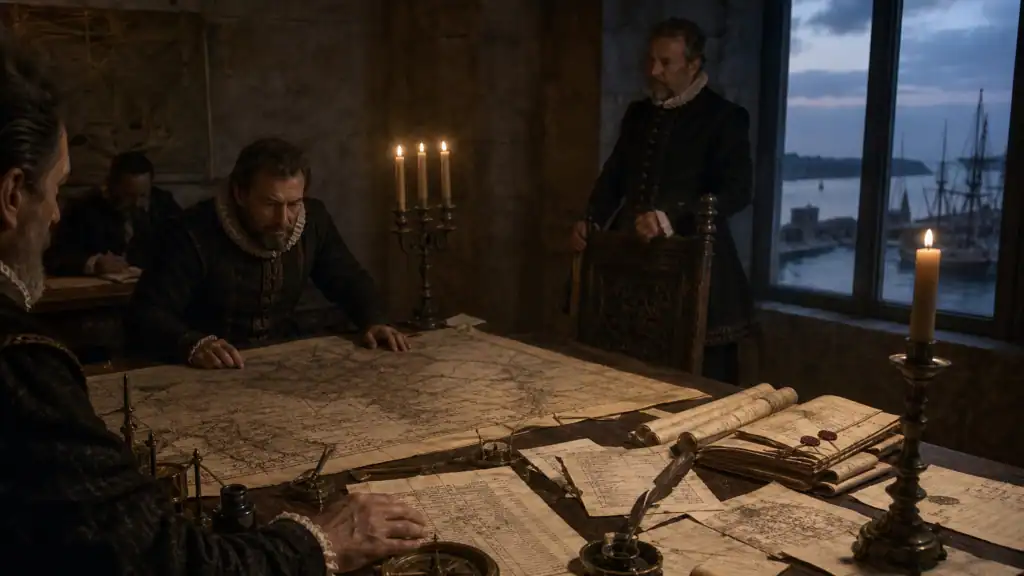
The heart of the campaign was the intended rendezvous with the Duke of Parma’s army. This was the key mechanism through which the invasion was supposed to happen. The Armada would sail into the Channel, secure the crossing, and provide the cover necessary for Parma’s troops to embark and reach England. Once landed, that army would advance against Elizabeth’s government.
The problem was that this required several independent elements to align at once. The Armada had to arrive at the right place. Parma’s army had to be ready. Boats had to be available. English resistance had to be suppressed or bypassed. Weather, tides, and timing all had to cooperate. Any failure in this chain could doom the entire enterprise.
This is the first major point that many popular accounts flatten out. Spain did not send a fleet to fight a fleet. It tried to engineer a crossing. That meant the real operational goal was not the destruction of English ships, but the creation of a protected space in which an army could move. The fleet was therefore an enabler of land warfare, not an end in itself.
The rendezvous also depended on co ordination across distance. Parma was operating in the Netherlands, where shallow waterways and Dutch rebel forces made movement difficult. The Armada could not simply sail to a beach and unload an army at will. The operation depended on communications, preparation, and safe passage through contested waters. In military terms, the plan was elegant on paper and fragile in practice.
The fleet as a moving defensive wall
The Armada’s best understood role was that of a moving defensive wall. Its ships were meant to shield troop transport, absorb pressure, and hold the Channel open long enough for the invasion to begin. That made the fleet both a weapon and a barrier. It was to project power, but also to contain risk.
Spanish commanders expected that their ships could grapple with the enemy if necessary and allow soldiers to fight across decks. This was a form of combat rooted in boarding and close action, where discipline and manpower could matter as much as cannon. It was not an irrational method. It simply reflected a different conception of naval warfare from the one the English were increasingly using.
The English, by contrast, wanted to fight at range. They aimed to harass, damage, and disorganise rather than close for hand to hand combat. That difference in tactical thinking would shape the entire campaign. It is also why Elizabeth I and Tudor Naval Power became so significant in the long term. England was learning to think about the sea in terms of mobility, gunnery, and strategic delay rather than only heroic encounter.
The Armada was therefore not merely a fleet. It was an invasion system that depended on keeping several moving parts in alignment. Once those parts began to separate, its strength would turn into burden. The great irony of 1588 is that Spain’s attempt to combine fleet and army made the operation powerful, but also vulnerable to disruption.
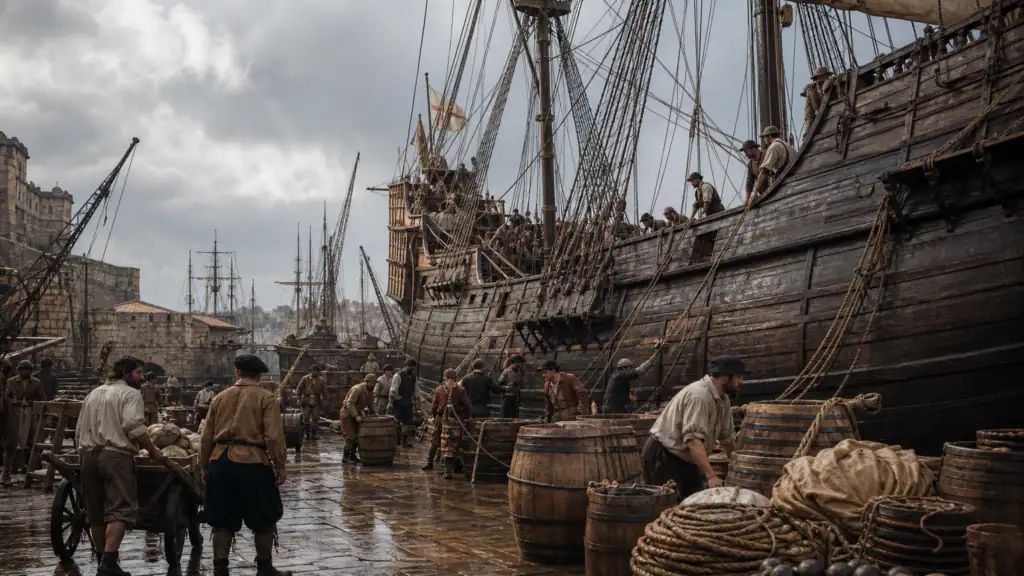
Building the Armada
Ships, stores, and men
The Armada was the product of immense preparation. Across Spanish territories, officials gathered food, powder, shot, tools, medical supplies, and men. Ships were inspected, refitted, and assembled. Crews were recruited from many regions, while soldiers were assigned to a fleet that had to carry them towards an invasion of England. This was a logistical undertaking on a grand scale, and that fact is too often ignored.
The strength of the Armada came not only from its size but from the resources that sustained it. A war fleet of this kind could not operate for long without food, water, ammunition, repair materials, and leadership. Every store had to be loaded, every vessel had to be ready, and every man had to be fed. The campaign was already being fought on the quays and in the administrative offices before it reached the Channel.
That is what makes the Armada so revealing. It shows that military power is never just about courage or numbers. It depends on systems. It depends on supply. It depends on the ability to move men and materials over distance while keeping the operation intact. The Spanish monarchy understood this, which is why so much effort went into preparation. But even massive preparation cannot erase structural difficulty. The fleet was designed for a highly demanding task, and the task itself was fragile.
Seen in this light, the Armada becomes a lesson in the relationship between empire and logistics. Spanish power could draw on vast resources, but those resources had to be concentrated and managed in a hostile environment. The Channel was not a theatre where an army could simply be dropped into place. It was a narrow, contested route where damage, delay, and confusion could quickly accumulate.
Medina Sidonia takes command
The Duke of Medina Sidonia was an experienced aristocrat, but not a specialist naval officer. Philip trusted his judgement and authority, and that made him a plausible choice for such a large command. Yet Medina Sidonia himself quickly recognised the danger of the situation. He knew the fleet was not perfectly prepared. He understood that the weather might turn against him. He also lacked detailed knowledge of the English coast and the waters in which he was expected to operate.
This matters because command is not simply a matter of rank. It is a matter of matching experience to task. Medina Sidonia had the stature needed to command men, but he faced an operation that required intimate maritime knowledge and rapid adaptation. That gap would become important as the campaign unfolded.
He also had to deal with delay. Every postponement made the logistics harder. Food and water became more precious. Morale could fray. Coordination with Parma became more difficult, not less. The Armada had to keep moving, but moving exposed it to danger. Standing still also exposed it to danger. That is a classic operational trap, and it was one the Spanish could not fully escape.
Medina Sidonia’s position helps explain why the campaign was so tense before any major battle had been fought. The fleet was formidable, but it was not relaxed. It was strained by the demands placed upon it. A commander who knows that his operation is delicate will not enjoy a sense of certainty, however impressive his force may look from afar. That unease ran through the Armada from the beginning.
The Running Fight in the Channel
English speed and distance attacks
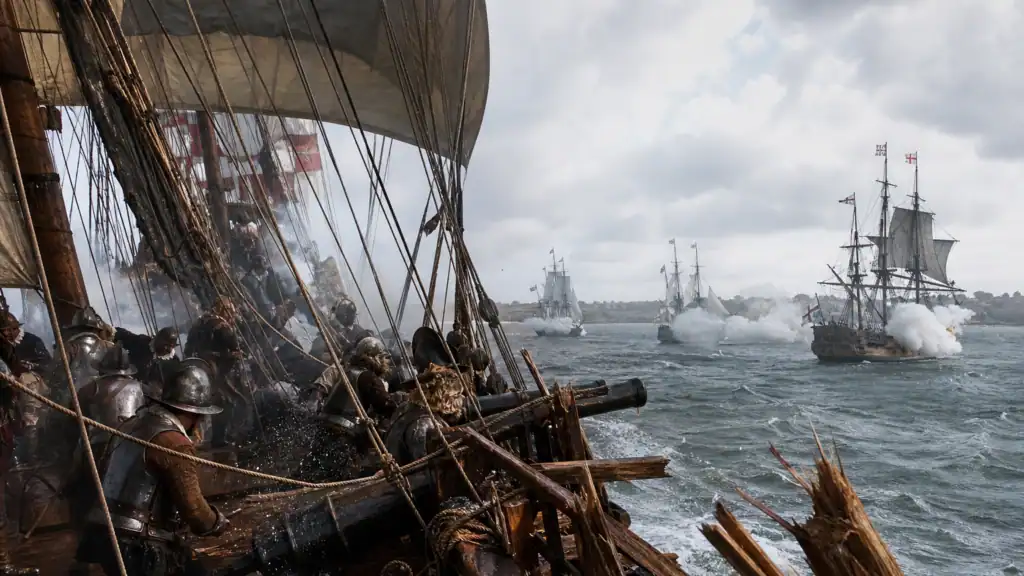
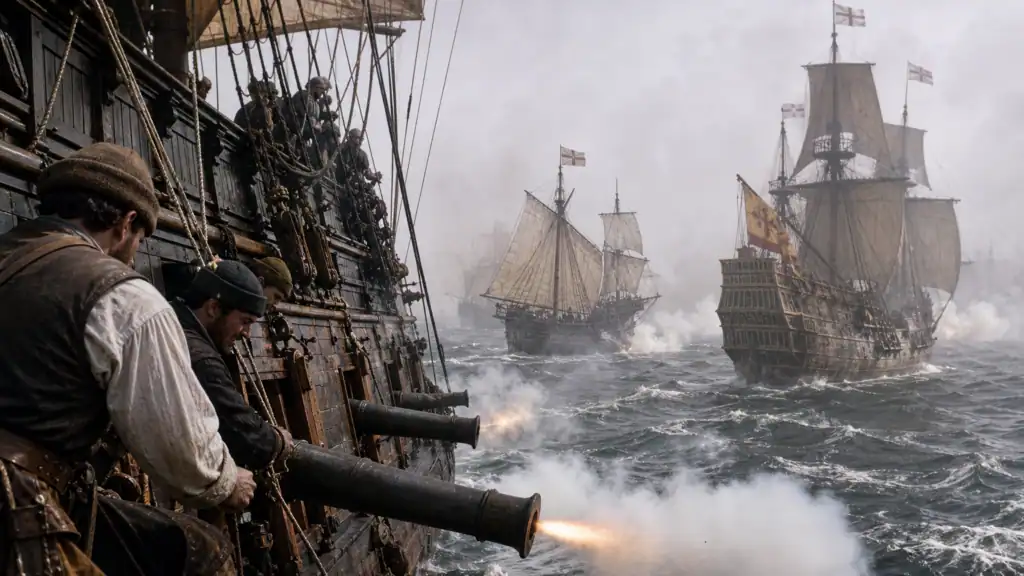
Once the Armada entered the Channel, the English began a running fight. Their ships approached from a distance, fired, and withdrew before Spanish soldiers could close and board. This was not an accident. It was the method. The English understood that they did not need to force a final decision immediately. They needed to wear the Armada down, keep it moving, and prevent it from achieving its objective.
The leading commanders, including Howard, Drake, and Frobisher, operated with patience as much as aggression. Their advantage lay in manoeuvre. They could exploit wind and position, change direction more readily, and impose a tempo on the fighting that the Spaniards found difficult to answer. That was especially important because English gunnery was geared towards distance attacks that disrupted rigging and hulls without requiring close contact.
The aim was not instant destruction. It was disruption. Damage the enemy’s ability to hold formation. Force it to consume ammunition and time. Make the invasion plan harder to sustain. In that respect, the English were fighting with a clear operational purpose. They wanted to stop Spain from using the sea as a corridor.
Yet the English approach also had limits. Cannon fire could wound ships and crews, but it did not always deliver the catastrophic results people imagine from later naval warfare. Many Spanish vessels were strongly built, and their crews fought with discipline. Ammunition was used quickly. The English could not assume that their supplies would last indefinitely, which meant they too were engaged in a contest of endurance.
Spanish discipline under pressure
The Armada should not be pictured as a helpless target. Spanish crews remained organised and resilient under pressure. Their commanders worked to preserve formation and maintain combat power. Even as English ships harried them, the Armada kept a degree of coherence that prevented the campaign from ending quickly.
That resilience is one reason the story matters so much. If we turn the Armada into a comic tale of Spanish incompetence, we miss the seriousness of the operation. The Spanish were dangerous, determined, and well resourced. They were also trying to solve a difficult military problem with the tools they had. Their failure was not the failure of cowardice. It was the failure of an operation under strain.
Both sides faced practical limits. Ships were damaged. Men grew tired. Powder and shot were consumed. Commanders had to decide when to press and when to preserve. The English could not simply keep firing forever. The Spanish could not simply force the issue by willpower alone. The Channel campaign became a battle of endurance, where each hour of delay made the invasion more difficult to sustain.
That is why the running fight is so important historically. It was not a dramatic prelude to the real battle. It was the battle. It was the process by which the Armada was denied the conditions it needed to succeed. Once that is understood, the later events at Calais and Gravelines become easier to interpret as part of a single operational collapse.
Calais and the Failed Rendezvous
Parma does not appear
By the time the Armada reached the area near Calais in early August, the campaign had reached its decisive moment. Medina Sidonia expected to meet Parma’s army. But Parma was not there with a ready fleet of invasion transports. His troops were scattered across the Netherlands, the waterways were shallow and difficult to leave, and Dutch rebel forces guarded parts of the coast.
This was the critical failure. The Armada had reached the rendezvous point, but the second force could not safely join it. The invasion plan depended on timing, and timing had broken down. The Spanish fleet could protect an army once it was aboard, but it could not create the boats, the passage, or the synchronisation needed to make the crossing happen.
That failure reveals the central weakness of the entire enterprise. A fleet and an army are not the same thing. They must be connected at precisely the right moment. If they cannot be connected, then power remains scattered. Spain had strength, but not the exact form of strength required. The English understood this, and they moved to exploit it.
The Dutch situation also mattered. The Netherlands Revolt Against Spain made the coast itself part of the strategic problem. Parma was not simply waiting by a shoreline with ready transports. He was operating in a hostile environment where movement was constrained. The Armada therefore arrived at a meeting point that did not function as planned. That is a logistical failure with strategic consequences.
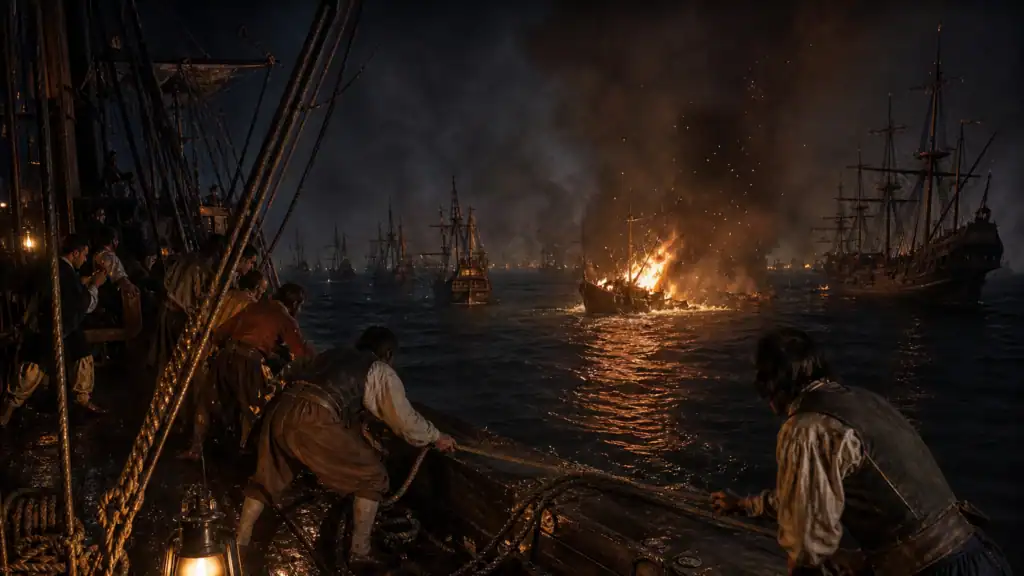
Fire ships and the night crisis
The English launched eight fire ships during the night. Their hulls were loaded with combustible material, set alight, and sent towards the anchored Spanish vessels. The physical damage was limited, but the effect was profound. Spanish crews cut anchors and moved away in haste to avoid the flames. Formation dissolved in darkness. The Armada lost the carefully held position that had been supporting its defensive posture.
This moment mattered not because it destroyed the fleet, but because it shattered its order at the worst possible time. The psychological effect was considerable. A fleet that depends on cohesion cannot easily recover when night, fear, and uncertainty force it into movement. What had been a difficult but managed situation became a crisis.
The English then attacked at Gravelines in the morning, now with the Armada disordered. This sequence is often reduced to a tale of panic and fire, but that misses the real point. The fire ships did not win the war by themselves. They exploited a vulnerable moment created by the failure to join with Parma. In military terms, they converted delay into disadvantage.
The Armada’s position had been weakened by more than enemy action. It had been weakened by the collapse of the schedule on which the whole invasion depended. Once the fleet was driven from its anchorage, the campaign began to move towards retreat. That change in direction would prove decisive.
Gravelines and the Turning Point
Close action off Gravelines
The fighting off Gravelines was intense, but it was not a neat annihilation. English guns damaged several Spanish ships, and some were forced into shallow water. Spanish crews returned fire and prevented the English from boarding in force. There was no single moment when the Armada suddenly ceased to be dangerous.
But the operational position had changed. That is the real turning point. Medina Sidonia could no longer carry out the invasion plan. The fleet had lost the stable arrangement that would have allowed it to hold the Channel for Parma. The English had not simply inflicted damage. They had made the original purpose of the Armada impossible.
This distinction matters because it changes how we interpret victory. A spectacular naval duel might destroy ships, but an operational victory prevents an enemy from achieving its task. In 1588, England’s achievement was not that it sank every Spanish vessel. It was that it denied Spain the ability to use the fleet as an invasion shield.
The English commanders understood this more clearly than many later commentators do. They were not trying to chase glory at any price. They were trying to keep the Armada from becoming the platform for an invasion. That required discipline, calculation, and a willingness to pursue a difficult campaign without expecting a single decisive blow.The invasion plan falls apart
After Gravelines, wind and English pressure forced the Armada northward. Medina Sidonia could no longer restore the original plan. With Parma still out of reach, the invasion had failed before a landing had been made. The fleet was now moving away from the strategic object for which it had been assembled.
That is why the campaign counts as a strategic defeat before it becomes a physical one. The Armada was still afloat. It was still armed. It was still formidable. But it could no longer do the job for which it had crossed into the Channel. In military history, that is a decisive loss.
This was not a triumph born of one heroic charge. It was the result of repeated pressure, tactical patience, and the disruption of co ordination. England had used its own position advantageously, fighting near home, under familiar conditions, and against an enemy whose plan depended on precision. The Spanish, by contrast, had to preserve an operation that became more fragile with every passing day.
If we want to understand why 1588 mattered, we must understand this moment. It was not the destruction of a fleet. It was the destruction of an invasion plan. That is a far more significant form of defeat.
The Long Retreat Around Scotland
Geography and weather take over
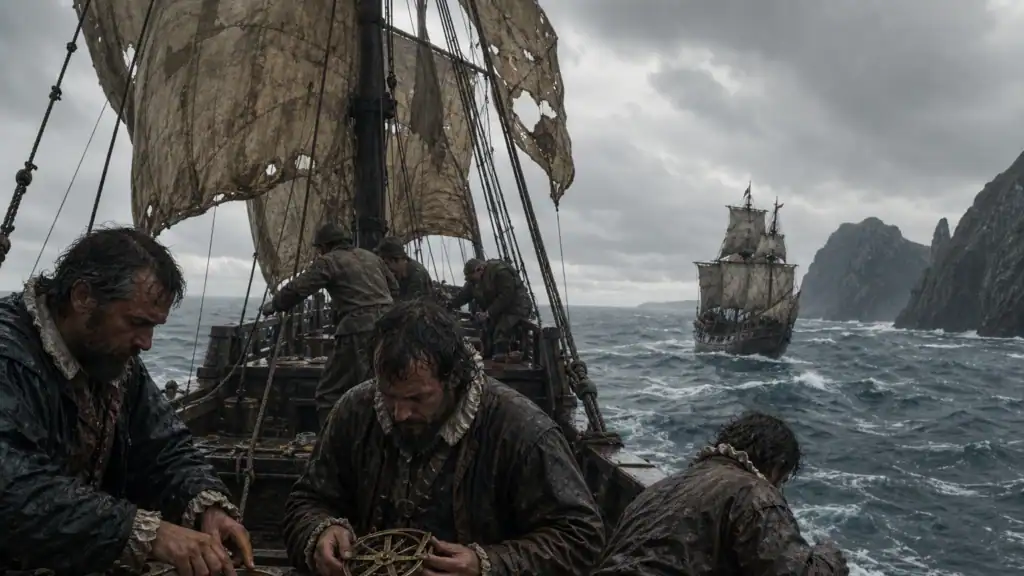
Once the Armada turned north, geography and weather took command of events. The fleet had to sail around the north of Scotland and then south along the Atlantic route back to Spain. This was not the intended route. It exposed the ships and crews to waters for which many were poorly prepared, especially after weeks of pressure, damage, and strain.
Navigation became harder. Provisions grew scarcer. Ships that had already suffered in the Channel now faced the open ocean. The English pursued for a time, but they did not destroy the Armada solely through direct combat. Instead, the fleet was worn down by cumulative hardship. Damage from fighting, the loss of formation, the shortage of stores, and the violence of weather all deepened the crisis.
This part of the story is vital because it shows how military outcomes are often produced by sequences rather than singular events. The retreat was dangerous not only because the sea was rough, but because the fleet had already been weakened operationally. The Armada had lost the context in which it could function effectively. Its movement south through the Atlantic was a retreat from failure, not a continuation of an active campaign.
The geography of the sea mattered here as much as tactics. The Spanish had entered a narrow theatre where the enemy could shadow them and disrupt their plan. They left by a route that was vaster, harsher, and less forgiving. The transition from the Channel to the Atlantic made every weakness more expensive.
A fleet defeated without being sunk
This is the central argument that many accounts fail to grasp. A fleet does not have to sink to be defeated. It is defeated when it cannot achieve its purpose. By that measure, the Armada had failed. It had not landed Parma’s army. It had not broken English resistance. It had not forced Elizabeth’s government to collapse. It had been turned away from the task for which it had been built.
That is why the campaign should be studied as an operational defeat rather than a simple naval catastrophe. Damage matters. Losses matter. But purpose matters more. Once the invasion purpose collapsed, the fleet’s survival ceased to be victory. It became a retreat under increasingly hostile conditions.
This point also helps explain why the Armada remains so useful for military history. It demonstrates the relationship between strategy, logistics, and geography. It shows how a fleet can remain dangerous while still being beaten. It also reminds us that command success depends on the ability to connect force to objective. Without that connection, even great power can drift into failure.
Why 1588 Changed England
Security, navy, and national thinking
The Spanish Armada changed England’s sense of security. Before 1588, invasion was a real and immediate fear. After 1588, the government could present the sea as a defensive frontier, and the navy as an essential instrument of survival. That shift in thinking was profound. It did not make England safe forever, but it did alter how rulers and subjects imagined the kingdom’s defence.
This is one of the campaign’s most lasting consequences. The English state increasingly understood that power at sea could protect the realm and shape events beyond it. Naval strategy became central to political imagination. The kingdom’s ability to defend itself no longer seemed to depend only on castles, levies, and land armies. It also depended on ships, gunnery, and command over maritime movement.
The victory also strengthened confidence in maritime methods. That confidence would matter in later conflicts and in the slow growth of overseas ambition. It did not create empire overnight, and it did not magically transform England into a global power. But it helped make naval thinking central to the way English elites conceived state strength. That is a major historical consequence, not a ceremonial one.
In that sense, 1588 belongs beside other turning points in the history of war at sea. It was not just a famous defeat for Spain. It was a demonstration that the Channel could be defended by a fleet acting strategically, not just bravely.
Reputation and long term consequences
Spain remained powerful after 1588. The Armada was not the end of Spanish imperial influence. But the campaign did damage the image of invincibility that surrounded Spanish arms. Reputation matters in war. When an empire is seen to fail in a highly visible operation, rivals take notice. Allies take notice too. The psychological effect can outlast the material loss.
For England, the boost in confidence was real. That confidence should not be confused with immediate dominance, but it did encourage a more ambitious understanding of what maritime power could achieve. Later English policy would draw on this lesson in a variety of ways, from war planning to overseas expansion. The Armada did not create those developments on its own, but it helped make them thinkable.
The campaign also exposed a broader truth about European warfare. Success increasingly depended on systems, supply, and co ordination across distance. Large ambitions required large logistical structures. If those structures failed, bravery could not rescue the plan. Spain learned that lesson painfully in 1588, and other powers would learn it in their own ways later.
That is why the Armada still matters. It was not merely a clash of national pride. It was a test of how far power could move, how safely it could be sustained, and how quickly a carefully assembled plan could unravel.
Conclusion
The Spanish Armada of 1588 matters more than the old story allows because it was never just a sea battle, and never just a storm story. It was a military operation built around movement, timing, and co ordination. Spain tried to use the fleet as a shield for an invasion army. England understood that the best way to stop the invasion was not to seek instant destruction, but to interrupt the system that made the invasion possible. That is the real heart of the campaign.
Once you see the Armada this way, the familiar details fall into place. Howard of Effingham’s hesitation becomes prudence rather than uncertainty. Drake and his fellow commanders become operators of pressure and disruption rather than mere adventurers. Medina Sidonia becomes a commander burdened by a plan that demanded more than it could reliably deliver. Calais becomes the point where the machinery failed. Gravelines becomes the moment the failure became irreversible. The retreat around Scotland becomes the consequence of an invasion that had already been defeated in strategic terms.
That perspective matters because it changes what we think military history is for. It is not simply the retelling of famous victories. It is the study of how states use force, how plans depend on logistics, and how geography can shape outcomes as powerfully as courage. In 1588, England survived not because the Spanish were weak, but because the English understood the conditions of maritime war well enough to deny Spain its objective. That was a hard won success, and it helped redefine how the kingdom thought about its own defence.
It also changed Europe’s strategic imagination. Spain learned the cost of coupling a fleet to an army across a narrow sea. England learned that naval power could defend the realm and shape its future. The consequences reached far beyond one summer campaign. They affected how rulers planned war, how fleets were prepared, and how the sea itself was understood as a space of conflict and security.
If you want to keep digging into the decisions, pressures, and consequences that shaped the Tudor world, explore more Digging Deep Histories articles on Elizabeth I and Tudor Naval Power, Francis Drake and English Privateering, the Battle of Gravelines, and the Netherlands Revolt Against Spain. There is always more to uncover when we look beyond the legend and into the strategy.