

Henry VIII and the Break with Rome: Understanding Its Lasting Impact
Introduction to a King’s Reign
The reign of Henry VIII was characterised by ambition, power, and a relentless drive for personal and national success. As King of England from 1509 to 1547, Henry VIII’s break with Rome would shape his legacy. Henry was not just a ruler of lands but also a figure whose decisions shaped the course of history. His relationships, particularly with the Church, were fraught with tension, ultimately leading to a pivotal moment that would alter the religious landscape of England. Understanding this era requires delving into a complex interplay of politics, personal desires, and broader socio-religious movements.
The context of Henry’s time was marked by an increasingly centralised monarchy and a burgeoning sense of national identity. Various forces were at play: the rise of humanism, the challenge of Protestant reformers, and the undeniable influence of the Catholic Church. The clergy held considerable power, and loyalty to the Pope was deeply ingrained in English society. Yet, even as church authority reached its zenith, fractures were developing within the fabric of faith that would ultimately reshape England.
Compounded by these external pressures, Henry’s personal situation weighed heavily on him. He was a monarch who desperately desired a male heir to secure the Tudor dynasty. To this end, he famously divorced his first wife, Catherine of Aragon, after failing to produce a male successor, leading to a quest for a new union that proved to be the catalyst for a monumental shift in English history.
This quest for an heir was not merely a personal affair. It is intertwined with issues of national importance. The political landscape was shifting, and the traditional paths to power were being called into question. Henry’s actions set the stage for a confrontation that would culminate in England’s break from the Catholic Church and would reverberate through the ages.
The Fateful Decision
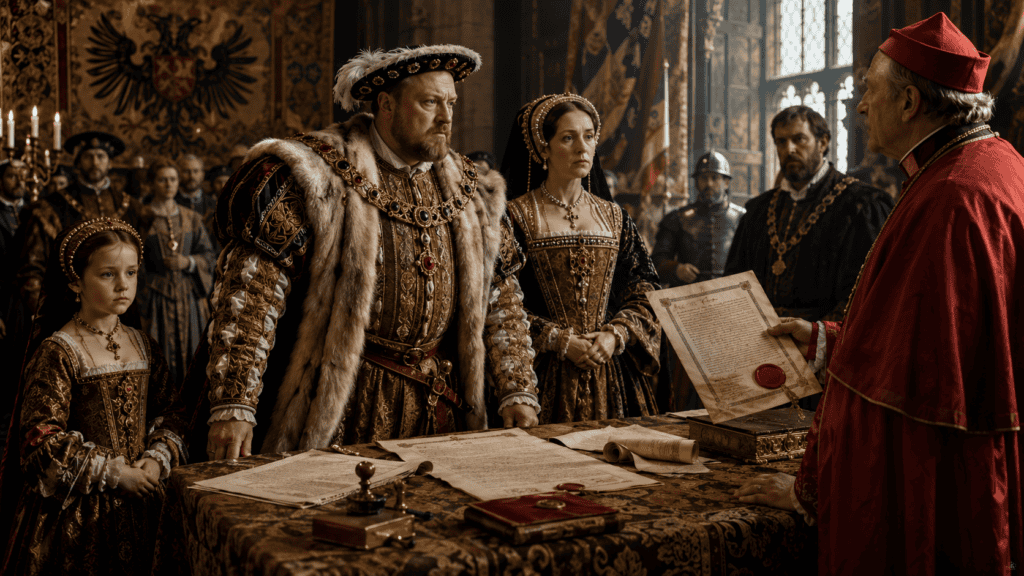
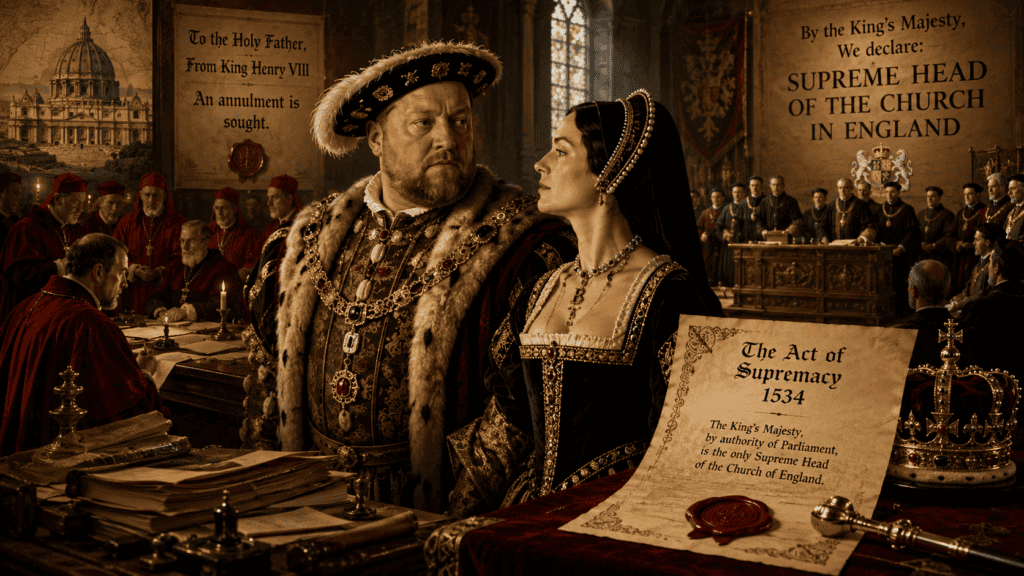
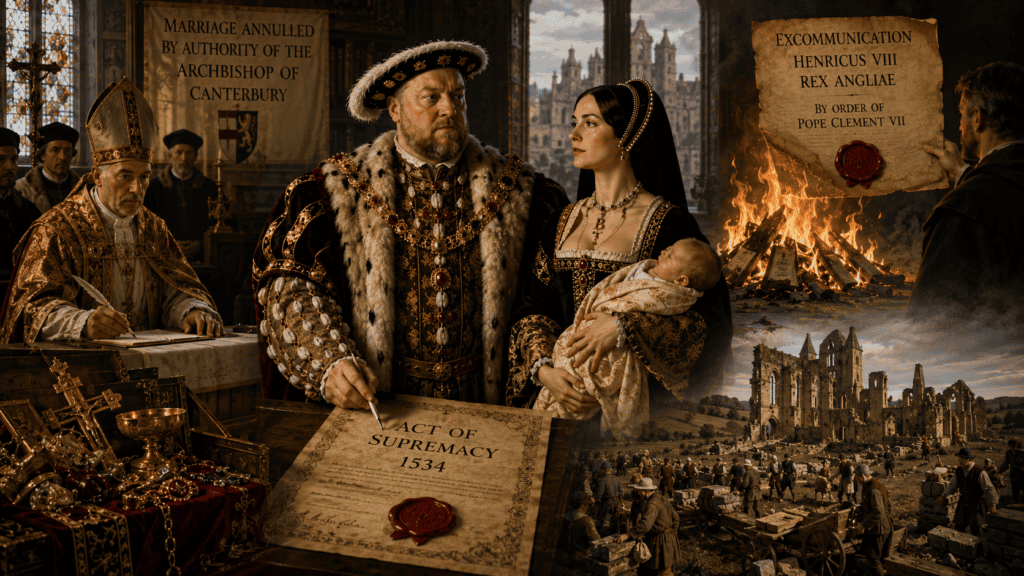
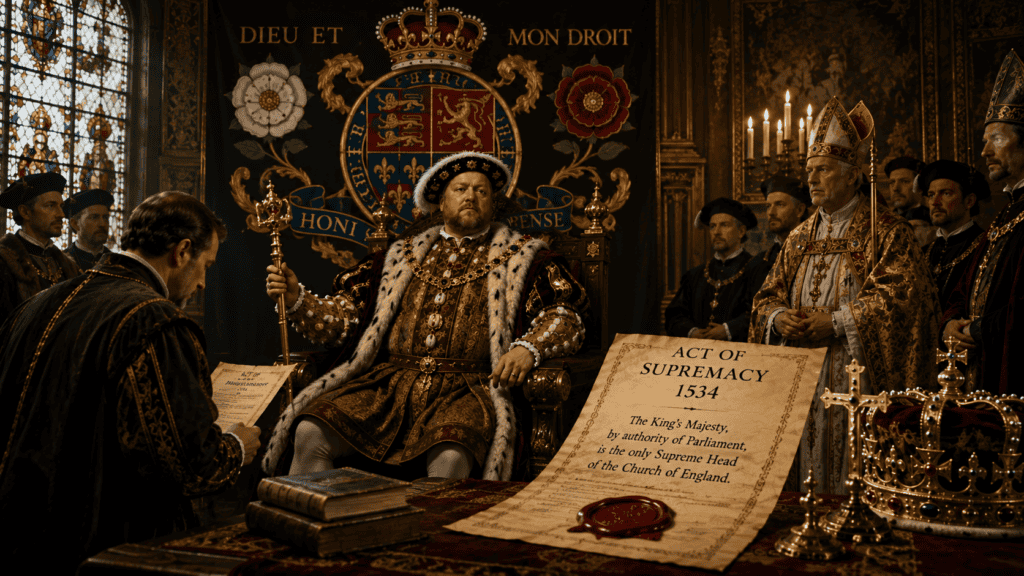
Central to this profound transformation was the Act of Supremacy passed in 1534, a legislative move that declared Henry the Supreme Head of the Church of England. This act did more than just formalise a shift in allegiance; it symbolised a break from the authority of the Pope and the Catholic Church, setting a precedent for future religious and political changes. The act provided Henry the legal mechanism to marry Anne Boleyn, his second wife, while simultaneously dissolving England’s ties to Rome.
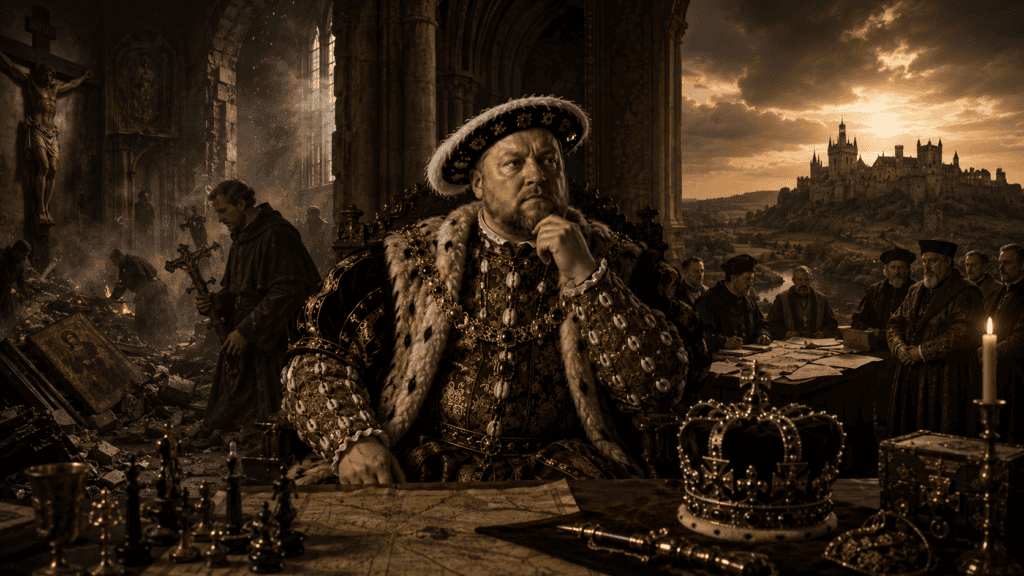
This declaration was not merely administrative but a radical transformation of religious governance. By positioning himself as the head of the church, Henry effectively eliminated papal authority within his realm, ushering in a new religious order. The immediate implications were daunting. Monasteries were dissolved, their wealth seized, and the traditional religious practices were challenged, creating uncertainty and upheaval among the clergy and laity alike.
The societal repercussions of this break were profound. Communities that had relied on the monastic institutions for education, charity, and care were left to adjust to a new reality. The sudden shift away from Catholic traditions instilled fear and confusion among the populace, leading to resistance and, in some cases, violent uprisings. The Pilgrimage of Grace in 1536 vividly showcased the discontent surrounding these changes, revealing a deep sense of loss and betrayal felt by those who remained loyal to Rome.
Henry’s decision was not solely about establishing control over Christianity in England; it represented a dramatic assertion of royal power that would echo through the centuries. The Act of Supremacy set a precedent for future monarchs, demonstrating how personal desires could intertwine with state politics, shaping the course of an entire nation.
The Role of Thomas Cranmer
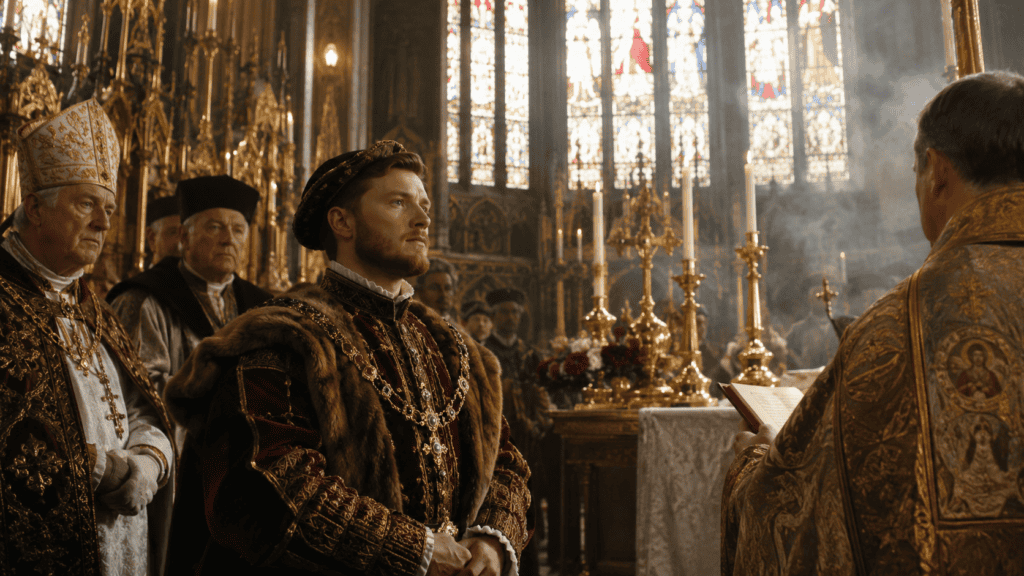
The figure of Thomas Cranmer emerged as pivotal during this tumultuous period. As the Archbishop of Canterbury, he played an instrumental role in legitimising Henry’s break from Rome and the subsequent establishment of the Church of England. Cranmer was not only a theological adviser but also a crucial ally in the king’s quest for an heir. His insights on religious reform aligned closely with Henry’s ambitions, solidifying a partnership that would have wide-ranging implications.
Cranmer’s influence extended beyond the confines of the court. He was a reformist whose theological ideas laid the groundwork for the English Reformation. His advocacy for translating the Bible into English and his promotion of Protestant ideals were foundational in shaping a new identity for the Church of England. Through his efforts, he helped create the Book of Common Prayer, a document that would define worship practices and beliefs for generations.
The legacy of Cranmer’s work cannot be understated. He positioned the Church of England not just as a political entity but as a unique theological institution that strived to balance traditional Catholic roots with emerging Protestant principles. His vision of a reformed church ultimately contributed to broader discussions about faith and governance that were becoming increasingly relevant throughout Europe.
However, Cranmer’s reforms were met with resistance. His association with Henry VIII made him vulnerable to the whims of a capricious monarch. Following the king’s death and the subsequent reigns of his children, Cranmer’s legacy was put to the test, highlighting the precarious nature of reform in a landscape marked by shifting allegiances and ideologies.
The Reformation in England
The English Reformation, sparked by the actions of Henry VIII, led to widespread political and societal changes throughout the kingdom. This was not merely about religious shifts; it was about establishing a new national identity that broke away from the traditional influence of Rome. The Reformation encouraged a sense of individualism that resonated with other movements sweeping across Europe. People began to question established authorities and seek personal connections with the divine, reflecting a massive shift in societal thinking.
Political changes were evident as well. The dissolution of monasteries and the redistribution of their vast wealth altered the power dynamics within England. Land that once belonged to the Church was now held by loyal nobles and commercial interests, who aligned themselves with Henry’s vision of a strong, independent state. This redistribution of wealth emboldened a new class of gentry that would wield significant influence in future governance.
Socially, the Reformation ignited debates about morality, ethics, and religious observance. People no longer accepted doctrines handed down from Rome without scrutiny. This created a more vibrant theological discourse but also led to divisions and conflicts within communities. As interpretations of scripture became a matter of personal understanding, friction arose between those favouring traditional practices and those advocating for reform.
The ramifications of the English Reformation reached beyond the borders of England, influencing Protestant movements across Europe. It catalysed conversations about the role of faith in governance and personal life, igniting religious fervour that would shape generations. Henry’s break with Rome was not simply an act of personal ambition but a transformative moment that altered the very fabric of English society.
The Dangers of Catholic Loyalty
Amidst these monumental changes, loyalty to Catholicism increasingly became fraught with peril. Those who remained steadfast in their allegiance to the Pope faced significant risks, both personally and politically. One striking example is Thomas More, a former Chancellor of England and a devout Catholic who famously opposed Henry’s break from Rome. His unwavering principles led to a dramatic downfall as he was ultimately sentenced to death for refusing to recognise the Act of Supremacy.
More’s legacy serves as a cautionary tale of the consequences of Catholic loyalty in a rapidly changing landscape. His life highlights the tension between personal conviction and the demands of political loyalty. More’s steadfastness in the face of persecution illustrates the broader struggles faced by Catholics in England as they grappled with a new reality marked by persecution and intolerance.
The moral dilemmas of the time were deepened by the wider religious context of Europe. As Protestantism spread, many Catholics felt cornered, their beliefs threatened not just by changing practices but by the fervent zeal of their Protestant neighbours. The religious conflict would escalate into violent confrontations, underscoring how personal faith became entangled with political identity and allegiance.
As factions solidified and tensions rose, the danger of being perceived as loyal to the Catholic Church increased. Those who maintained their fidelity faced societal ostracism, conflict, and, in extreme cases, execution. This brewing hostility gave rise to a landscape that was as dangerous as it was transformative, marking a turning point in the relationship between faith and governance.
The Legacy of the Break with Rome
The legacy of Henry VIII’s break with Rome reverberated through the centuries, impacting the national identity and church-state relations in profound ways. This historical pivot not only shifted the allegiance of England from the Pope to the monarch but also established a unique path for the Church of England that balanced elements of both Catholicism and Protestantism. The actions taken during this period laid the foundation for a distinctly English identity, one that prized independence and self-governance.
The establishment of the Church of England sent a clear message about the relationship between the monarchy and religious authority. Future monarchs would grapple with the complexities of church governance, navigating a course that took into account the expectations of a populace that had become increasingly attached to the ideas of reform and national pride. This interplay of faith and politics defined not only the Tudor dynasty but set a precedent for governance in England that would last well into modern times.
As the centuries unfolded, the repercussions of the break became evident in various social and political movements. Ideas of religious tolerance and pluralism began to emerge, influenced by the foundational shifts initiated by Henry’s decisions. The struggle for religious freedom and the right to personal belief have roots in the reforms of this era, highlighting the importance of the break within broader human rights discourse.
Moreover, the legacy of the break with Rome continues to be relevant in contemporary discussions about church-state relations. The events surrounding Henry VIII’s reign force us to engage with questions of power, allegiance, and personal beliefs in ways that resonate with current political climates. The struggle for autonomy and belief remains a core aspect of many societies, demonstrating that history’s lessons are never far from the present.
Conclusion: Why the Break Matters Today
Reflecting on the historical ramifications of Henry VIII’s break with Rome provides us with insights that are still applicable in today’s society. The complexity of faith, governance, and personal belief in our world mirrors the tensions that characterised this transformative period in England. The break catalysed discussions around the role of religion in public life and the importance of establishing boundaries between church and state, themes that resonate strongly in contemporary debates.
The evolution of national identities underpinned by religious convictions has shaped cultural narratives across the globe. Understanding how Henry’s actions paved the way for a reformation allows us to appreciate the fluid nature of identity and belonging, revealing that such themes are not merely historical but vital parts of ongoing societal dialogues.
As we interrogate the significance of the break with Rome, we begin to unravel its layers, allowing us to grasp the enduring impacts on present-day society. Engaging with this history invites us to reconsider our relationships with power, belief, and each other, suggesting that even centuries later, the echoes of the past continue to shape our very existence.
In essence, Henry VIII’s break with Rome was not just a historical event but a transformative moment that reshaped an entire nation, setting in motion a series of changes that still resonate today. Understanding its impact helps illuminate the delicate balance between faith and power, reminding us of the lessons history offers in navigating our present and future.
For more blog posts on Royal and Political History, click here